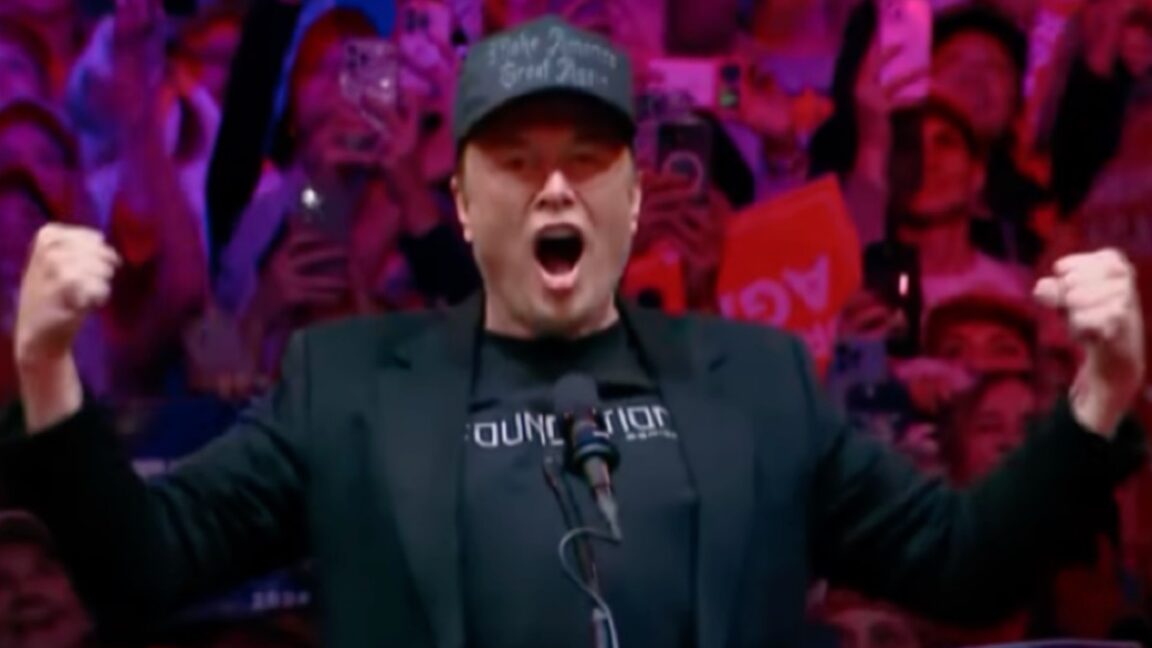
Likely in the next few weeks, a federal judge will decide if Donald Trump can become the first president to personally profit from selling early access to government information in his social media posts.
At a hearing Wednesday, Department of Justice civil attorney Brantley Mayers argued that there was no conflict whatsoever with Trump charging up to $100,000 monthly for instant API access to Truth Social posts that often break news from his administration.
Trump is the largest stakeholder and majority owner of Trump Media & Technology Group, the parent company that owns Truth Social, and the value of the API access comes largely from Trump’s role as president.
News groups suing have argued that Trump’s exorbitant API fees violate the First Amendment and the Presidential Records Act by creating tiers of access to government information in social media posts that Trump doesn’t technically own. Additionally, Trump’s exorbitant API fees undermine the Fifth Amendment. That prohibits the government from “charging unreasonable sums that cannot be justified to offset the cost of the government benefit, and granting preferential access to crucial government information for arbitrary and irrational reasons,” news groups argued.
However, Mayers likened Trump’s Truth Social posts—which have announced military strikes, ceasefires, tariffs, immigration policies, and major changes in his administration—to Franklin D. Roosevelt’s evening radio addresses known as “fireside chats,” Courthouse News reported. His personal feed acts as an unvarnished public service, not a greedy profit grab, the DOJ argued.
It’s clear, though, that Trump could potentially make $1.2 million per subscriber annually by selling government information that is not Trump’s property. Before Mayers could proceed, US District Judge Paul Oetken “cut him off,” Courthouse News reported.
“Well, President Roosevelt didn’t charge money for his fireside chats, did he?” Oetken asked.
Responding, Mayers suggested that although Roosevelt didn’t charge for his broadcasts, there were similar “barriers to entry” keeping every American from tuning in. Just as some news groups today can’t afford to pay $60,000 to $100,000 for Truth’s API, some Americans in the ’30s and ’40s couldn’t afford radios, he argued.
Nikhel Sus, chief counsel for a group representing news plaintiffs called the Citizens for Responsibility and Ethics in Washington (CREW), told Ars that the judge was right to push back on the DOJ’s comparison. During the hearing, the judge acknowledged that the Truth API could be discriminatory by creating “two classes of people," Courthouse News reported. Sus said that he also clearly recognized the “symbiotic relationship” between Trump and Truth Social.
Criticizing the comparison to FDR's fireside chats, Sus told Ars that the DOJ “can throw out these hypotheticals that have absolutely nothing to do with this situation until the cows come home, but they're not persuasive."
Judge asks if a second of delay is “negligible”
At the hearing, Oetken asked “tough questions” of both sides, Sus told Ars. No elected official has ever owned a media company where they can profit from presidential announcements, and the judge took time to remark that “there hasn’t really been anything like this case.”
Talking to Ars, Sus argued that the lack of precedent should trigger alarm bells, not excuse the conduct, as the DOJ has suggested. “Just because no prior president had the gall to try to do something so flagrantly corrupt and illegal doesn't mean that it is legal,” he said.
Initially, Oetken approached claims that the API scheme violated the First Amendment with skepticism, Courthouse News reported. At one point, he wondered if Trump delaying the general public’s access to information by potentially as little as a fraction of a second would meaningfully harm the free press. Although it’s easy to see how an algorithmic trader would benefit from getting information just a little bit sooner, “It’s a negligible delay to a human being,” Oetken suggested.
But the conflict isn’t only about timing, nonprofit news organizations have argued. TMTG has confirmed that large news groups are already in talks to buy API access because there is immense value in the service that goes beyond getting instant access to Truth Social posts. For example, the API “provides a machine-readable feed and a historic archive of all of President Trump's Truth Social posts,” Sus told Ars. With that access, even if Trump deletes posts—which he frequently does—any news group can maintain a more reliable log of all posts.
“It is absolutely worth something,” Sus told Ars. “And it's not just the algorithmic traders. News outlets use APIs too.”
The judge sees the case as complex and did not rule from the bench, instead promising a written ruling on whether to enjoin Trump from selling API access while he’s in office at a later date. Sus told Ars that courts typically treat requests for preliminary injunctions urgently and that he expects a decision in the next few weeks.
Until then, news groups remain optimistic that the court’s ruling will swing their way, Sus said.
“All we're asking for is that when the president chooses to make government information available to the public, he has to do so on equal terms,” Sus said. “He cannot discriminate based on who's willing to pay the president's personal company hundreds of thousands of dollars. That is obscenely corrupt and unconstitutional.”
API gives news orgs a "direct advantage"
Defending Trump’s scheme, Mayers asked the judge to look at Trump’s interests as wholly separate from the media group that bears his name. He claimed Trump had nothing to do with the decision to charge for API access to his posts, branding them as a “completely private commercial decision” made exclusively by TMTG.
Nonprofit news groups suing, however, have argued that the expensive API pricing is “corrupt,” ignoring America’s long history of providing equal access to presidential records. On Wednesday, David Schulz, an attorney representing The Intercept, argued that the scheme gives a “direct advantage” to newsrooms that can pay the high price for previously free access.
“Trump Media specifically is courting the largest news organizations in the country to get them to subscribe to Truth API,” Sus told Ars.
If Trump’s gamble pays off and the judge approves the API sales, Sus warned that the press would suffer, as more politicians could follow his lead, and access to even more government information would be delayed behind paywalls.
“If the president is allowed to do this, it sets a very dangerous precedent for enabling public officials to profit off of their office and specifically profit off of government information,” Sus told Ars.
Soon, Reddit won’t let people use Old.Reddit.com unless they have used the site while logged in within the previous six months.
In July, Reddit started requiring that users be logged in to access Old Reddit. This new requirement is an effort to reduce Reddit’s biggest source of scraping and automated traffic, the company says.
Today, the social media platform announced additional upcoming restrictions on Old Reddit. A Reddit post from an employee, known as "judy-funnie" on the platform, says that “in the next few months, we'll further limit access for logged-in users to only those who have used Old Reddit in the last six months (which covers the vast majority of all Old Reddit users).”
There is an exception for moderators, who will still be able to view Old Reddit regardless of when they last used it, as long as they are logged in.
“This helps keep Old Reddit available for the people who rely on it while reducing automated abuse," the post says.
Today’s post claimed that forcing users to log in to use Old Reddit “helped reduce scraping and automated abuse.” But further restrictions on the site, which many longtime Reddit users prefer over regular Reddit for its look, layout, homepage feed, and familiarity, have people concerned that Reddit will shutter Old Reddit one day.
I asked Reddit if it has plans to shut down Old Reddit, and spokesperson Rosa Kim told me via email:
As [Reddit CEO Steve Huffman previously] confirmed, Reddit is continuing to work on the future of Old Reddit. This change is about limiting unauthenticated access and reducing automated abuse—not removing Old Reddit for people and moderators who rely on it. We want to preserve Old Reddit for the real people that use it, not let it be a vector for automated abuse.
Reddit’s announcement noted that the current rules permit “any logged-in account to access Old Reddit, including accounts with no prior Old Reddit use.” I asked Kim why that’s a bad thing but didn’t receive a response.
In August, Kim told Ars that Reddit “will work directly with the mods, developers, and communities that depend on our systems and make sure to keep everyone updated” about any future changes to Old Reddit.
In 2025, Huffman said Old Reddit would remain “online as long as people are using it." But in August, he changed his tune, saying in a post that “the reality is we’re getting to that time where we need to make some changes." Those changes would “probably” include limiting access, migrating “important uses,” and rebuilding Old Reddit “on a modern tech stack," per Huffman.
With the new restrictions for accessing Old Reddit, the site may see dwindling use, making it easier for the company to one day justify closing it or limiting access even further.
Reddit also limiting RSS feed support
Reddit will also stop supporting RSS feeds on November 13 “because RSS is now a common surface for large-scale scraping and automated abuse,” judy-funnie said. RSS feeds will still be available for moderators who use it for workflows “through supported alternatives,” Reddit’s employee said. They added:
For common mod alerts, we recommend Devvit apps like Discord Relay. If your mod team relies on RSS, review your setup and migrate workflows before November 13 to ensure your needs are uninterrupted. If you use RSS for feeds outside of a community you moderate, there is no replacement. RSS has been a beloved part of the open web for a long time, and we’re grateful to everyone who used it to stay connected to Reddit.
Advance Publications, which owns Ars Technica parent Condé Nast, is the largest shareholder in Reddit.
According to US Rep. Jamie Raskin (D-Md.), Apple has no evidence to support claims that apps raised safety concerns. Instead, the lawmaker accused Apple of using immigrant deaths with no connection to the apps to justify censoring Americans who have the right to record ICE activity.
It appears that Apple is “working with the government to violate its customers’ First Amendment rights to record and report on the activities of their own government,” Raskin said in a letter to Apple sent Monday, CNN reported.
Raskin had been hounding Apple for answers for months. In July, Apple finally explained to Raskin that ICEBlock was removed, along with other apps, after a fatal shooting left two detainees dead at a Dallas ICE office, CNN reported.
As an earlier CNN report explained, the shooter in that case, Joshua Jahn, fired bullets indiscriminately into the ICE facility before dying of a self-inflicted gunshot. Jahn left notes saying that he “hoped his actions would give ICE agents real terror of being gunned down.”
At that time, the US attorney for the Northern District of Texas, Nancy Larson, highlighted the “tragic irony” that it was a detainee who was killed during the attacks, CNN’s report said. But the Department of Homeland Security, along with FBI director Kash Patel, has since claimed that the incident showed agents were being targeted. DHS also frequently cites an internal October 2025 statistic claiming that ICE officers face an 8,000 percent increase in death threats. The agency will not release data to let independent parties verify that claim.
Additionally, Patel has said that the Texas shooter “searched for apps that tracked ICE agents’ locations.” But Raskin pushed back on that claim, too, telling Apple that there is “no evidence” that the shooter used ICE-tracking apps. And even if he did, “he did not need a tracking app to locate the fixed position of a government building” and “is reported to have found the address using an app that comes standard on Apple devices,” Raskin’s letter said.
“There appears to be no direct connection between the Dallas incident and the apps you removed,” Raskin said.
Apple pressured to share DHS communications
To ensure that no Americans’ core speech rights are violated by removals unconstitutionally ordered by the government, Raskin has asked Apple to “send a full list of the apps it removed following concerns from the Justice Department” so that it will finally be possible to “conduct an independent review of those removal decisions.”
Federal officials have insisted that Apple acted on its own.
However, in a lawsuit accusing the Trump administration officials of censoring watchdogs, ICEBlock creator Joshua Aaron told the court that officials publicly bragged about getting the app removed. And in Apple's July letter to Raskin—which was signed by Timothy Powderly, Apple’s senior director of government affairs—the iPhone maker seemed to confirm this. Powderly specifically cited agency reports of a “significant increase in ICE activity and threats against ICE” as triggering the follow-up review of ICE-tracking apps.
Apple claimed it was acting to protect both officers and detainees, ultimately deciding that sharing “precise location information about ICE officers (and, as a result, other individuals who may be in proximity to ICE agents, such as protestors or detainees)” provides “a potential roadmap for targeted violence and creating a significant risk of harm.”
The company “does not take decisions about removing apps from the App Store lightly, but acts when it must—especially when there are serious concerns that an app is creating safety risks,” Powderly said.
Raskin remains dubious that records will show the apps posed any risks. On Bluesky, Aaron did not comment directly on CNN’s report, but he did boost an ICEBlock post that thanked Raskin for continuing to press Apple to explain the removals.
“Apple’s sticking to their story even though everyone can see this was jawboning plain as day,” ICEBlock’s post said.
Trump admin denies app removals are retaliation
The Trump administration has asked the court to dismiss Aaron’s lawsuit, claiming that Apple independently chose to moderate that content, despite comments from agency officials suggesting otherwise.
It doesn't matter that former officials like Pam Bondi publicly took credit for removing ICEBlock from the App Store, boasting that she made the "demand" and "Apple did so.” Those comments were merely officials expressing opinions about Apple’s promotion of supposedly dangerous apps, they argued. They’re hoping the court will agree that Aaron has not uncovered evidence of communications that can be “reasonably understood to convey a threat of adverse government action” against Apple “if Apple chose not to remove ICEBlock from the App Store.”
But in an August ruling, the Second Circuit recently upheld that courts broadly recognize “a First Amendment right to record law enforcement activity in public,” Aaron argued in a recent filing that could influence how the case is decided at this stage. In his opposition to the government's motion to dismiss, Aaron maintained that the record showed that the government was acting to censor Americans.
As he argued:
The then-Attorney General told the nation she demanded removal of the app, Apple reversed a decision it previously reached after a thorough five-week legal review citing only "information provided to Apple by law enforcement," and the then-Attorney General characterized Apple’s response as "compliance."
If the case proceeds, which Aaron expects it will, discovery would likely reveal the actual communications between government officials and Apple leadership, which so far have remained hidden. Only then can a court sufficiently determine if “a threat of adverse government action” triggered app removals, Aaron argued.
Raskin told Apple that he thinks the removal decisions won’t fly under the First Amendment.
“Monitoring the actions of federal immigration authorities who have been deployed to (users’) neighborhoods… is a core First Amendment right and not a crime,” Raskin said.
Last month, we shared word of a Stanford University study that found entry-level employment in so-called "AI-impacted" occupations lagging well behind that in other fields. Now, a new working paper from economics researchers at Munich's CESifo finds the opposite, arguing point blank that "there is no evidence of any significant, widespread displacement or reduction in hiring of recent college graduates in absolute or relative levels."
In "The Early Impacts of AI on Employment Among Recent College Graduates," researchers Robert Fairlie and Jane Wu said they decided to focus on recent graduates "because changes in labor demand may first appear through reductions in hiring." As AI gets good enough to at least perform the "relatively standardized tasks" in many entry-level office jobs, they argue, firms could reduce new hiring for simpler roles rather than laying off more experienced long-term employees.
There's some reason to believe 2026's graduating job seekers might be more at risk of AI displacement than those graduating just a year or two prior. The CESifo researchers point to a recent sharp increase in the number of firms "replacing a large number of employee tasks with AI" in a Census survey, as well as broad increases in AI spending per employee and ChatGPT Enterprise token use in the last 12 months.
Anecdotally, some major names also think that this is the year AI is finally capable enough to start replacing the jobs of some recent graduates. Venture capitalist Marc Andreessen said earlier this year that "AI literally until December [2025] was not actually good enough to do any of the jobs that they’re actually cutting." And BlackRock CEO Larry Fink said in March that "the speed at which AI is changing" led him to worry that "when this year's college graduates enter the workforce, we could see the highest unemployment rate among them in years—even without a recession."
Nothing to see here (yet)
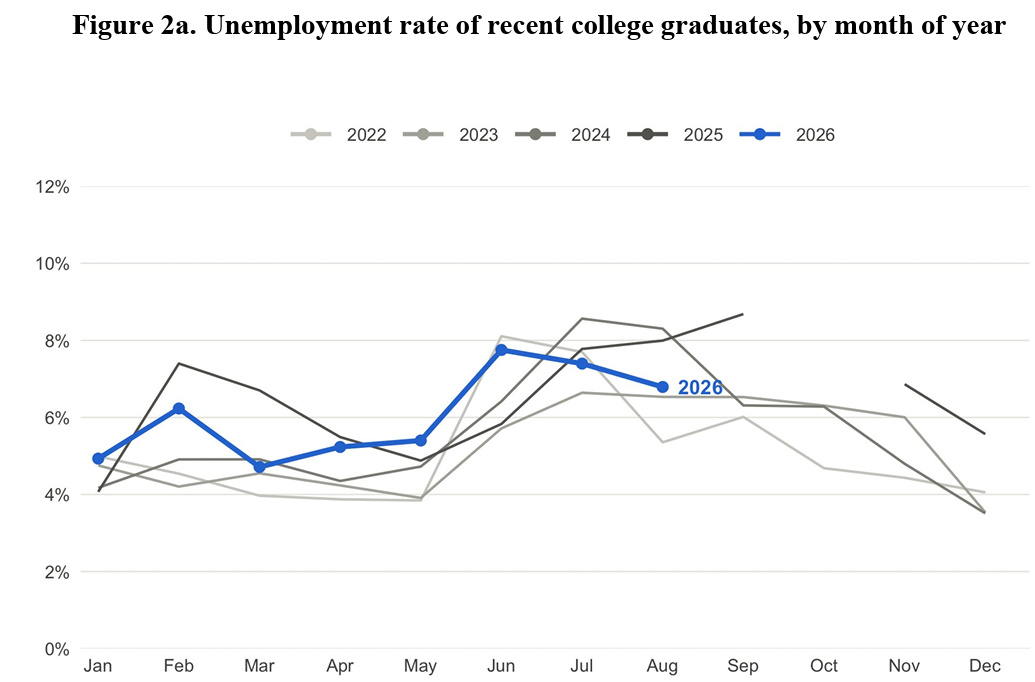
To determine if those kinds of worries were valid, the CESifo researchers looked at detailed microdata from the US Census' Current Population Survey to determine unemployment trends among recent college graduates (i.e., Bachelor's degree recipients 22 to 25 years old who aren't pursuing higher degrees). Since these unemployment numbers predictably spike as fresh graduates enter the job market in the summer months, the researchers looked at year-over-year and seasonal trends going back to 2022 (which is both the year employment returned to pre-pandemic levels and the year ChatGPT was released).
The 2026 jobs market looks incredibly normal for recent graduates.
Credit:
CESifo
At a base level, the summer unemployment rate for those young college graduates in 2026 (7.3 percent) was well within the range seen in previous years (from 6.3 percent in 2022 to 7.8 percent in 2024). The 2026 numbers were similarly unremarkable when expanded to include graduates who told the CPS survey they "want a job" even though they weren't actively looking for one (and thus don't officially count as part of the official "unemployed" labor force).
To test the robustness of these findings, the researchers created statistical tests to compare the recent college graduates both with non-college graduates in the same age range and with older college graduates (aged 30 to 49). They also broke down employment by potential "AI exposure" based on a 2023 study of which job roles AI systems were best equipped for.
In almost all of the comparisons, any trend differences between the groups in the 2022 to 2026 time frame studied were not statistically significant. Overall, the data “tell a consistent story in which unemployment among recent college graduates in summer 2026 was not unusually high relative to earlier summers” across comparison groups, the researchers wrote.
So how does this analysis square with the recent Stanford study that found an almost completely opposite result? Well, Stanford’s study was based on payroll data from HR firm ADP, which covers a decent cross-section of the economy but might miss some elements of a wider Census survey. The ADP data also looks at the total supply of jobs in various fields, while the unemployment rate being studied here also takes into account the aggregate demand for those jobs. That demand could easily shift even if the supply of jobs in certain fields starts contracting due to AI.
Overall, the CESifo researchers conclude that the Summer 2026 unemployment data serves as a “useful first test” of how accelerating AI usage is—or, as the data show, is not—impacting the current US job market. But current trends do not imply future performance, of course, and the researchers warn that “if the intensity of AI use in the workplace continues to increase, the graduating classes of 2027 and later might be more affected than the class of 2026, and additional years of data will be needed to hone in on whether effects emerge as workplace use of AI deepens.”
As Apple's Tim Cook era draws to a close, we're seeing more experimentation with the iPhone's design than we've seen in a long time, but you wouldn't know it from the iPhone 18 Pro. This absurdly fast, full-featured handset might be eclipsed by the hype around the iPhone Duo this year, but it's still just as good as its immediate predecessor.
Of course, not too much has changed since the iPhone 17 Pro. There's the new variable aperture and other camera controls for those who want to get granular with their mobile photography, a welcome addition given the iPhone's reputation for inflexibly opinionated computational photography.
Beyond that, though, all the most important changes are under the hood: a new chip, better battery life, and much-improved thermals that both give the phone better sustained performance and make it cooler to the touch in many situations.
I think we're seeing something of a transition for the "Pro" iPhones. They may still be the flagships in a sense, but Apple is at least for now saving its flashier design ideas for new products like last year's iPhone Air or this year's iPhone Duo.
The Pro phones aren't the sexy, cool ones right now; they're the everything-and-the-kitchen-sink, cover-for-every-kind-of-obsessive-user workhorses. I think that's a great space for them to occupy, and this year's iteration is no exception.
Design
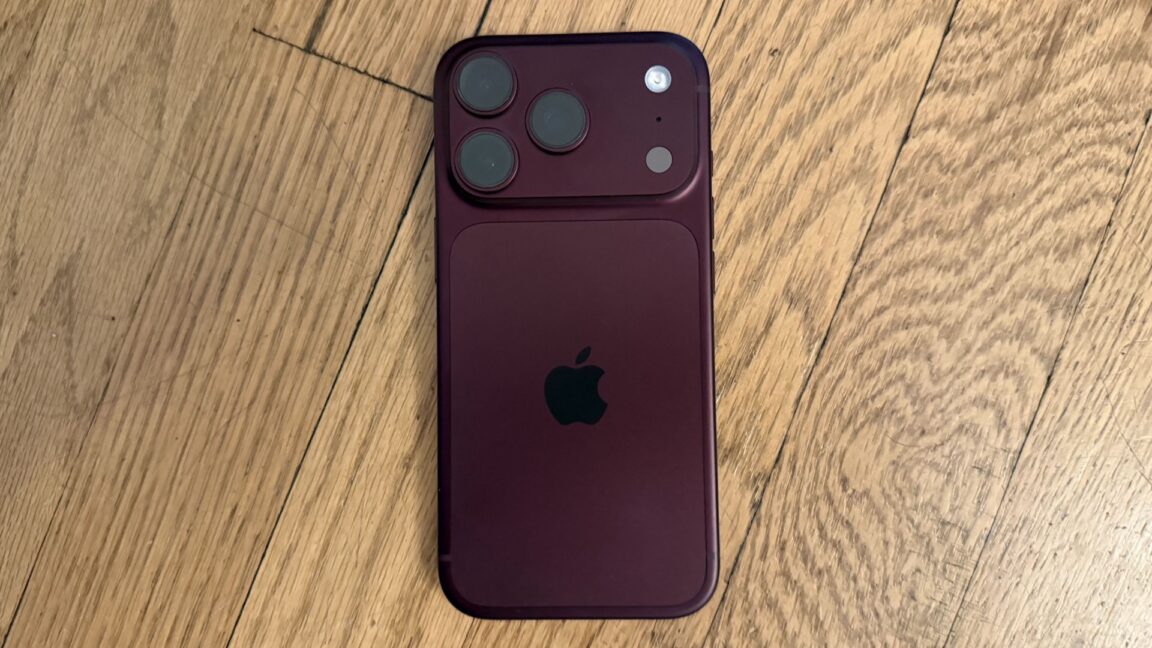
The iPhone 18 Pro mostly looks and feels like last year's flagship. It's a function-over-form design (at least compared to something like the iPhone Air) with good materials.
I'm not normally one to care too much about color in these phones. For my personal phone, I've always just grabbed whatever was closest to black. (Apple says this year's black is the blackest yet, of course.) But I have to admit the new burgundy color of my review unit is appealing, even though it's quite the fingerprint magnet, in a long tradition for iPhones.
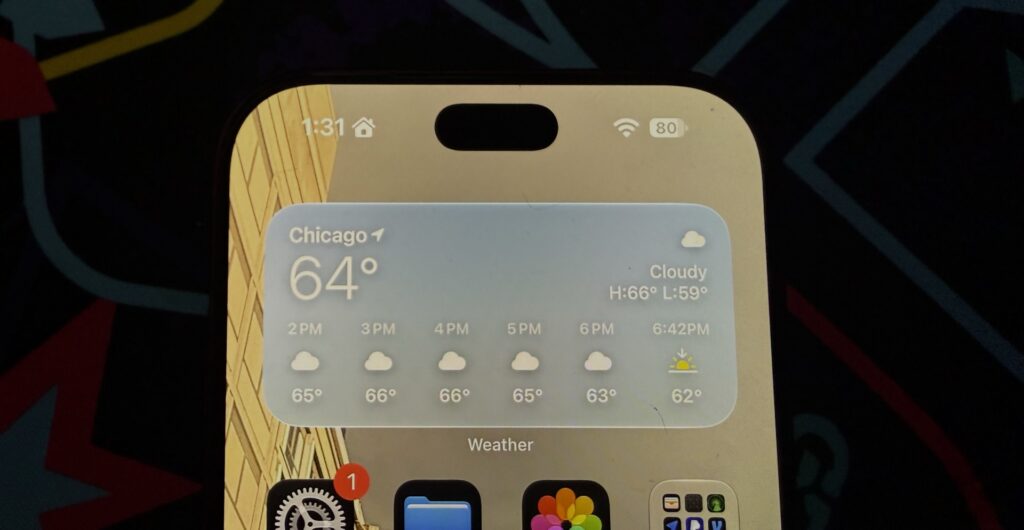
The main design difference this time around is a smaller Dynamic Island, that cut-out at the top of the screen that houses the front-facing camera and sensors. Apple has achieved this by moving the IR camera underneath the OLED panel, now in the top-left corner of the screen.
A new pixel arrangement allows infrared light to pass through in that spot, while the pixels in this region operate at twice the brightness to compensate for lower density, so there's little visible effect on the image on the display. You can tell there's something subtly going on in that corner if you know what to look for and look closely, but I don't think most people will notice.
As I wrote when the Dynamic Island was first introduced, the way Apple combines the per-pixel brightness and absolute blacks of the OLED panel with creative software to turn what should be something of an albatross—a big, chunky hole in the screen—into an appealing feature by displaying live activities and other information around the sensors is one of the company's more impressive design ideas in recent years. The execution is excellent and remains so.
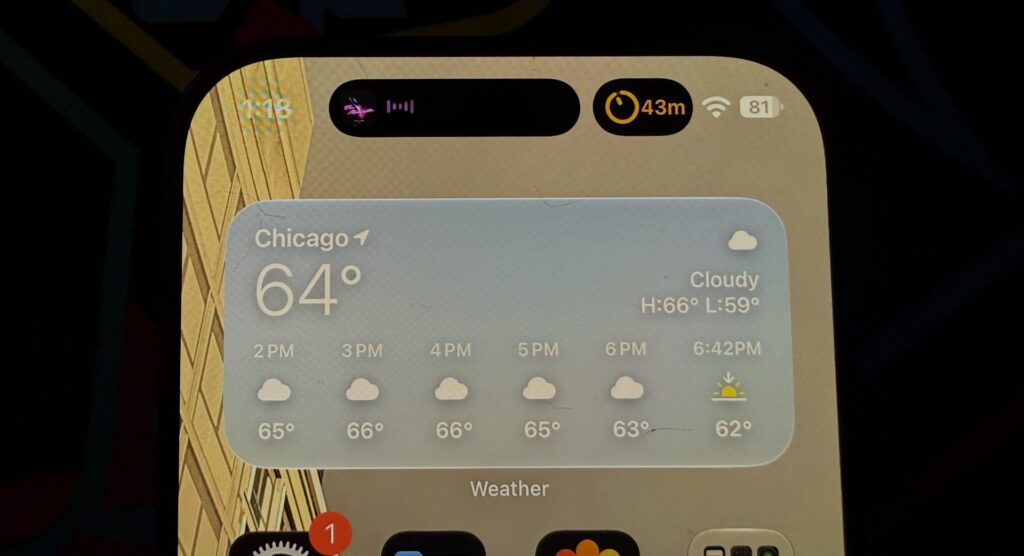
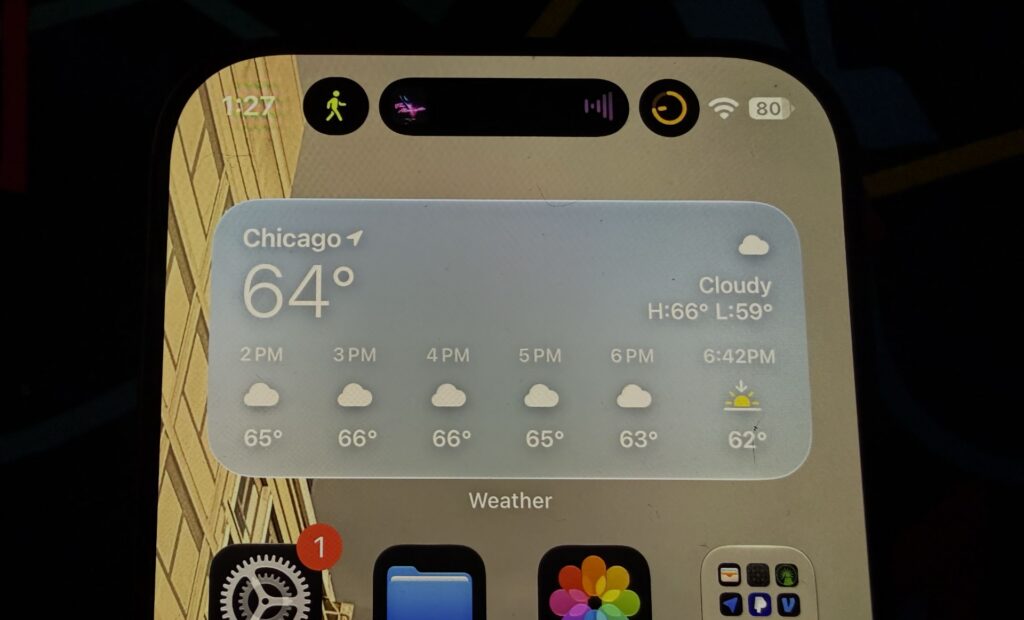
Now, that hole is less big and chunky, making it sensible for Apple to now show up to three live activities at once in the region, not just one. The middle one has more information, while those on the left and right are basically dots with just enough to tell you something useful.
The smaller Dynamic Island on the iPhone 18 Pro.
Credit:
Samuel Axon
In this shot of two Live Activities on the new Dynamic Island, I've lowered the exposure so you can subtly see the distortion where the IR sensor is in the top-left. It's much harder to see with the naked eye.
Credit:
Samuel Axon
And here are three Live Activities at once, which wasn't possible on prior iPhones.
Credit:
Samuel Axon
It's also now possible to show more information on a second live activity when there are just two being displayed; I found this even more appealing than showing three live activities.
This isn't enough of a reason to upgrade from an earlier Dynamic Island phone, of course, but it has made a good feature a little bit better.
Performance and thermals
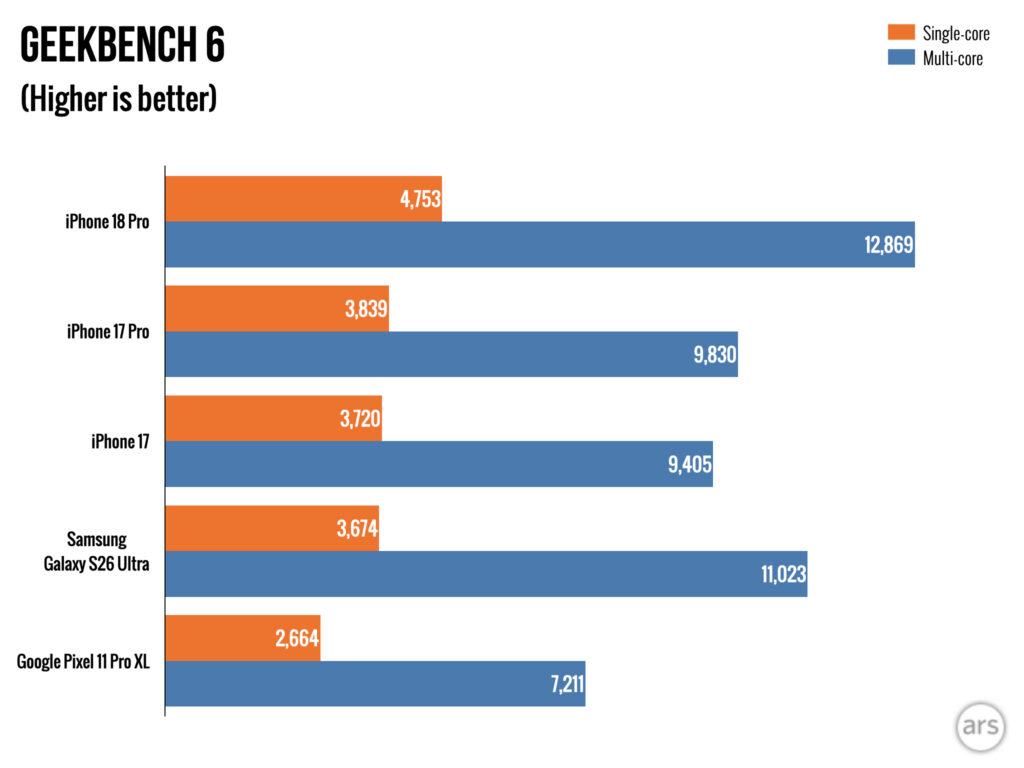
Let's talk specs, performance, and the main story with this phone—heat management. For most specs, this is last year's iPhone 17 Pro. But the A20 Pro chip has some improvements that make this one of the more notable performance steps in a while.
A20 Pro
First up is the new A20 Pro chip. Apple has gone from a 3-nanometer process node in the A19 Pro to 2 nm here. It has a 6-core CPU with four efficiency cores and two performance cores—nothing new there. The GPU has seven cores, each with a Neural Accelerator that Apple says helps improve GPU-based AI workloads. (There's hardware-accelerated ray-tracing support, too, though few games or apps utilize it.)
Also for local AI features (which are a big emphasis for this year's iOS 27), there's the dual 16-core Neural Engine.
Apple also says the A20 Pro has "the widest memory interface ever shipped in an iPhone" (naturally) with 50 percent more bandwidth. Based on what Apple has said so far about it, that seems to be mainly to improve AI performance. I'm speculating here, but given that Apple Intelligence and Siri AI features work fine on other recent iPhones, I imagine that's a bit of padding to enable support for future AI features that won't work on the 16 Pro or 17 Pro.
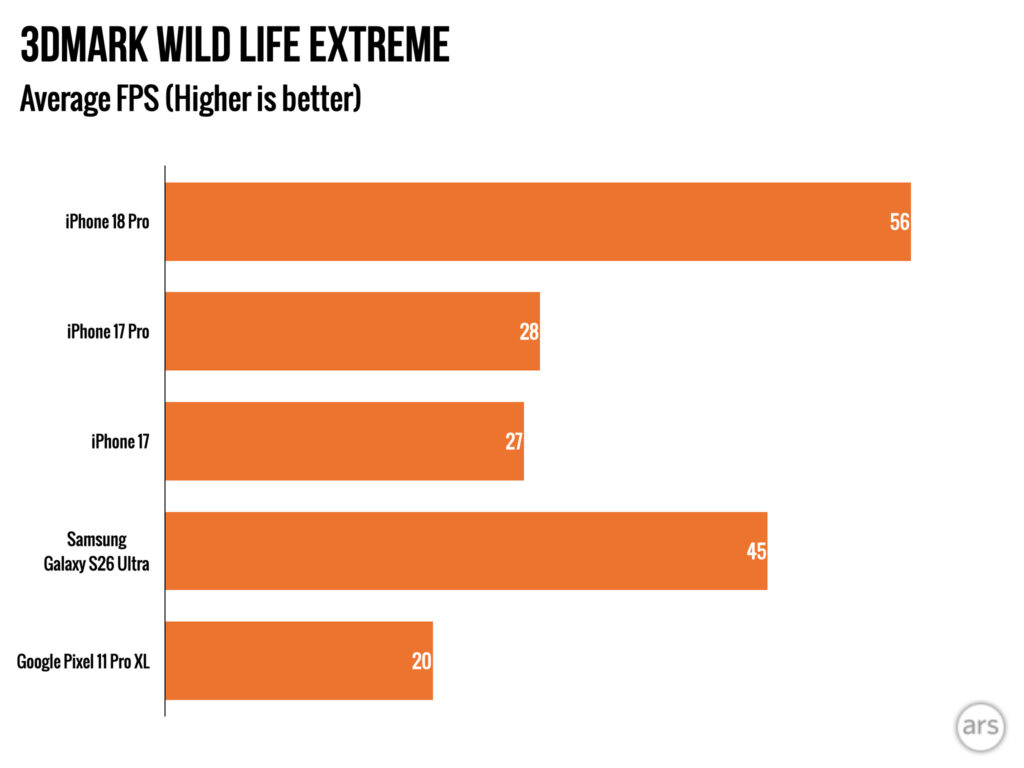
Unsurprisingly, and as the 3DMark benchmark chart below shows, that could make a big difference in graphics performance, too. It's not like many people were complaining about the 17 Pro's frame rates in Genshin Impact or Diablo Immortal, but hey, they definitely won't be now.
Improved heat management
The chip has been re-architected in a couple of ways. New chip packaging promises improved heat management, thanks in part to a design that puts the system-on-a-chip next to the memory instead of stacked on top of it.
The most notable improvement is arguably a larger vapor chamber. Last year's iPhone 17 Pro introduced the vapor chamber as an additional cooling measure, meant to help the phone sustain good performance for longer and distribute heat more sensibly. A copper material on the display plate helps keep the display cooler, too.
Apple promises up to 40 percent better sustained performance compared to last year's Pro and up to 100 percent better than the iPhone 16 Pro before that. That's neat, but sustained performance wasn't a big problem for most users before. The main benefit is that the phone feels cooler and is less likely to overheat.
In my view, the better thermals are the most welcome addition to the iPhone 18 Pro. Many of us who have tried to use our phone as a GPS on the car dashboard on a hot summer day know the frustration of features shutting down when the phone goes into crisis heat-management mode. And even in normal use, like during online gaming or web browsing while streaming video, iPhones from a couple of years ago or earlier tended to get quite hot.
It's been quite cool and overcast in Chicago this week—fall is here at last—so I haven't been able to test the former of those extreme cases, but I've used the phone enough to be able to report that there is noticeable improvement in the more day-to-day scenarios. It still gets warm in some situations, like when I read the 3DMark benchmarks, but most of the time, it subjectively seems better than a couple of generations ago.
It's normally hard to notice the absence of a problem, but my own iPhone 16 Pro has gotten hot frequently enough over the past couple of years that the contrast has been real and felt.
We'll leave the camera specs to the cameras section of the review, but there are a couple of other spec changes worth noting.
A beefy battery (and other updates)
First off, there are further battery life improvements. Apple has long used offline video playback as one of its measures, and it says the iPhone 18 Pro can offer up to 36 hours of that on a single charge, compared to 33 for its predecessor. (It's up to 45 for the 18 Pro Max and 39 for the 17 Pro Max.)
Subjectively, I'm impressed by the battery performance. My personal daily driver is an iPhone 16 Pro Max, which is currently sitting at 86 percent maximum capacity per Apple's battery health panel in the Settings app.
I have no complaints; I charge it for about an hour in the morning, then do whatever I want with it (other than maybe intensive 3D gaming) with the brightness cranked up until the next morning, when I charge again.
I noticed the iPhone 18 Pro showing higher percentages when I wake up in the morning than my 16 Pro Max with similar use, which is impressive for a smaller phone—even though my 160 Pro Max's battery has aged a bit.
In terms of other additions, Apple has put its proprietary C2 cellular modem in the 18 Pro, which uses less energy than the Qualcomm modem in the 17 Pro, so that's part of the battery life story here, too.
And if you're inclined to charge wirelessly rather than with a USB-C cable, the iPhone 18 Pro has wireless charging at up to 25 W.
Cameras
If you've read my iPhone reviews before, you may recall that I am not a photography geek. This is not the review to read if you want a deep dive on optics or how well this thing will work in a professional photo shoot. (I'll leave it to more skilled and knowledgeable people to assess the phone from that perspective, as there are already many such reviews out there.)
I'm a point-and-shooter. Thanks to both new hardware features and developments in computational photography, that's actually where some of the more interesting and fastest-moving developments have been happening in the iPhone and its Android competitors over the past few years.
Sure, the iPhone 18 Pro is "pro" in the sense that it will be used by content creators and others who approach snapping photos or capturing videos far more seriously and creatively than I do. But really, it's the phone that sometimes lets non-pros like me produce quasi-pro-looking images despite ourselves.
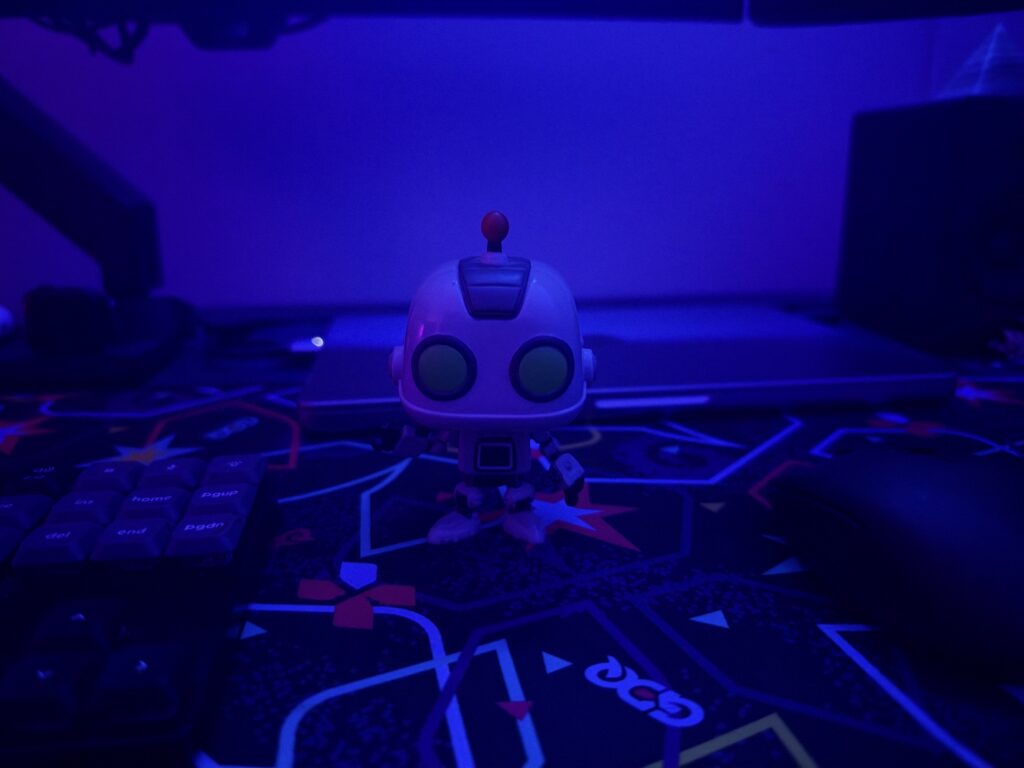
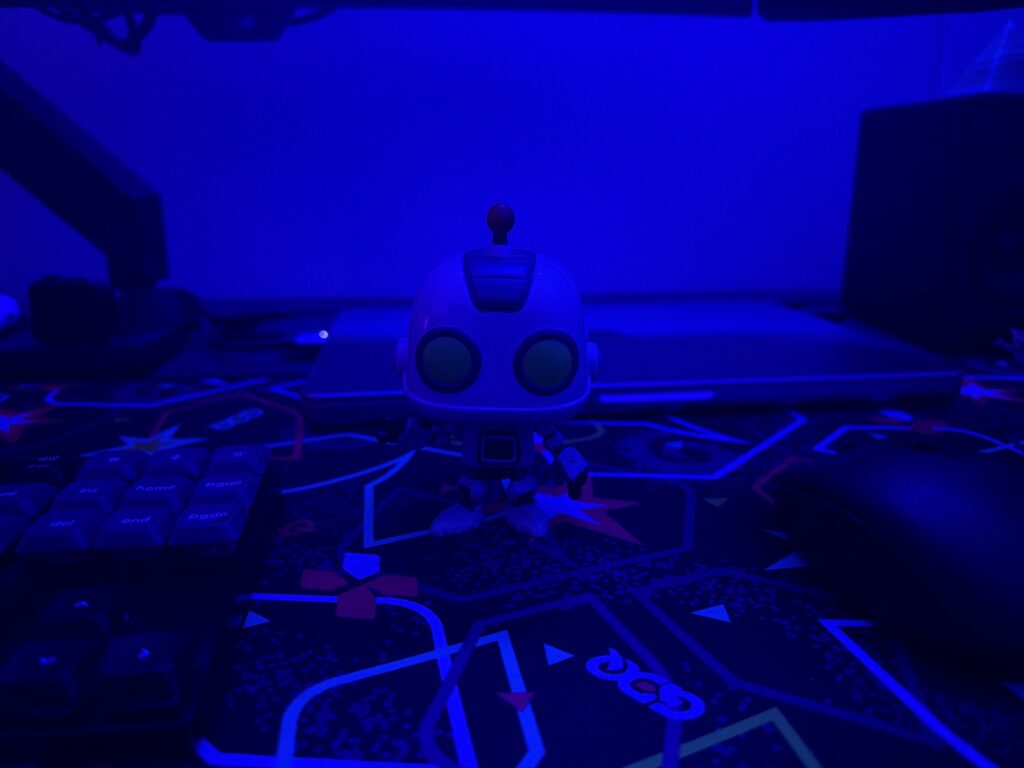
Take the new variable aperture feature, which got the most fanfare when this handset was announced. The ability to tweak this setting manually is a niche proposal, really; many people will rarely, if ever, touch it. That said, it adjusts automatically based on what's in the scene by default, so in many cases, even folks like me will get slightly better photos.
Taken with the iPhone 18 Pro at f/1.48.
Credit:
Samuel Axon
Taken with the iPhone 18 Pro at f/1.8.
Credit:
Samuel Axon
Taken with the iPhone 18 Pro at f/2.8.
Credit:
Samuel Axon
Taken with the iPhone 18 Pro at f/4.
Credit:
Samuel Axon
There's also Photographic Styles 3, the latest generation of Apple's set of non-destructive presets for the general appearance and vibe of the photos you're taking. Think Instagram filters, but less blunt force. Previously, Photographic Styles were basically just color balance settings, but Photographic Styles 3 allows for texture tweaks, too.
This includes four texture options: film, glow, soft skin, and standard. These options—especially the film one—allow the iPhone's built-in Camera app to compete with some third-party apps that try to give photos warmer, more film-like looks. I won't say it's enough to make everyone drop those alternatives, but it's good to have more options for those who are loyal to the main app.
Apart from these and a few other minor tweaks, it's the same triple-48 MP rear camera system that we reviewed in last year's iPhone 17 Pro, paired with the same front-facing 18 MP camera.
With the variable aperture and the other custom camera controls that are now accessible in the built-in Camera app (all the others are available on other recent iPhones), Apple has finally done plenty to address long-standing complaints that iPhone cameras were a little too opinionated for some users' tastes.
Yes, these new features enable better point-and-shoot photos in some narrow situations, but user control seems to be the main pitch for the cameras this year.
For those who just want a good phone
This was Tim Cook's last year as Apple's CEO, and the iPhone 18 Pro is the quintessential iPhone of the Cook era: practical, pricey, loaded with features to cover ever more niche edge cases, and not especially bold in its design or ambitions—all to a high standard of quality.
This is the formula that has made it the world's most popular flagship smartphone. There's nothing wrong with that formula. Its recent predecessors were all great phones, and this one is, too.
But we all know the era of buying a new smartphone every year or two to enjoy amazing new features has passed. (Which is also great, by the way—for our pocketbooks, for the environment, for a whole bunch of reasons.) If you have an iPhone 17 Pro, there's little reason to upgrade. Yes, we're seeing some notable performance improvement year over year here, but I don't think too many of us were complaining about the A17 Pro's performance to begin with.
My daily driver is an iPhone 16 Pro, and I won't be pulling the trigger this year, either. In fact, I think you're still in great shape with your iPhone 15 Pro, if that's what you have, provided your battery is still holding up.
Go further back than that, though, and all these little things start to accumulate into something enticing. That's where we're at, and that's where we've been for a while now.
I wouldn't go so far as to say the modern flagship smartphone is perfect in all respects; Apple and its competitors still find small ways to refine it and up the ante for specific types of users year after year, and I expect that to continue. And last year's base iPhone 17 is still more than good enough for almost everybody.
But after almost two decades of competition and iteration, it's at least directionally perfect. The basics are all here, and they don't need to change. I wish the price hadn't risen, but I suppose that's the reality we live in right now.
If you want something new and flashy to impress your friends or to satisfy your brain with a novel experience, hold out for the iPhone Duo next month or venture into the slightly more energetic Android market. But if you just want a good phone that leverages all the latest technological progress without overdoing it for attention or progress' sake, the iPhone Pro line is a good fit.
The good
Greatly improved thermal management has added up over two generations
Ditto for battery life
Very strong graphics and AI performance
New custom camera controls and photographic styles help you get (a little bit) out of the typical Apple-processed look
The bad
Some might find it a little heavy
This isn't really a bad thing, but there's not much here to excite you or to inspire an upgrade if you already own a recent iPhone
Oscar-winning documentary filmmaker Alex Gibney has never been one to shy away from controversy. His latest feature, Musk, has stirred up plenty even before its release, drawing the ire of its subject, Elon Musk, and threats of a defamation lawsuit. After the film debuted two weeks ago at the Venice International Film Festival, rumors swirled that Universal Pictures was getting cold feet about theatrically releasing the film in international markets.
Those rumors appear to be unfounded (at least for now). And Musk is still on track for a US theatrical release, thanks to the folks at domestic distributor Bleecker Street Media, which released the official trailer today.
Gibney has been making documentaries since the 1980s, covering such varied subjects as Jimi Hendrix, Hunter S. Thompson and gonzo journalism, WikiLeaks, Scientology, Steve Jobs, Elizabeth Holmes (the subject of another forthcoming documentary, You Can See Everything, featuring comedian Nathan Fielder), Boris Becker, The Sopranos creator David Chase, alleged Russian interference in the US 2016 presidential election, the opioid epidemic, and cyclist Lance Armstrong. He snagged his first Oscar nomination for 2005's Enron: The Smartest Guys in the Room, and won the Oscar for Best Documentary Feature two years later for Taxi to the Dark Side.
While Musk has attacked the film as a "hit piece" and a "psy op," it's been critically well-received thus far, despite a daunting run time of 3 hours and 45 minutes. Per Gibney, Musk declined to be interviewed for the film, so the director created an AI version of Musk uttering verbatim public quotes as a stand-in for a real interview. That, too, is likely to draw some controversy.
The trailer includes a few well-known incidents: Tesla and the fatalities linked to its driver-assistance systems, SpaceX, his purchase of Twitter, DOGE, and his 14 (possibly more) children, among others. Those interviewed include ex-wife Justine Musk, tech journalists Kara Swisher and Zoe Schiffer, engineers Martin Eberhard and Geoffrey Hinton, and former MAGA influencer Ashley St. Clair, who also bore a child by Musk. I spotted Cory Doctorow and physicist Adam Becker in the trailer. David Byrne co-wrote and performs an original song, "Let Me Sell You a Dream," incorporating more of Musk's words.
Musk is slated for theatrical release in the US on October 9. Per Deadline Hollywood, Universal has confirmed that it is lining up an international release schedule for the first quarter of 2027, which is also when it's slated to start streaming on HBO.
 Log in




 The 2026 jobs market looks incredibly normal for recent graduates.
Credit:
The 2026 jobs market looks incredibly normal for recent graduates.
Credit: