17837 stories
·
173 followers

The Vera C. Rubin Observatory has Discovered 11,000 New Asteroids, and It's Barely Even Started!

1 Share

A model of the inner Solar System showing the asteroids discovered by Rubin in light teal. Known asteroids are dark blue. Credit: NSF–DOE Vera C. Rubin Observatory/NSF NOIRLab/SLAC/AURA/R/NASA/Goddard/ESA/Gaia/DPAC

Rubin’s largest asteroid haul yet, gathered before the Legacy Survey of Space and Time even begins, is just the “tip of the iceberg”

Read the whole story
fxer
1 hour ago
reply
Bend, Oregon
Share this story
Delete

Israel escalates attacks on medics in Lebanon with deadly ‘quadruple tap’

2 Shares

When they received the call to respond to an Israeli airstrike in the city of Mayfadoun, in southern Lebanon, most of the paramedics held back, having previously seen colleagues killed by double-tap attacks targeting rescuers. But the medics from the Islamic Health Association (IHA) rushed to the scene.

By the time the other emergency workers arrived at the site, they found the IHA medics had indeed been caught in a second strike. They started evacuating their wounded colleagues, only for their ambulances to be hit in two further attacks.

One of the paramedics covered his ears and screamed, convulsing in pain as shrapnel shattered the back window of the ambulance.

The rescue mission on Wednesday afternoon had turned into a nightmare as Israel carried out three consecutive strikes on three sets of ambulances and medical workers.

A man carries the blood-stained jacket of a paramedic killed in Mayfadoun, during his funeral procession on Thursday. Photograph: Mahmoud Zayyat/AFP/Getty Images

In total, the attacks killed four medics and wounded six more, from three different ambulance corps, according to medical sources. Three of the medics were from the Hezbollah-affiliated IHA and Amal-affiliated medical corps, while one was from the Nabatieh emergency services organisation. Under international law, all medics are protected and are considered non-combatants, regardless of political affiliation.

Rescuers in Lebanon have long been wary of the double-tap attack, when Israeli forces target a location, wait until people gather to help survivors, and then strike again. Wednesday’s three-wave attack after the initial one prompted the coining of a fearsome new term: the quadruple tap.

In a video taken by one of the paramedics at the site, rescuers are seen loading two wounded people into their ambulances when a bomb lands next to their vehicle. Paramedics rush to extract the driver, who is motionless and limp as they pull him from the ambulance, which is splashed with blood. “Oh God, oh God,” the man filming can be heard saying. They carry two more blood-covered medics out of their vehicle and on to stretchers.

Among the paramedics killed was Fadel Sarhan, 43, who is survived by his eight-year-old daughter.

The Lebanese health worker Fadel Sarhan was killed in the Israeli ‘quadruple tap’ attack. Photograph: Social media

“Fadel was a very loved person. He had a bold personality, but at the same time, he was emotional. He was well liked and responsible,” said Ali Nasr al-Deen, the head of the Mayfadoun civil defence centre who grew up with Sarhan.

“He used to feed the cats and dogs. He would bring pet food from Beirut so they wouldn’t go hungry. He was that kind of person, caring and attentive. It’s a huge loss for us,” said Nasr al-Deen.

Medics mourned their colleagues on Thursday at funerals in Nabatieh, a city near Mayfadoun. Such events have become increasingly common, with healthcare workers killed by Israeli bombings on a near daily basis.

Mohammed Suleiman, whose 16-year-old son, Joud, was killed while on duty as a paramedic by an Israeli strike weeks earlier, joined his peers in burying another of his friends on Thursday. A few hours after the funerals, Israel carried out another wave of airstrikes on Nabatieh.

Mourners attending the funeral of Fadel Sarhan in Haret Saida, southern Lebanon, on Thursday. Photograph: EPA

Israel has so far killed 91 healthcare workers and wounded 214 more in Lebanon since the Israel-Hezbollah war started on 2 March. It has given little justification for its repeated attacks on medical infrastructure and workers, apart from accusing Hezbollah of using ambulances and hospitals to transport fighters and weapons, without providing evidence for the claim.

The Lebanese ministry of health accused Israel of deliberately targeting ambulance crews. “Paramedics have become direct targets, pursued relentlessly in a blatant violation that confirms a total disregard for all norms and principles established by international humanitarian law,” the ministry said in a statement.

The Israeli military did not immediately respond to a request for comment.

In the video taken of the quadruple tap on Wednesday, the frame was frozen on the interior of the ambulances, as the Nabatieh emergency services highlighted that the vehicle clearly contained no weapons.

A few hours after Israel hit the ambulances outside Nabatieh, it bombed the vicinity of the governmental hospital in Tebnine, south Lebanon. It was the second time in two days that Israeli bombings damaged the healthcare facility, which is the only remaining public hospital in the area. The strikes injured 11 hospital workers and damaging the emergency department, according to the World Health Organization (WHO).

A video of Tebnine hospital from 14 April showed workers trying to clear shattered concrete and debris from the emergency department after a strike blew in the windows.

Commenting on the strike in Tebnine, the head of the WHO, Tedros Adhanom Ghebreyesus, said: “I reiterate the call for the immediate protection of healthcare facilities, health workers, ambulances and patients. There must be safe, sustained and unhindered humanitarian access across Lebanon.”

An ambulance in Tebnine was also struck on Thursday, leading to the critical injury of two medics, according to the Lebanese ministry of health. As healthcare workers watched their colleagues and friends being killed by Israel, the mental toll was becoming almost too much to bear.

“We have to go to places to rescue people, but then we get double tapped,” said Abbas Atwi, the head of the IHA’s emergency department in Nabatieh, shortly after a medical centre was targeted in March, killing his friends and colleagues. “But we will stay and keep going, we will not leave.”

Read the whole story
fxer
1 hour ago
reply
Bend, Oregon
acdha
2 days ago
reply
Washington, DC
Share this story
Delete

A rare event to capture on video: an underwater volcanic...

1 Comment and 3 Shares

A rare event to capture on video: an underwater volcanic eruption in the Solomon Islands.

Read the whole story
fxer
1 hour ago
reply
Bend, Oregon
Share this story
Delete
1 public comment
cjheinz
4 days ago
reply
wow!
Lexington, KY; Naples, FL

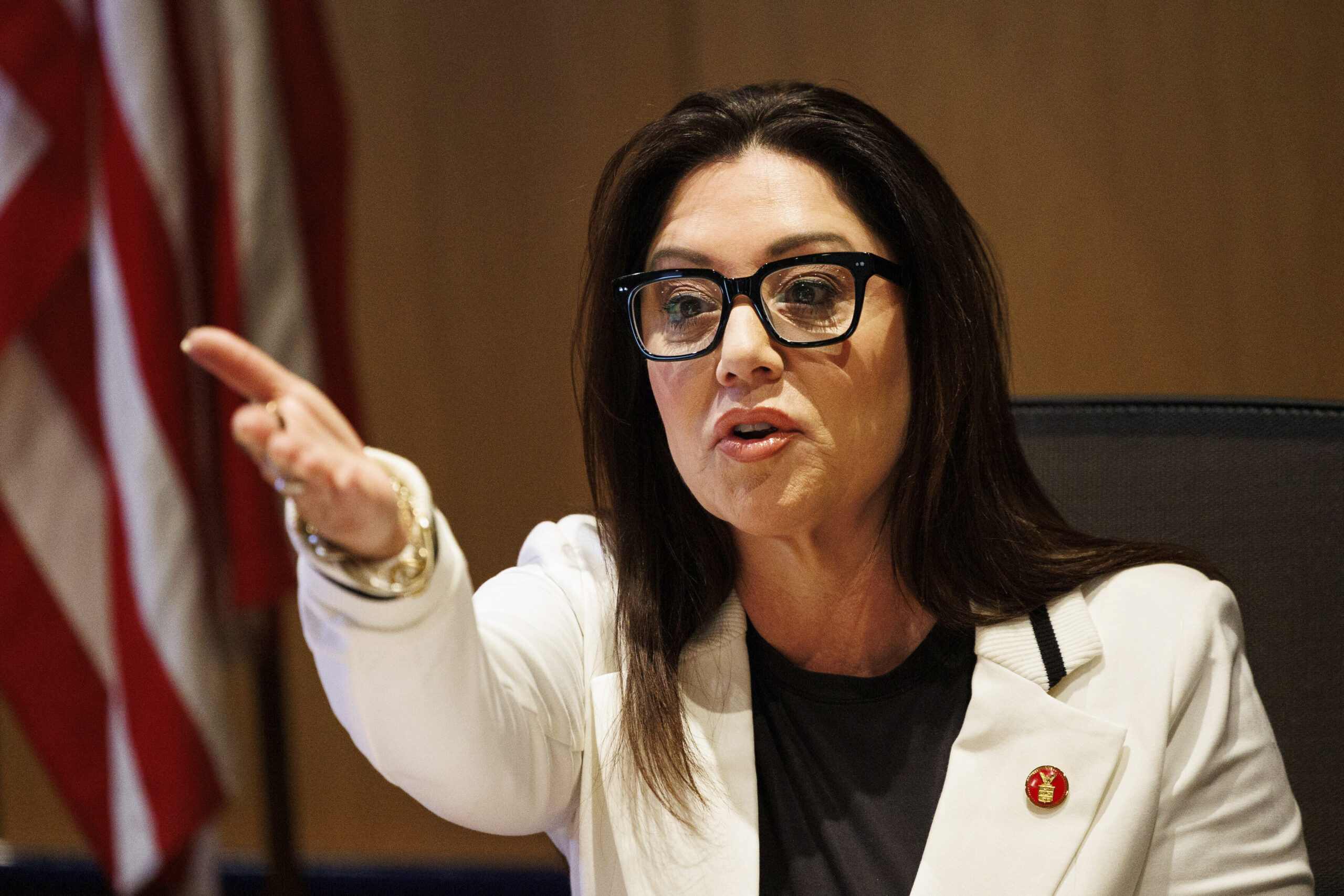
Lori Chavez-DeRemer Reportedly Asked Staff to Bring Her Wine

1 Comment and 2 Shares

Nikos Frazier/Omaha World-Herald via AP

Labor Secretary Lori Chavez-DeRemer, top department officials, and even members of her family regularly sent text messages to young staffers to ask for favors, according to a review by the Labor inspector general’s office.

On Wednesday, The New York Times published yet another unflattering account of Chavez-DeRemer’s tenure at the department, which has been marred by reports of bizarre personal and professional faux pas, including potential ethics violations.

In one exchange from April 2025, DeRemer’s father, Richard Chavez, texted a young female staffer, “Hearing u/r in town. Wishing you would let me know. I could have made some excuses to get out and show u around. Please keep this private.”

The staffer apologized for not apprising the secretary’s father of her travel plans, and replied, “Will do, no need to worry!”

“When are u leaving an where u staying,” Chavez responded.

Weeks later, the same staffer texted the secretary’s husband, Dr. Shawn DeRemer, an anesthesiologist, and also apologized for not reaching out to him.

“I’ve been having so much fun traveling with LCD and being in the moment for everything!! I promise from now on I’ll check in,” she wrote.

“You better. I was feeling forgotten. I figured you were still in church repenting after your exposure to the demon state of Oregon,” DeRemer responded.

In February, DeRemer was banned from the Department of Labor after at least two female employees said he touched them inappropriately. The incidents were reportedly recorded by security cameras. The secretary’s husband has no role in the department. The allegations were made public a month after Chavez-DeRemer was reported to have taken subordinates to a strip club.

The Labor Department’s inspector general is also reviewing allegations that the secretary and aides drank on the job. The Times report published on Wednesday said text messages show Chavez-DeRemer, who reportedly keeps a liquor stash in her office, asking a staffer to bring wine to her hotel room:

In one text message, Ms. Chavez-DeRemer asked a staff member to bring rosé to her hotel room.

“Do they sell by the bottle,” she asked. The staff member responded that they did, but were out of rosé. Ms. Chavez-DeRemer responded with another selection: “How about the josh sauvi B.”

The messages are undated, but a picture of the menu in the text message exchange suggests it is from a hotel bar in Myrtle Beach, S.C., where Ms. Chavez-DeRemer went on an official visit last July.

The reference to “josh sauvi b” appears to be a reference to Josh Cellars Sauvignon Blanc.

The secretary and her husband did not respond to the Times for comment.

New: The Mediaite One-Sheet "Newsletter of Newsletters"
Your daily summary and analysis of what the many, many media newsletters are saying and reporting. Subscribe now!

Read the whole story
fxer
2 hours ago
reply
Unfortunately she was my congresswoman, but luckily she's an assclown and lost her next election. Then Trump picked her up off the scrap heap...
Bend, Oregon
acdha
1 day ago
reply
Washington, DC
Share this story
Delete

Traders placed over $1bn in perfectly timed bets on the Iran war. What is going on? | US-Israel war on Iran | The Guardian

1 Comment and 2 Shares

Sixteen bets made $100,000 each accurately predicting the timing of the US airstrikes against Iran on 27 February. Later, a single user would make over $550,000 after betting that Ayatollah Ali Khamenei would topple, just moments before his assassination by Israeli forces. On 7 April, right before Donald Trump announced a temporary ceasefire with Iran, traders bet $950m that oil prices would come down. They did.

These bets and other well-timed wagers accurately predicted the precise timing of major developments in the US-Israel war with Iran, creating huge windfalls and raising concerns among lawmakers and experts over potential insider trading.

Betting – once largely siloed to sporting events – has now spread to include contracts on news events where insider information could give some traders an advantage.

The proliferation of online betting markets like Polymarket and Kalshi has allowed bets on virtually any news event. It’s also easier than ever to buy commodity derivatives like oil futures, where traders gamble on what the price of oil will be in the future.

Leaders of some US federal agencies and some members of Congress said they want to crack down on suspicious trading taking place across different marketplaces, but it’s unclear how much headway regulators will make.

“Is the problem that we don’t have legislation or that we don’t have enforcement capabilities?” said Joshua Mitts, a law professor at Columbia University. “To have a law that can’t really be enforced effectively given the technological limitations, it’s sort of putting the cart before the horse.”

Perfect timing

On the night of 27 February, the day before the US and Israel would carry out strikes on Iran, an unusual influx of about 150 accounts on Polymarket placed bets that the US would strike Iran the next day. A New York Times analysis found the bets totaled $855,000, with 16 accounts pocketing more than $100,000 each.

Soon after, a single anonymous Polymarket user, under an account named “Magamyman”, made over $553,000 after betting that Khamenei would be “removed” from power just moments before he was killed by an Israeli airstrike, according to a complaint filed to the Commodity Futures Trading Commission (CFTC), the federal agency that regulates futures markets, by Public Citizen, a consumer advocacy group. The complaint also cites a crypto-analytics firm that identified six “suspected insiders” who made a total of $1.2m on Polymarket after Khamenei was killed.

The well-timed surge of wagers were seen again on 7 April, when at least 50 Polymarket accounts placed bets that the US and Iran would reach a ceasefire hours before Trump would announce it in a Truth Social post. Earlier, the president had said “a whole civilization will die tonight” if Iran did not open the strait of Hormuz.

But traders weren’t just active on Polymarket: there were similar surges of oil futures trading activity just hours before Trump announced updates to the conflict that would lower oil prices.

On 23 March, traders placed $580m in bets on the oil futures market just 15 minutes before Trump said on social media that the US was having “productive” talks with Iran, according to the Financial Times. The traders made a windfall after Trump’s comments triggered a sell-off in the oil markets that made oil prices plummet.

The same thing happened again on 7 April, this time when traders spent $950m on oil futures, betting that the price of oil would fall just hours before the ceasefire with Iran was announced.

“We can’t say from the outset whether any of these trades were illegal. Any one of them could be lucky, and any one of them could be based on lawful information,” said Andrew Verstein, a law professor at the University of California at Los Angeles. “But many of them bear the hallmarks of suspicious trades that would naturally warrant investigation.”

‘A wild west’

For those who closely follow trading patterns, the rush of activity that happened before these events seem too big to simply be bets hedging on luck.

“Not only the timing, but the amount of these bets makes it look very likely that someone had insider knowledge … and placed very, very substantial bets on it,” said Craig Holman, a government affairs lobbyist for Public Citizen who filed the group’s complaint to the CFTC.

Holman said he is skeptical about how bold the CFTC will be in its investigations given its current structure under the Trump administration. The commission typically has five bipartisan members that are appointed by the president. Now, the CFTC has only one commissioner: Michael Selig, whom Trump appointed at the end of 2025 and who has positioned himself as friendly toward prediction markets.

Over the last few months, the CFTC has been roiled in fights with state legislatures who argue that regulation of these online betting marketplaces belongs to the states.

Kalshi, Polymarket’s competitor, was temporarily banned in Nevada after the state sued the company for offering contacts in the state without a gambling license. Arizona meanwhile filed criminal charges against the company for allowing people to place bets on elections. In both cases, Kalshi denied any wrongdoing and has argued that the CFTC has exclusive jurisdiction over online prediction markets.

“It’s a wild west phase, when we’re talking about the prediction market industry, and now it’s spilled over into the stock market as well,” Holman said.

Anonymous sources told Reuters and Bloomberg that the CFTC launched an investigation into the oil futures trades that were placed on 27 March and 7 April, though the agency has not publicly announced it is conducting an investigation.

Speaking to Congress this week, Selig said that the agency is prepared to go after those who are suspected of insider trading, warning “we will find you and you will face the full force of the law”, but said that the commission would not issue any new regulations until it had five seated commissioners.

Polymarket did not respond to request for comment. In a statement, White House spokesperson Davis Ingle said “federal employees are subject to government ethics guidelines that prohibit the use of nonpublic information for financial benefit”.

“Any implication that administration officials are engaged in such activity without evidence is baseless and irresponsible reporting,” Ingle said. “The CFTC will always uphold its duty to monitor fraud, manipulation and illicit activity daily.”

Risky bets

Federal law prohibits government employees, including those working for Congress or the White House, from using non-public information for personal profit.

In late March, a bipartisan group of representatives introduced a bill that would ban members of Congress and senior staff within the federal government from participating in prediction market contracts related to political events or policy decisions.

But experts warn that insider trading law is complicated, and the new technology that makes it easier to place bets online leaves a complicated paper trail that can be hard to follow.

Historically, insider trading takes place when a person uses exclusive information about a company to buy or sell stocks right before information becomes public. These types of illegal trades are regulated by the Securities and Exchange Commission (SEC), which regulates the stock exchanges.

Insider futures trading could be seen as a subset of this typical insider trading, but the territory is new.

“The trick is that there are essentially no clean cases of people getting in trouble for commodity futures insider trading,” Verstein said. “The law there is just not well-developed.”

In a paper published last month, Mitts, the Columbia law professor, and other researchers screened more than 200,000 “suspicious wallet-market pairs” from February 2024 to February 2026 and found that traders in this group achieved a nearly 70% win rate, making $143m in well-timed bets tied to everything from the capture of former Venezuelan leader Nicolás Maduro to Taylor Swift’s engagement to Travis Kelce. The paper notes that informed traders face fewer legal constraints by trading on platforms like Polymarket or Kalshi because these markets still operate in a legal gray area.

“The challenge here is that this trading is occurring through the blockchain or other anonymized means, so it is going to be quite difficult for a regulator enforcement authority or prosecutor to determine the identity of the trader,” Mitts said. “They would also have to prove the trader traded on the basis of information that had been wrongly misappropriated.”

But the stakes are high. Insider trading involving classified military information can lead to distrust of both markets and governments.

“Unlike corporate insider trading, there’s a lot of ways for the government to make itself be correct. You can just make the war that would occur, and that’s concerning because then the real economy is being distorted,” Verstein said. “Real decisions, including perhaps financial decisions, are being distorted by financial bets.”

Read the whole story
fxer
2 hours ago
reply
What oh what could be going on
Bend, Oregon
acdha
1 day ago
reply
Washington, DC
Share this story
Delete

Kash Patel’s Erratic Behavior Could Cost Him His Job - The Atlantic

1 Comment and 2 Shares

Kash Patel has alarmed colleagues with episodes of excessive drinking and unexplained absences.

Michael M. Santiago / Getty

On Friday, April 10, as FBI Director Kash Patel was preparing to leave work for the weekend, he struggled to log into an internal computer system. He quickly became convinced that he had been locked out, and he panicked, frantically calling aides and allies to announce that he had been fired by the White House, according to nine people familiar with his outreach. Two of these people described his behavior as a “freak-out.”

Patel oversees an agency that employs roughly 38,000 people, including many who are trained to investigate and verify information that can be presented under oath in a court of law. News of his emotional outburst ricocheted through the bureau, prompting chatter among officials and, in some corners of the building, expressions of relief. The White House fielded calls from the bureau and from members of Congress asking who was now in charge of the FBI.

It turned out that the answer was still Patel. He had not been fired. The access problem, two people familiar with the matter said, appears to have been a technical error, and it was quickly resolved. “It was all ultimately bullshit,” one FBI official told me.

But Patel, according to multiple current officials, as well as former officials who have stayed close to him, is deeply concerned that his job is in jeopardy. He has good reasons to think so—including some having to do with what witnesses described to me as bouts of excessive drinking. My colleague Ashley Parker and I reported earlier this month that Patel was among the officials expected to be fired after Attorney General Pam Bondi’s ouster, on April 2. “We’re all just waiting for the word” that Patel is officially out of the top job, an FBI official told me this week, and a former official told my colleague Jonathan Lemire that Patel was “rightly paranoid.” Senior members of the Trump administration are already discussing who might replace him, according to an administration official and two people close to the White House who were familiar with the conversations.

In response to a detailed list of 19 questions, the White House spokesperson Karoline Leavitt told me in a statement that under Donald Trump and Patel, “crime across the country has plummeted to the lowest level in more than 100 years and many high profile criminals have been put behind bars. Director Patel remains a critical player on the Administration’s law and order team.” Acting Attorney General Todd Blanche told me in a statement, “Patel has accomplished more in 14 months than the previous administration did in four years. Anonymously sourced hit pieces do not constitute journalism.”

The FBI responded with a statement, attributed to Patel: “Print it, all false, I’ll see you in court—bring your checkbook.”

The IT-lockout episode is emblematic of Patel’s tumultuous tenure as director of the FBI: He is erratic, suspicious of others, and prone to jumping to conclusions before he has necessary evidence, according to the more than two dozen people I interviewed about Patel’s conduct, including current and former FBI officials, staff at law-enforcement and intelligence agencies, hospitality-industry workers, members of Congress, political operatives, lobbyists, and former advisers. Speaking on the condition of anonymity to discuss sensitive information and private conversations, they described Patel’s tenure as a management failure and his personal behavior as a national-security vulnerability.

They said that the problems with his conduct go well beyond what has been previously known, and include both conspicuous inebriation and unexplained absences. His behavior has often alarmed officials at the FBI and the Department of Justice, even as he won support from the White House for his eager participation in Trump’s effort to turn federal law enforcement against the president’s perceived political enemies.

Several officials told me that Patel’s drinking has been a recurring source of concern across the government. They said that he is known to drink to the point of obvious intoxication, in many cases at the private club Ned’s in Washington, D.C., while in the presence of White House and other administration staff. He is also known to drink to excess at the Poodle Room, in Las Vegas, where he frequently spends parts of his weekends. Early in his tenure, meetings and briefings had to be rescheduled for later in the day as a result of his alcohol-fueled nights, six current and former officials and others familiar with Patel’s schedule told me.

On multiple occasions in the past year, members of his security detail had difficulty waking Patel because he was seemingly intoxicated, according to information supplied to Justice Department and White House officials. A request for “breaching equipment”—normally used by SWAT and hostage-rescue teams to quickly gain entry into buildings—was made last year because Patel had been unreachable behind locked doors, according to multiple people familiar with the request.

Some of Patel’s colleagues at the FBI worry that his personal behavior has become a threat to public safety. An FBI director is expected to be available and focused on his job—especially when the nation is at war with a state sponsor of terrorism. Current and former officials told me that they have long worried about what would happen in the event of a domestic terrorist attack while Patel is in office, and they said that their apprehension has increased significantly in the weeks since Trump launched his military campaign against Iran. “That’s what keeps me up at night,” one official said.

Patel arrived at the FBI in early 2025 as a deeply polarizing figure. He had risen from being a public defender in Miami to a congressional aide and, ultimately, a national-security official during the first Trump administration. During Patel’s confirmation hearing to be FBI director, the Republican chairman of the Senate Judiciary Committee, Chuck Grassley, expressed optimism that Trump’s nominee would implement much-needed reforms. “He’s the right change agent for the FBI,” the senator said, adding that the bureau was in need of “a big shake-up.”

Under questioning from skeptical Democrats, Patel vowed that “there will be no retributive actions” and that he was not aware of any plans to punish FBI staff who had been part of investigations into Trump. Democrats were not the only ones who were leery of Patel, who had a record of embracing far-fetched conspiracy theories—including the notion that the FBI and its informants had helped instigate the January 6, 2021, attack on the U.S. Capitol to sabotage the MAGA movement. Several Republicans wavered on whether to back him. But a pressure campaign by the White House and its allies ultimately prevailed, and Patel was confirmed by a vote of 51 to 49.

Inside the FBI, which had been wounded by a number of scandals, many hoped that Patel could give the bureau a fresh start. But even many of those who had been enthusiastic about his arrival have since been disappointed. Officials said that Patel has been an irregular presence at FBI headquarters and in field offices, and that he has compounded the agency’s existing bureaucratic bottlenecks. Several current and former officials told me that Patel is often away or unreachable, delaying time-sensitive decisions needed to advance investigations. On several occasions, an official told me, Patel’s delays resulted in normally unflappable agents “losing their shit.”

Patel has also earned a reputation for acting impulsively during high-stakes investigations. He announced triumphantly on social media, for instance, that the FBI had “detained a person of interest” in the Brown University shooting in December. That person was soon released while agents continued to hunt for the killer.

Still, Patel has his fans. The president has been pleased by Patel’s efforts to purge agents who worked on January 6 cases and other probes into Trump. The president has also indicated that he is relatively unbothered by grumblings about Patel from within the FBI, according to White House and other administration officials. That’s not surprising: Patel views many of the bureau’s veterans as anti-Trump “deep state” agents who have worked against him and his followers. But Patel has, on occasion, earned the president’s ire. Trump has complained that the FBI director has seemed unprepared for TV appearances and that some high-profile investigations that he directed Patel to pursue have not moved quickly enough. These include inquiries into former Biden-administration officials and other political opponents.

Patel’s spotty attendance at the office and the eagerness with which he’s embraced the perks and travel that come with the job have also been sources of concern at the White House. Some in the West Wing have followed the headlines about Patel’s use of the FBI jet for personal matters—as well as the whispers about his love of partying—and said that they fear that Trump would react badly were he to focus on those storylines.

DOJ’s ethics handbook states that “an employee is prohibited from habitually using alcohol or other intoxicants to excess.” The department’s inspector general has warned that off-duty alcohol consumption can not only impair employees’ judgment; it can also make them vulnerable to exploitation or coercion by foreign adversaries.

Patel’s drinking is no secret. While on official travel to Italy in February, he was filmed chugging beer with the U.S. men’s Olympic hockey team following their gold-medal victory. The incident prompted the president—who does not drink and whose brother died following a long struggle with alcoholism—to call the FBI director to convey his unhappiness, according to two officials familiar with the call. But officials told me that Patel’s alcohol use goes far beyond the occasional beer. FBI officials and others in the administration have privately questioned whether alcohol played a role in the instances in which he shared inaccurate information about active law-enforcement investigations, including following the murder of Charlie Kirk.

Many of the people who spoke with me said that they have been afraid to reveal their concerns about Patel publicly or through traditional whistleblower channels, because he has been aggressive in cracking down on anyone he deems insufficiently loyal. At Patel’s direction, FBI employees are polygraphed in an effort to identify leakers. One former official told me that bureau employees have been asked in these sessions for opinions about Patel’s perceived “enemies,” as well as whether they have ever said anything disparaging about the director or the president.

Patel has held on to his job in part because of his commitment to using the federal government to target political or personal adversaries of the president. In his 2023 book, Government Gangsters, Patel designated a list of government officials past and present that he alleged were corrupt or disloyal. In an interview that year on Steve Bannon’s podcast, Patel said that he planned to “come after” members of the media for their 2020-election coverage with criminal or civil charges. Patel has led a purge of people who he believes are anti-Trump “conspirators” or “enemies” within the FBI. This has included firing people, opening internal investigations, and pressuring agents to quit when they pushed back—or were perceived to have pushed back—against Patel’s demands or questioned their legality.

Some at the FBI are concerned that Patel’s behavior has left the country more vulnerable. One former senior intelligence official told me that there is a lack of experience at FBI headquarters and that the turnover rate is high in field offices, because of both voluntary departures and Patel-ordered purges. The result is an FBI workforce being asked to accomplish more with fewer resources, and with less direction from the top. “The instinctive level of muscle memory or discernment that is necessary to identify and counter a terror attack is missing,” the former official said. A current official described people inside the bureau feeling besieged and disillusioned—or even angry.

Days before the United States launched its war with Iran, Patel fired members of a counterintelligence squad that was devoted, in part, to Iran. The director said in testimony before Congress that the agents had been let go because their work investigating Trump’s handling of classified documents had placed them in violation of the bureau’s ethics rules. But multiple officials told me that they were concerned that the firings had been rushed and would leave the U.S. shorthanded at a crucial moment.

Patel has publicly proclaimed that the FBI needs to demonstrate that it is “fierce,” and officials I spoke with said that he is fixated on that image in private as well. He recently expressed frustration with the look of FBI merchandise, complaining that it isn’t intimidating enough. Officials have grown accustomed to such behavior, and they have learned to roll their eyes at it. But they said that the absurdity masks real concerns about what Patel’s leadership has meant for an institution that the country relies on for national security and the safety of its citizens. “Part of me is glad he’s wasting his time on bullshit, because it’s less dangerous for rule of law, for the American public,” one official told me, “but it also means we don’t have a real functioning FBI director.”

Jonathan Lemire, Isabel Ruehl, and Marie-Rose Sheinerman contributed reporting.

Read the whole story
fxer
2 days ago
reply
Soooo he forgot his password? And figures being firing would involve his login getting disabled but his badge still granting him access to the building all the way to the directors office?
Bend, Oregon
acdha
2 days ago
reply
Washington, DC
Share this story
Delete
Next Page of Stories