One point in favor of the sprawling Linux ecosystem is its broad hardware support—the kernel officially supports everything from '90s-era PC hardware to Arm-based Apple Silicon chips, thanks to decades of combined effort from hardware manufacturers and motivated community members.
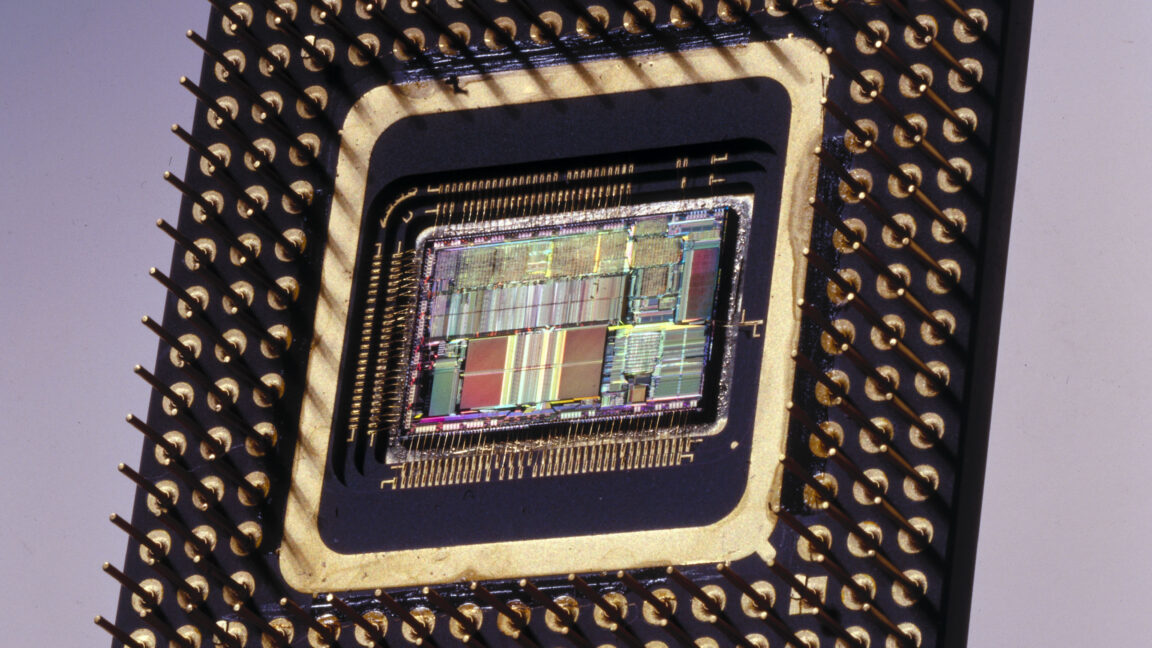
But nothing can last forever, and for a few years now, Linux maintainers (including Linus Torvalds) have been pushing to drop kernel support for Intel's 80486 processor. This chip was originally introduced in 1989, was replaced by the first Intel Pentium in 1993, and was fully discontinued in 2007. Code commits suggest that Linux kernel version 7.1 will be the first to follow through, making it impossible to build a version of the kernel that will support the 486; Phoronix says that additional kernel changes to remove 486-related code will follow in subsequent kernel versions.
Although these chips haven't changed in decades, maintaining support for them in modern software isn't free.
"In the x86 architecture we have various complicated hardware emulation facilities on x86-32 to support ancient 32-bit CPUs that very, very few people are using with modern kernels," writes Linux kernel contributor Ingo Molnar in his initial patch removing 486 support from the kernel. "This compatibility glue is sometimes even causing problems that people spend time to resolve, which time could be spent on other things."
This echoes comments from Linus Torvalds in 2022, suggesting there was "zero real reason for anybody to waste one second of development effort" on 486-related problems. The removal of 486 support would also likely affect a handful of 486-compatible chips from other companies, including the Cyrix 5x86 and the Am5x86 from AMD. Molnar was also a driving force the last time Linux dropped support for an older Intel chip—support for the 80386 processor family was removed in kernel version 3.8 back in early 2013.
"Unfortunately there's a nostalgic cost: your old original 386 DX33 system from early 1991 won't be able to boot modern Linux kernels anymore," Molnar wrote. "Sniff."
A tree falling in a forest
The practical impact of the end of 486 support will be negligible; the number of modern Linux distributions that use the kernel's 486 support is negligible.
Many of the consumer-focused Linux distros have more Windows-like minimum system requirements, an acknowledgment of how CPU and RAM-intensive modern web browsers and browser-based apps have become; Ubuntu raised its minimum RAM requirement from 4GB to 6GB for the 26.04 LTS release. Even lightweight distros like Xubuntu or AntiX recommend 512MB to 1GB of RAM, amounts far in excess of what any 486-based PC ever shipped with (or could reasonably work with, using actual hardware).
One of the few actively maintained distros that explicitly mentions 486 support is Tiny Core Linux (and its GUI-less counterpart, Micro Core Linux). These OSes can run on a 486DX chip as long as it's paired with at least 48MB or 28MB of RAM, respectively, though a Pentium 2 with at least 128MB of RAM is the recommended configuration. But even on the Tiny Core forums, few users are mourning the loss of 486 support.
"I get the nostalgia, like classic cars, but a car you've spent a year's worth of weekends fixing up isn't a daily driver," writes user andyj. "Some of the extensions I maintain, like rsyslog and mariadb, require that the CPU be set to i586 as they will no longer compile for i486. The end is already here."
Those still using a 486 for one reason or another will still be able to run older Linux kernels and vintage operating systems—running old software without emulation or virtualization is one of the few reasons to keep booting up hardware this old. If you demand an actively maintained OS, you still have options, though—the FreeDOS project isn't Linux, but it does still run on PCs going all the way back to the original IBM Personal Computer and its 16-bit Intel 8088.
Social network Bluesky saw some intermittent service disruptions on Monday. On its own, this fact isn't that noteworthy—Bluesky has seen similar service disruptions in the past, and this one coincided with widespread service problems being reported with other popular sites (Bluesky officially blamed the temporary problems on an "upstream service provider").
What made this outage notable for many Bluesky users, though, was the instant assumption that it was the result of sloppy, AI-assisted "vibe coding" by the Bluesky development team.
Overall, though, the mood among these vibe-code blamers was one of righteous anger. "Any developer or programmer using 'vibe-coding' or any reliance on AI to code things is clearly too stupid to know how to do the job they're paid to do and should be fired out of a cannon," Bluesky user T-Kay wrote, summing up the, er, vibe. "Coding takes skill, not slop."
bluesky employees: we are vibe coding the entire website using only AI now
It's the kind of reaction that highlights just how many tech users are still reflexively repulsed by the idea that AI tools were used in any way to create the products they use. Even as professional coders are becoming increasingly enthusiastic about the power of AI coding tools, many end users still see them as a boogeyman to instantly blame for any and all observed ills in the tech industry.
"Things are changing. Fast."
Before yesterday's outage, many on the Bluesky development team faced social media backlash for admitting they used AI tools in their work. Bluesky founder and Chief Innovation Officer Jay Graber posted point-blank in late March that "Bluesky is made with AI, the engineers and even some non-engineers use Claude Code," for instance. And Bluesky Technical Advisor Jeromy Johnson (who goes by the handle "Why" on the site) has been an outspoken proponent of AI coding tools, saying in February that "In the past two months Claude has written about 99% of my code. Things are changing. Fast."
Bluesky CTO Paul Frazee later joined in with a (perhaps joking) reply to Johnson saying, "I vibecode at least as much." Later, Frazee said that he saw a "call to action... for all of us to start utilizing this [AI] tech in our work."
Public worries about AI tools "infecting" the Bluesky experience increased on March 28 when the company announced Attie, a side project that lets users build their own custom Bluesky feed by talking to a chatbot built on Claude Code. Bluesky team members said the tool's eventual goal, as reported by TechCrunch, was to let users vibe-code their own social apps.
Until December of last year I was using LLMs as fancy autocomplete for coding. It was nice for scaffolding out boilerplate, or giving me a gut check on some things, or banging out some boring routine stuff.
In the past two months Claude has written about 99% of my code. Things are changing. Fast
"We hear the concerns about AI," Graber posted last week in response to the uproar around Attie. "Our goal is to use this technology to give people greater control, not to generate content. Attie uses AI to help you create custom feeds without having to know how to code."
These worries over AI coding and side projects had been marinating among the most anti-AI segments of the Bluesky user base for weeks before yesterday's service disruptions. Given that setup, many seemed eager to jump to the conclusion that Bluesky's issues must be connected to AI use among its coders, relishing the presumption with a clear sense of "this is what you get" schadenfreude.
This isn't the only recent example of "vibe coding" being blamed for a tech snafu. When Anthropic accidentally leaked its client source code last week, some social media users similarlyassumed it was the result of a sloppy vibe coder making a mistake while using Claude Code to push the release. While Anthropic's Boris Cherny blamed the leak on human error during the code's manual deploy process, that hasn't stopped some from trying to tie the blunder to Cherny's admission that the team relies on Claude Code to create "pretty much 100% of our code."
But glitchy software and Internet service problems existed long before vibe coding was a thing, of course. Instantly attributing any software or service glitch you see to the scourge of AI-generated code, without evidence, is as presumptuous as assuming that AI demonstrates perfect reasoning.
On a personal level, I've been a software engineer since I was 12. I joke about the quality of my code, but the reality is that I take it incredibly seriously. The source of those jokes is humility to how difficult it is to write complex software and avoid bugs, or outages.
Putting all code made with AI assistance into the same mental "vibe-coded slop" bucket can also obscure some important distinctions in how these tools are used. The original definition of "vibe coding," as it was coined over a year ago, described amateurs and non-coders using AI to generate minimally working but extremely brittle code without understanding how it works. That's completely different from experienced developers using AI-powered coding tools to program more efficiently while still using their accumulated coding knowledge to organize, check, and verify the code. As we wrote in a January hands-on deep dive into the bowels of AI coding tools, "even with the best AI coding agents available today, humans remain essential to the software development process."
Frazee tried to highlight this distinction in an early March thread, clarifying how Bluesky developers use AI behind the scenes. "The Bluesky team maintains the same review, red-teaming, and QA processes that we always have," Frazee wrote. "AI coding tools have been proving useful, but haven't changed the fundamental practices of good engineering. Human review and direction remain key."
That distinction has seemed to resonate with some Bluesky users, who have urged restraint for those eager to blame every service glitch on AI code. "There's an actual conversation to be had about AI-assisted coding and being a software developer that architects more complex systems, and where AI can be incredibly useful," Bluesky user Randi Lee Harper wrote. "But it's impossible to have that conversation when folks not in tech jump in saying 'AI is bad, always.'"
But even some who understand that Bluesky hasn't suddenly been converted into 100 percent vibe-coded slop were happy for an opportunity to mock developers for using AI tools in the first place. "Is blaming vibe coding for the Bluesky outage plainly wrong? Yes," Bluesky user Lucyfer wrote. "Is it funny? Also yes."
In other words, even if vibe coding is merely a public boogeyman for many software glitches, it's one that coders may have to get used to hearing about if they admit to using AI tools at all. "The lesson from today’s downtime isn’t that it was caused by vibe coding..." Bluesky user Dalton Deschain wrote. "It’s that if you use AI you will no longer get the benefit of the doubt and everyone will mock you for laziness regardless of the cause."
Conversely to all the whiners about it, I'd say any engineers too stupid to know how to leverage LLMs to boost their own work will soon be looking for employment
LG was once a heavyweight in the smartphone industry, trading blows with hometown rival Samsung. However, as smartphone sales plateaued, the company struggled to stay competitive. In 2021, LG planned to make waves with a rollable phone, but it never moved beyond the teaser phase. Five years after LG threw in the towel on smartphones, the LG Rollable has appeared in a YouTube teardown that demonstrates why this form factor never took off.
The LG Rollable is just one of several rollable concept phones that appeared throughout the early 2020s. Flexible OLED screens had finally become affordable, leading to foldable phones like the Samsung Galaxy Z Fold. Although, "affordable" is relative here. Foldables were and still are very expensive devices. Based on what we can see of the complex inner workings of the LG Rollable, these devices may have commanded even higher prices.
Noted YouTube phone destroyer JerryRigEverything managed to snag a working prototype LG Rollable. It may even be the unit LG demoed at CES 2021. The device looks like a regular phone at first glance, but a quick swipe activates the motor, which unfurls additional screen real estate from around the back. This makes the viewable area about 40 percent larger without the added thickness of a foldable.
LG Rollable teardown
The device expands with the aid of two tiny motors, which are attached via straight teeth to an internal track. The screen assembly has zipper-like teeth that keep it locked into the frame as it moves. The motors make a surprising amount of noise when operating, so LG designed the phone to play a musical chime to hide the sound.
While the motor does the heavy lifting, the phone also has a lattice of articulating spring-loaded arms inside that keep the OLED panel even as the frame slides side to side. The battery and motherboard sit in a tray that allows the back of the phone to expand as the OLED rolls into view.
This is a prototype phone, featuring a chunky frame and visible screws. That helped Zack Nelson from JerryRigEverything successfully disassemble and reassemble the phone. So this little bit of mobile history was not destroyed, and the teardown gives us a good look at how LG was hoping to attract new customers before calling it quits.
LG's last gasp
In 2020, LG's mobile division was searching for a way to stand out. The company tried hand gestures, rotating screens, phone cases with secondary screens, and rehashing old hardware with more stylish exteriors—none of it worked. Maybe the Rollable would have stood out if it launched in 2021 as planned, but looking at how it's built, it's hard to see how it could have been a successful product.
There's no doubt this piece of hardware is very cool. It's overengineered to an impressive degree, particularly for LG. That may sound like a dig, but it's not! This device demonstrates the kind of 2020 engineering chops we'd expect from the likes of Samsung. It doesn't look like something designed by a company that was mere months away from killing its smartphone division.
The rollable uses two motors on a geared track to expand the frame.
Credit:
JerryRigEverything
Okay, but there are problems with that kind of engineering. The complexity of the internals would have made the Rollable extremely expensive to manufacture, and it would have demanded a high price tag. Asking people to pay Galaxy Z money for an LG phone in 2021 was probably a non-starter.
Durability is also a big concern. There's just a lot going on inside this phone, with multiple motors, springy arms, tracks, and a screen that has to loop around the back. Even unpowered hinges on foldable phones add an additional point of failure, and they do fail sometimes. It took Samsung a few tries to design a hinge that wouldn't be defeated by dust, and a motorized phone would be even more vulnerable. It seems unlikely the LG Rollable could have survived daily use for multiple years.
As neat as this phone looks, no one ever pursued the form factor. LG wasn't alone in demoing rollables back then. Motorola, Oppo, and others showed off similar hardware at press events and trade shows, presenting the rollable as the next evolution of foldables. Still, no one has released a rollable even as foldables continue to chug along. Were they too fragile? Too expensive? Too loud? Maybe it was a mix of all of the above, based on what we've now seen of the LG Rollable. Manufacturing this phone at scale would have been a major undertaking, so it's not too surprising that LG just gave up rather than risk it.
Because LG never launched the Rollable, the Wing with its weird rotating screen went down in history as the company's final smartphone release.
Some of you don’t just read the news. You monitor it. You’re tracking competitors, watching for security disclosures, following regulatory changes, or covering a beat where being 30 minutes late means you missed the story. NewsBlur has always been a great reader, but for people who need it to be a monitoring tool, I wanted to build something that takes feed fetching and filtering seriously.
Premium Pro is the new top tier. It includes everything in Premium Archive and adds two things that matter when speed is the priority: high-frequency fetching and a 10,000 site limit. And when you pair that with Premium Archive features like classifier-driven notifications, Pro becomes a real-time monitoring system.
Every feed fetched every 5 minutes
This is the headline feature. When you’re on Pro, every single feed in your account is checked every 5 minutes. This isn’t based on how often the feed publishes or how popular it is. It’s every feed, every time, regardless.
For context, most RSS readers check feeds every hour or two. Even NewsBlur’s Premium tier updates feeds up to 5x more often than standard, but Pro goes further. If a CVE drops, a competitor publishes a press release, or a regulatory filing appears, you’ll see it in minutes, not hours.
Notifications that actually keep up
Fast fetching only matters if you find out about new stories quickly. NewsBlur has a full notification system that pairs perfectly with Pro’s 5-minute polling. You can enable notifications per feed and choose whether to be notified about all unread stories or only Focus stories that match your intelligence training.
Notifications go to every platform at once: iOS push notifications, Android push notifications, browser notifications on the web, Mac notifications, and email. Set up a few critical feeds with notifications enabled and you have a real-time alerting pipeline built on RSS.
Classifier-driven notifications, supercharged by Pro
Premium Archive recently added the ability to attach notifications directly to individual classifiers. Train a tag, author, title keyword, or phrase, and turn on notifications for that specific classifier. Track a specific author across a folder of feeds. Watch for a tag like “layoffs” or “acquisition” across your entire account. Get pinged the moment a story about a competitor shows up anywhere in your subscriptions. Classifier notifications work at every scope: per-feed, per-folder, or global across all your feeds.
These classifiers now come in three flavors. Standard classifiers match exact tags, authors, and keywords. Regex classifiers let you write patterns like \bCVE-\d{4}-\d+\b to catch any CVE identifier, or iPhone|iPad|MacBook to track multiple products in a single classifier. And natural language classifiers let you describe what you’re looking for in plain English, like “stories about startup funding rounds over $50M” or “any mention of regulatory action against tech companies.” All three types can have notifications attached.
On their own, classifier notifications are already useful. But on Pro, where every feed is checked every 5 minutes, they become something else entirely. Create a natural language classifier for exactly the kind of story you’re watching for, attach a notification, and within minutes of that story appearing in any of your feeds, you have a push notification on your phone. That’s the difference between knowing about something the same day and knowing about it the same hour. If you’re already using classifier notifications on Premium Archive, Pro is what makes them fast enough for real monitoring.
Follow up to 10,000 sites
Pro raises the feed limit to 10,000. Premium supports 1,024 sites, Premium Archive supports 4,096, and Pro takes it to 10,000. If you need comprehensive coverage across industries, beats, competitors, or research domains, this is the ceiling you’ve been looking for.
Everything in Archive, included
Pro includes the full Premium Archive feature set. That means every story archived and searchable forever, Ask AI for answering questions about stories, full-text content training, global and folder-scoped intelligence training, per-feed auto-mark-read timers, and more. Pro adds speed and precision on top of that foundation.
You also get priority support, so when you need help, you’re at the front of the line.
Pricing
Premium Pro is $29/month. It’s monthly rather than yearly because the high-frequency fetching infrastructure costs more to operate. You’re paying for dedicated polling of up to 10,000 feeds every 5 minutes. If your work depends on being the first to know, Pro pays for itself.
You can upgrade from the Premium page on the web. If you have feedback or ideas for Pro, I’d love to hear them on the NewsBlur forum.
While there might be useful use-cases where this is worth it, it's not for simple users. I'm happy to pay for the Archive tier, and I'm glad Newsblur is trying to make new revenue sources, but from my side, $29/month for just aggregation is too much.
Editor’s note, April 6, 2026, 6 am ET: This story was originally published on March 29, 2018, and we’re revisiting it for this Easter.
Christians from a variety of traditions will celebrate Easter this Sunday. Easter commemorates the resurrection of Jesus Christ after his crucifixion. For many Christians, including those from Eastern Orthodox traditions (who generally celebrate Easter later than Western Christians, as they use a different calendar), Easter is the most important Christian holiday of all.
But in North America and Europe, Easter has a diminished cultural force as a time for secular celebration — its wider cultural cachet hardly approaches that of Christmas. As Jesuit priest and writer James Martin wryly wrote for Slate, “Sending out hundreds of Easter cards this year? Attending way too many Easter parties? … Getting tired of those endless Easter-themed specials on television? I didn’t think so.”
So why don’t we celebrate Easter the way we do Christmas? The answer tells us as much about the religious and social history of America as it does about either holiday. It reveals the way America’s holiday “traditions” as we conceive of them now are a much more recent and politically loaded invention than one might expect.
The Puritans weren’t fans of either holiday
Christmas and Easter were roughly equal in cultural importance for much of Christian history. But the Puritans who made up the preponderance of America’s early settlers objected to holidays altogether. Echoing an attitude shared by the English Puritans, who had come to short-lived political power in the 17th century under Oliver Cromwell, they decried Christmas and Easter alike as times of foolishness, drunkenness, and revelry.
Easter has maintained its status as a religious holiday and — the Easter Bunny and eggs aside — largely avoided any wider cultural proliferation.
Cotton Mather, among the most notable New England preachers, lamented how “the feast of Christ’s nativity is spent in reveling, dicing, carding, masking, and in all licentious liberty … by mad mirth, by long eating, by hard drinking, by lewd gaming, by rude reveling!” As historian Stephen Nissenbaum wrote in The Battle for Christmas, “Christmas was a season of ‘misrule’ a time when ordinary behavioral restraints could be violated with impunity.”
Like other feasting days (such as the pre-Lent holiday we now call Mardi Gras), Christmas was a dangerous time in which social codes could be violated and social hierarchies upended. (Among the practices Puritans objected to was the popularity of the “Lord of Misrule,” a commoner allowed to preside as “king” over the festivities in noble houses for the day.)
The very nature of having a holiday, furthermore, was seen as problematic. Rather, the Puritans argued, singling out any day for a “holiday” implied that celebrants thought of other days as less holy.
Easter, too, was singled out as a dangerous time. A Scottish Presbyterian minister, Alexander Hislop, wrote a whole book about it: the 1853 pamphlet The Two Babylons: The Papal Worship Proved to Be the Worship of Nimrod and His Wife. Using questionable and vague sources, Hislop argued that the name of Easter derived from the pagan worship of the Germanic goddess Eostre, and through her the Babylonian goddess Ishtar. (This claim has persisted into the present day, and is often cited by those who want us to make Easter more fun and secular. Still, the evidence for the existence of Eostre in any mythological system — a single paragraph in the work of an English monk writing centuries later — let alone actual religious links between Eostre and Easter is scant at best.)
Hislop decried Easter as a pagan invention, writing: “That Christians should ever think of introducing the Pagan abstinence of Lent was a sign of evil; it showed how low they had sunk, and it was also a cause of evil; it inevitably led to deeper degradation.” Even seemingly harmless rituals — food, eggs — were signs of demonic evil: “The hot cross buns of Good Friday, and the dyed eggs of Pasch or Easter Sunday, figured in the Chaldean rites just as they do now,” he wrote. Bad history it may have been, but it made good propaganda.
What did the English Puritans, their American counterparts, and this Scottish Presbyterian have in common? As the title of Hislop’s pamphlet makes clear, they were all influenced by anti-Catholicism: a suspicion of rituals, rites, and liturgy they decried as worryingly pagan. The celebration of religious holidays was associated, for many of these preachers, with two suspicious groups of people: the poor (i.e., anyone whose holiday celebrations might be deemed dangerously licentious or uncontrolled) and “papists.” (Of course, in England and America alike, those two groups of people often overlapped.)
Christmas got reinvented, but Easter didn’t
So what changed? In the 19th century, Christmas, the secularized, domestic “family” holiday as we know it today, was reinvented. In his book, Nissenbaum goes into detail about the cultural creation of Christmas as a bourgeois, “civilized,” “traditional” holiday in the English-speaking world. Christmas, Nissenbaum argues, came to be identified with the preservation (and celebration) of childhood. Childhood itself was, of course, a relatively new concept, one linked to the rise of a growing, prosperous middle class in an increasingly industrialized society, in which child labor was (at least for the bourgeois) no longer a necessity.
Popular writers helped create a new, tamer, model of Christmas: Washington Irving’s 1822 Bracebridge Hall stories, which referenced “ancient” Christmas traditions that were, in fact, Irving’s own invention; Clement Clarke Moore’s 1822 poem “The Night Before Christmas”; and, of course, Charles Dickens’s 1843 A Christmas Carol. Nearly everything we think we know about Christmas, from the modern image of Santa Claus to the Christmas tree, derives from the 19th century, specifically, Protestant sources, who redeemed Christmas by rendering it an appropriate, bourgeois family holiday.
But no such redemption happened for Easter. While it, too, received a minor family-friendly makeover — Easter eggs, traditionally an act of charity for the poor, became a treat for children — it didn’t have the literary PR machine behind it that Christmas did.
Instead, its theological significance intact, Easter has maintained its status as a religious holiday and — the Easter Bunny and eggs aside — largely avoided any wider cultural proliferation. A study by historian Mark Connelly found that at the dawn of the 19th century, English books referred to the two more or less equally. By the 1860s, references to Easter were half that of Christmas, a trend that only continued. By 2000, Christmas was referenced almost four times as often as Easter. Today, Christmas is a federal holiday in the US, as is the nearest weekday after, should Christmas fall on a weekend. But “Easter Monday” gets no such treatment.
Christmas is a more natural fit for a secular holiday than Easter
The reason that Christmas, rather than Easter, became the “cultural Christian” holiday may well be prosaic. Religion News Service’s Tobin Grant suggests that the need for something frivolous to break up the monotony and cold weather rendered the Christmas season, rather than early spring, the ideal time for a period of celebration.
Or it may be theological. Christmas, with its celebration of the birth of a child, is a natural fit for a secularized celebration. Dogmatic Christians and casual semibelievers alike can agree that Jesus Christ, whether divine or not, was probably a person whose birth was worth celebrating. Plus, the subject matter makes it ideal for a child-centered holiday. The centrality of family in Christmas imagery — the Nativity scene, portraits of the madonna and child — allows it to “translate” easily into a holiday centered around children and childhood.
But the message of Easter, that of an adult man who was horribly killed, only to rise from the dead, is much harder to secularize. Celebrating Easter demands celebrating something so miraculous that it cannot be reduced, as Christmas can, to a heartwarming story about motherhood; its supernatural elements are on display front and center. It’s a story about death and resurrection.
But the same qualities that make Easter so difficult to secularize are also what make it so profound. As Matthew Gambino writes at CatholicPhilly.com,“That [paradox] is why I love Easter far more than Christmas. That moveable springtime feast celebrates not the beginning of the God-man’s life but the conquering of his suffering and ours. Easter marks the transcendence of death, the road leading beyond this life into eternity with the Father.”
Christmas as we know it today in the English-speaking world is, for better or worse, tied up in wider cultural ideas about family and a specifically Victorian, Protestant iteration of “middle-class values.” But the mystery of Easter remains strange, profound, and — for some — off-putting. But as the debate over the “meaning of Christmas” rages on, it’s nice to have one holiday, at least, where the meaning is clear.
That's the second comic I've seen in a month that involves the sun reflecting off and old-school wrist watch, which isn't a lot but it's weird that it happened twice.
 Log in




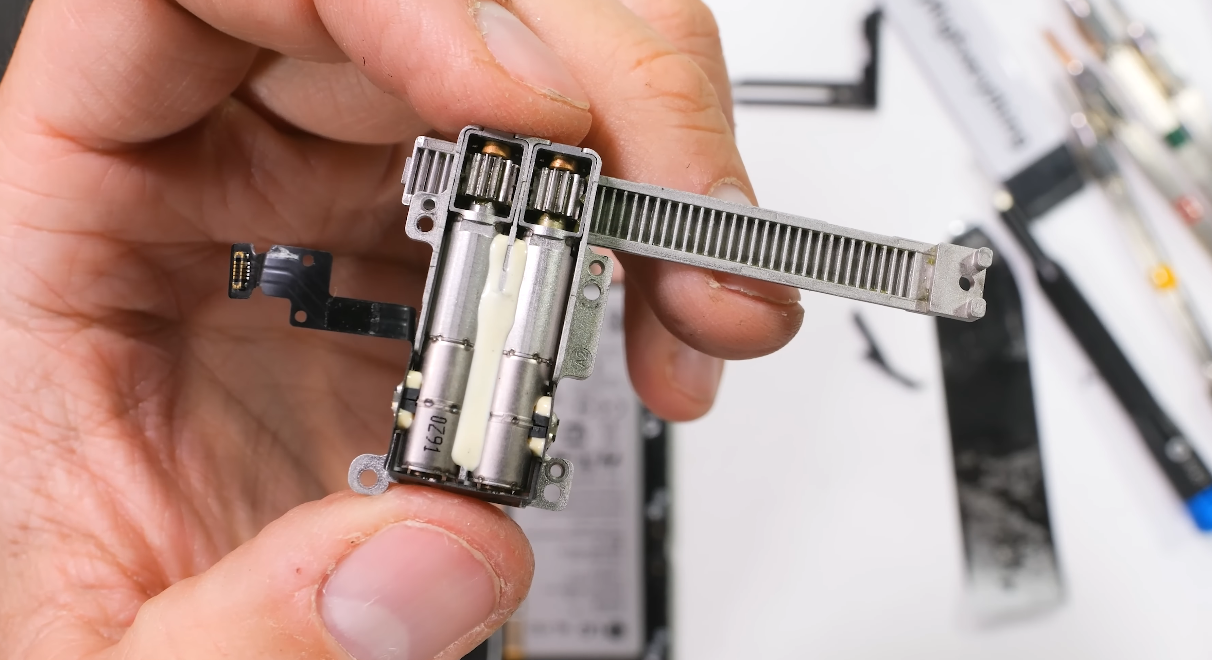 The rollable uses two motors on a geared track to expand the frame.
Credit:
JerryRigEverything
The rollable uses two motors on a geared track to expand the frame.
Credit:
JerryRigEverything