17981 stories
·
174 followers

Taika Waititi brings more dramatic tone to Klara and the Sun trailer

1 Share

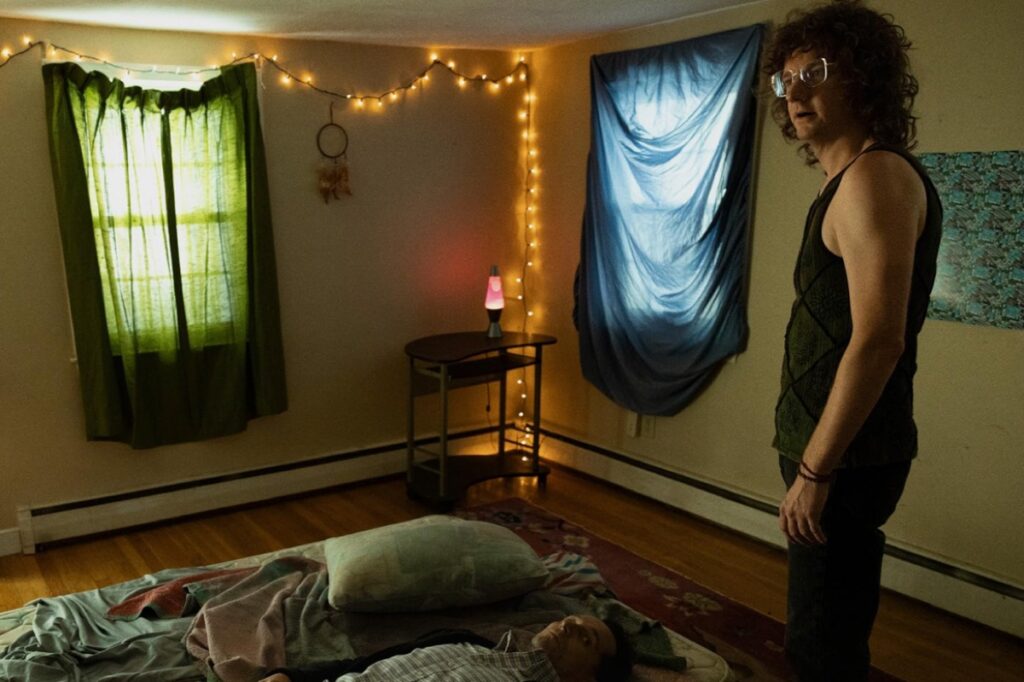
One of Taika Waititi's greatest strengths as a director is his unique voice; he's able to bring a light touch to tragedy (Jojo Rabbit) and a gentle sadness to offbeat comedy (Our Flag Means Death). That makes him an excellent choice to direct Klara and the Sun, based on the novel by Kazuo Ishiguro. Sony Pictures just released the first trailer, and it's giving strong Hunt for the Wilderpeople vibes—a good thing, from my perspective, since that's my favorite Waititi film.

Per the official premise:

Based on the bestselling novel from Nobel Prize winner Kazuo Ishiguro and written and directed by Academy Award winner Taika Waititi, Klara and the Sun introduces audiences to Klara (Jenna Ortega), an Artificial Friend who wants nothing more than to find the perfect home. When Klara meets Josie (Mia Tharia), each immediately senses a kindred spirit in the other. Josie has a fraught relationship with her mother (Amy Adams), and they’ve suffered great loss, but Klara’s innocent wonder and unwavering loyalty begin to heal the family and bring light to Josie’s complicated world.

The cast also includes Natasha Lyonne as an artificial friend (AF) store manager; Rachel House as the housekeeper Melania; Aran Murphy (son of Cillian Murphy) as Josie's best friend, Rick; and Sophia Bryant-Taukiri as Josie's older sister, Sal. Steve Buscemi and Harry Greenwood also appear in as-yet-undisclosed roles.

Like Ishiguru's novel, Klara and the Sun is set in an unidentified future, with Klara narrating. As a solar-powered AF, Klara has a special relationship with the sun, the source of her nourishment, but she also bonds with Josie when the girl and her mother are shopping for AFs. So Josie chooses Klara, despite the latter being an older model. Josie's mom is skeptical but agrees on a trial basis, encouraged by the 20 percent discount. “Just remember everything you learned and hopefully they’ll come to love you like a member of the family or family dog," Lyonne's store manager tells Klara. Klara soon senses that something is wrong and turns to her old friend, the sun, for guidance. (Book readers will know what's up.)

Ishiguru's leisurely meditation on humanity's relationship to technology might seem out of Waititi's usual wheelhouse, but the director recently told Vanity Fair that he quickly realized he needed a new tonal approach to the material and adapted quickly to make his most dramatic film. “Sometimes I think you get caught up in, like, ‘Oh, people want the same tone as this other thing from eight years ago,’ and it’s nice to not have to cater to that so much or cater to your own expectations of what you think you want to do,” Waititi said.

Klara and the Sun hits theaters on October 23, 2026.

Read full article

Comments


Read the whole story
fxer
55 minutes ago
reply
Bend, Oregon
Share this story
Delete

Everyone pays the price as patent holders on seeds stifle innovation

1 Share

The United States is one of only a handful of countries that allows companies to hold patents on plant varieties. As a result, a small number of corporations can—and do—suppress competition in the seed industry, stifle innovation, and turn taxpayer subsidies intended for farmers into corporate profits.

The US Department of Agriculture has found that two companies control more than 70 percent of US corn and soybean seed sales, and the top four cottonseed companies control nearly 94 percent of that market.

In a May 2026 court filing in a legal dispute between two US seed companies, the Department of Justice said patents on seeds are obstructing competition and research in the agriculture industry.

As researchers who work on plant breeding and seed policy, we have seen how that plays out. When huge companies assert their patents, smaller businesses and public plant breeders, who often lack the legal resources to fight back, are frequently dissuaded from conducting research and development that might actually not be illegal at all.

And a lack of competition allows dominant companies—not always based in the US—to collect large sums of taxpayer money that Congress allocated in hopes it would help farmers, not shareholders’ and executives’ bottom lines.

A shift in ownership

For most of human agricultural history, farmers freely saved, exchanged, and planted seeds season after season, creating a diversity of crops suited to the places and people who grew them.

While some communities restricted the exchange of seeds for cultural or ceremonial reasons, seeds were broadly understood to be a shared resource. Even as recently as the 1970s, most plant breeding was carried out by public researchers at government stations and universities, while private companies focused on producing and selling those varieties at scale.

That diverse and decentralized system also served as an invisible insurance policy against disease and disaster: If one variety failed, there were plenty of others distinct enough to fill its place.

Beginning in the 20th century, though, governments began to grant companies patents on living organisms, beginning with a genetically engineered bacterium that broke down crude oil. Suddenly, chemical and pharmaceutical companies saw opportunities to earn money by engineering specific traits, such as herbicide tolerance, into key crop plants, including corn, soybeans, cotton, and canola, and patenting those varieties.

Then they used those patent rights to prohibit other plant breeders, even university researchers, from conducting research and breeding with their seeds and to forbid farmers from saving their own seeds from one season to the next.

Those steps eliminated seed companies’ two most obvious sources of competition: other developers building on their work and farmers saving seed. The seed companies then had enough market power to set prices so high that they took nearly all of farmers’ potential profits, while leaving them just enough of a margin to remain customers.

According to a report from the Department of Agriculture’s Economic Research Service, the price for genetically engineered seeds has more than quintupled since 1990, rising by 463 percent. But over that same period of time, the price farmers have received for their crops has increased only by 56 percent.

Both figures are indexed, so 1990 values=100. Credit: The Conversation (CC BY-ND), MacDonald, Dong and Fuglie (2023), U.S. Department of Agriculture, Economic Research Service Report No. EIB-256.

Subsidies get diverted

When the prices farmers receive for certain crops fall below a certain threshold, or when farmers suffer losses from bad weather or unexpected trade disputes, the Department of Agriculture has a multitude of programs that offer payments to make up the difference.

But that money tends to spend little time in farmers’ pockets.

An August 2025 study shows that when farm subsidies increase, seed companies respond by raising their prices, charging based on what farmers can afford to pay rather than their own cost of producing and marketing the seed. Specifically, for every 1 percent increase in farm subsidies, seed companies raise their prices by 0.5 percent.

And when farmers go to sell their crops to grain processors, those companies benefit from being able to purchase commodity grains, such as corn, soybeans, and canola, at a predictable price, held low because subsidies help farmers produce an abundant supply at margins that would otherwise drive farms out of business.

Testifying at an October 2025 Senate Judiciary Committee hearing on competition issues in the seed and fertilizer industries, Iowa farmer Noah Coppess put it plainly: “The reality in farming today is we’re price takers rather than price makers. That’s especially true when consolidation limits our options. … I have concerns with our input and equipment supply chains and their ability to manipulate our costs.”

The result is a system in which public money intended for farmers is redistributed to the seed suppliers and commodity purchasers who profit on either side of them.

Limiting research

Dominant seed companies prevent competitors from developing new breeding programs through a complex web of patents and restrictive licensing contracts that make it nearly impossible to acquire enough genetic material to get started.

The patent system is built on the premise that applicants must completely disclose how their inventions were made in order to get protection. This allows the public to understand the scope of the invention, as well as to improve upon it.

Genetic analyses on the protected seeds would be required to understand how a variety was bred and the genetic traits it contains. However, seed companies have also threatened independent researchers with patent-infringement lawsuits. Those threats prevent independent researchers from studying the crops that make up the country’s supply of food, feed, fuel, and fiber.

The result is that no one outside of the dominant companies, not even the US government, knows which economically crucial crops, most of which are grown from patented seeds, might be vulnerable to emerging pests and pathogens. For years, plant breeders have been calling for genetic assessments of these seeds and the crops they grow; to date, no such studies have been conducted.

A shift in direction

But the May 2026 Justice Department court filing saying seed patents are blocking agricultural competition and research indicates the tide may be turning.

In 2023, multinational agrochemical company Corteva sued a genetic engineering startup, Inari, for infringing its patents by, among other things, obtaining samples of Corteva’s patented seeds from a public repository and analyzing their genetic makeup.

Though the Justice Department didn’t weigh in favor of either company, its court filing said companies should not be able to restrict the public from sequencing genetic material that was deposited as part of the process of securing patent protection.

Notably, the department’s court filing came from the Antitrust Division rather than the Civil Division, which usually handles intellectual property issues. That difference suggests that the government sees this extension of patent rights as an illegitimate way for a company to exclude other companies from competing.

The case is still winding its way through the legal process. But if the judge agrees, his decision could be consequential. For starters, competitors could begin to understand the strengths and weaknesses in seed varieties on the market and find ways to build on that innovation, which is precisely the type of activity the patent system was designed to encourage.

More competition in the market could provide an important check on seed prices, reducing the burden on American farmers and, thereby, taxpayers. Finally, researchers could conduct the studies that are needed to begin rebuilding the kind of genetic knowledge that was, for most of human history, held in common—an insurance policy in the best interest of us all.

Julie Dawson is Professor of Plant and Agroecosystem Sciences at the University of Wisconsin-Madison; Kiki Hubbard is a Researcher at the Nelson Institute for Environmental Studies, University of Wisconsin-Madison; and Paulina Jenney is Research Coordinator, Urban and Regional Food System Program, University of Wisconsin-Madison

This article is republished from The Conversation under a Creative Commons license. Read the original article.

Read full article

Comments


Read the whole story
fxer
1 hour ago
reply
Bend, Oregon
Share this story
Delete

Report: Russia's nuclear-powered 'Skyfall' missile is dirty and dangerous

1 Share

Sometime on Oct. 21 of last year, high above the Arctic Circle, a lone missile shot skyward from a Russian island.

The missile flew northeast and then banked and began flying in loops for hours over the barren, frozen landscape.

According to Russian and Western sources, the new weapon, known in Russian as Burevestnik and by NATO as Skyfall, was powered by a small nuclear reactor. Few other details were forthcoming.

Now, two MIT researchers have published an analysis that sheds fresh light on how the nuclear-powered missile actually worked. If they are correct, the October flight test marks the first time a nuclear-powered aircraft has ever flown. It would also suggest the opening of an extraordinarily dangerous new chapter in the 21st century's simmering arms race.

"This is something that is possible, but wildly expensive and very dangerous," said Jake Hecla, a professor at the Massachusetts Institute of Technology with a dual appointment in both aerospace and nuclear science and engineering, who led the new analysis along with co-author R. Scott Kemp.

Their modeling shows a reactor design that spews radiation as it flies, putting anyone living or working near the test site for the missile at "enormous risk, potentially."

The dream of nuclear flight

Since the 1950s, both the U.S. and the then-Soviet Union contemplated building nuclear-powered aircraft. Such weapons had the potential to give both sides an advantage in the Cold War because they would have nearly unlimited range. That could allow them to loiter near a target awaiting an attack order almost indefinitely, or they could attack from an unpredictable direction, making it harder to defend against.

In 1955, the U.S. Air Force put a small nuclear reactor inside a Convair B-36 strategic bomber to test whether it would expose the crew to excessive amounts of radiation in flight. The reactor was never hooked up to the plane's engines, but it did show that a nuclear reactor could fly. In 1961, the Soviet Union conducted similar experiments aboard a modified Tupolev TU-95 bomber.

Safety concerns left those concepts grounded, but the U.S. also worked on a series of nuclear reactors to power missiles. Known collectively as Project Pluto, the idea was to build a supersonic low-altitude cruise missile that could deliver a nuclear weapon to any point on Earth. The tests culminated in 1964, with the ground test of a reactor mounted on a railroad car in Nevada that could run for five minutes, producing 513 megawatts — equivalent to more than 35,000 pounds of thrust.

When news of the new Russian cruise missile first emerged, many onlookers assumed it would be a variant of the Project Pluto engine, but Hecla was skeptical. Project Pluto's design, known as a ramjet, required air to move through it very quickly and could only operate at supersonic speeds.

"There are a number of reasons we have to suspect that a nuclear ramjet is infeasible for Burevestnik," he said. In particular, the shape of the weapon looks much like a conventional subsonic cruise missile.

"You can see very obviously that it is a subsonic system, and ramjets are not very efficient at subsonic speeds," he said.

A new kind of reactor

To try and figure out how the weapon was powered, Hecla first used a handful of videos posted by Russian media to determine its dimensions. He identified objects of known size in the factory where the videos were filmed — things like a utility desk or a fire extinguisher. Through many hours of repeated measurements, he was eventually able to build a three-dimensional model of the missile.

Based on the measurements, he concluded that Burevestnik is larger than even the largest Russian cruise missiles, but it is by no means enormous. Aerodynamic modeling showed it would need to travel around Mach .75 or about 575 miles per hour to stay airborne. That speed is similar to a commercial aircraft, like the Airbus A320.

Hecla now knew roughly how big the reactor could be and how much thrust it needed to produce to make Burevestnik fly. Based on that data, and his knowledge of nuclear engineering, he was then able to model the type of reactor that might be powering the missile.

His conclusion: "It's almost certain that the system uses a direct-cycle air-breathing nuclear propulsion system, most likely driving a turbojet," he told NPR.

A direct-cycle system means that the reactor runs by pushing air from the atmosphere directly through the nuclear fuel. A compressor forces the air through tiny straw-like channels in the reactor core, where nuclear reactions cause the air to heat and expand out the back of the engine. Such a system is radically different from most nuclear reactors, which use an "indirect" closed loop. Those sealed systems are filled with water or another coolant and transfer heat out of the reactor while limiting radiation exposure.

Hecla said he can't completely rule out that some sort of indirect loop is used in the missile, but given the complexity and extra weight involved with building such an indirect system, he finds it far more likely that Burevestnik is heating air by sucking it right through the reactor core.

And that's a big problem. "The direct cycle is very likely to result in a large quantity of radioactive material in the exhaust," Hecla said. Air itself is irradiated as it passes through the engine, and fission decay products from the nuclear fuel also diffuse into the straw-like cavities and are shot out the back.

Hecla said his calculations show that a direct-cycle system would produce large quantities of radioactive isotopes of argon, krypton and carbon. He admits the reactor could release still more radioactivity if the core starts to corrode during hours of flight.

"Heated, compressed atmospheric air is very good at eroding engine components," Hecla noted. There's no reason to think this new nuclear reactor would be different.

"A terrible idea" 

If Hecla is correct, then Burevestnik is the first aircraft ever built and flown using nuclear power. It's also incredibly problematic, said Jeffrey Lewis, a scholar at Middlebury College who specializes in studying rockets and missiles and was not affiliated with the MIT study.

"This thing is an environmental nightmare," Lewis said. In addition, the reactor poses a huge risk to members of the military who might be required to handle it. "Just the question of how you safely load one of these things is, I think, really pretty challenging," he said.

In 2019, an accident off the Russian coast killed several Russian nuclear personnel. Shortly thereafter, a spike in radioactivity was detected nearby. It's now widely believed the accident was the result of a Russian team attempting to recover a prototype Burevestnik reactor. Hecla said it's possible that the reactor restarted as it was being hauled from the bottom of the sea, sparking an explosion.

Given all the problems, both real and potential, associated with Burevestnik, Hecla questions why the Russians developed it at all. He notes that although its range is likely significantly longer than that of a conventional cruise missile, that doesn't mean it's particularly hard to intercept.

"It's not a game-changing idea by any stretch of the imagination," he said. "We are able to routinely shoot down cruise missiles today, and there is no reason to think this will be particularly more difficult to do."

Moreover, Russia has said that Burevestnik will only be used with a nuclear weapon as its warhead. A conventional warhead would likely be heavier, Lewis noted, and the reactor would still end up spreading lethal radiation over a significant area where the missile strikes. Given all that, "I can't see the Russians wasting one to deliver a few hundred pounds of explosives," he said.

Put it all together, and the weapon appears to be "kind of useless," Lewis said.

Hecla suspects that Burevestnik's development may be advancing for one of two reasons. First, he said, it's possible that somebody within Russia's nuclear industry has simply caught President Vladimir Putin's ear and convinced him to invest in the program. Second, he speculates, it might be possible that the reactor in Burevestnik is just a stepping stone to developing nuclear-powered surveillance drones or space-based nuclear systems that could be useful for other missions.

Lewis agrees that the nuclear-powered missile probably isn't very useful as a weapon. But Hecla's paper at least shows it is technically feasible that the Russians have developed it: "It might be a bad idea, it's almost certainly a terrible idea," he said. "But it's not an impossible idea."

Read the whole story
fxer
16 hours ago
reply
Bend, Oregon
Share this story
Delete

Man used massage gun on his tired eyeballs. It went as well as you'd expect.

1 Share

For our weary eyeballs, strained and tired from long periods locked onto screens, rest and relaxation can do wonders. But a man in Scotland came up with an eye-popping plan to try to pamper his pooped peepers.

Ophthalmologists discovered it when the man, who was in his 20s, appeared at an eye treatment center in Edinburgh. He told them he had noticed increasing floaters and flashing lights in his right eye over the previous six days. According to a BMJ Case Report, the man said he hadn't had any eye or head injuries before the vision problems began, and that his family didn't have a history of eye disorders that might explain them. Besides having mild near-sightedness and needing glasses, he usually didn't have any problems with his eyes, he said.

When the doctors—Niamh O’Connell ‍‍and Ashraf Khan—took a close look, they were surprised to find that both of his eyes were in terrible shape. In his right eye, he had multiple retinal tears, widespread retinal bruising, and a condition called retinal dialysis—a retinal break at a junction in the front of the eye—that is usually seen after a significant eye injury. In his left eye, he had more widespread bruising and six full-thickness rips in his retina.

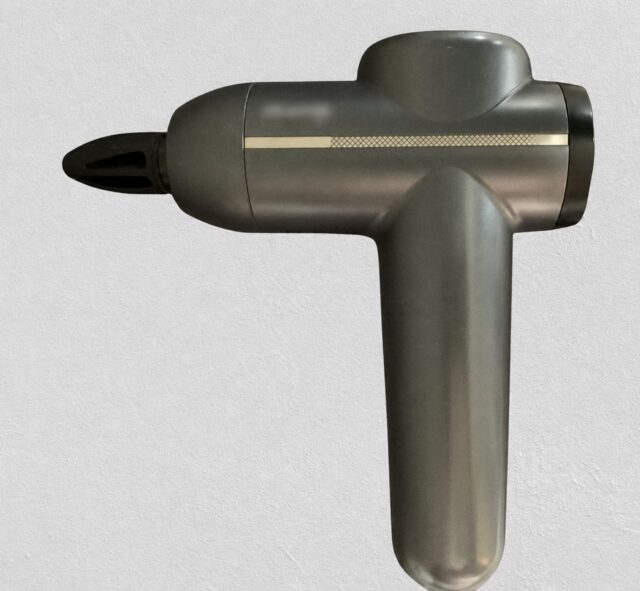
Given the findings, they had more questions. They pressed him on any "untoward" things that might have happened to his battered orbs. The man then reluctantly admitted he had been trying to soothe his tired eyes with a percussive massage gun. Specifically, he used a gun with a small head attachment shaped like a bullet.

The massage gun with the small head attachment the man used. Credit: BMJ Case Reports, 2026

Describing the man as a "hesitant historian," the doctors said he eventually confessed to using the massage gun directly on and around both eyes on a weekly basis for three months to help with his eye fatigue. They noted that he did not have a history of psychiatric conditions or drug use.

Occular offense

The doctors acknowledged that percussive massage therapy may be helpful for some soft tissues, like muscles, with the vibrations possibly relieving pain, improving blood flow, and promoting relaxation. But it can demonstrably cause serious damage to the eyeballs.

The ill-conceived thwacking therapy likely caused all of the damage to the man's eyes, the doctors concluded. The gun would have rapidly compressed the eyeballs back, causing them to squish out from the sides, which is thought to lead to retinal dialysis. Still, the doctors noted that the retinal dialysis was unusual because it was seen in the lower quadrant of the eye closest to the ear (inferotemporal quadrant). When retinal dialysis occurs from blunt trauma—like taking a fist to the eye, a more common cause of trauma—it usually occurs in the upper quadrant closest to the ear (superior temporal). Overall, the man's case marks a first in scientific literature for how to injure an eyeball.

After identifying the injuries, the doctors used laser treatments to mend the retinal tears and rips and seal the break. At a six-month follow-up appointment, the man's condition was stable without any deterioration. His vision was preserved, despite his injuries having a high risk of progressing to vision loss.

While his decision to put a massage gun to his eyes was highly questionable, he at least demonstrated good judgment in the aftermath, saving his sight, his doctors concluded. "This favorable outcome was likely due to the patient’s prompt presentation soon after noticing symptoms and the immediate initiation of treatment," they wrote.

Read full article

Comments


Read the whole story
fxer
18 hours ago
reply
Bend, Oregon
Share this story
Delete

Review: Widow's Bay is a boldly original take on comedic horror

1 Share

Widow's Bay, the delightfully eccentric new comedic horror series from Apple TV, is easily one of the best new series of the year. There's a reason everyone from Guillero del Toro and Ben Stiller to Damon Lindelolf (Lost) is raving about the show. It's an eminently binge-able, addictive series that pays tribute to all the classic horror tropes while reinventing them in surprising ways. Think Stephen King meets Parks and Recreation, with a dash of Twin Peaks—except Widow's Bay is very much its own refreshingly original beast.

(Some spoilers below but no major reveals.)

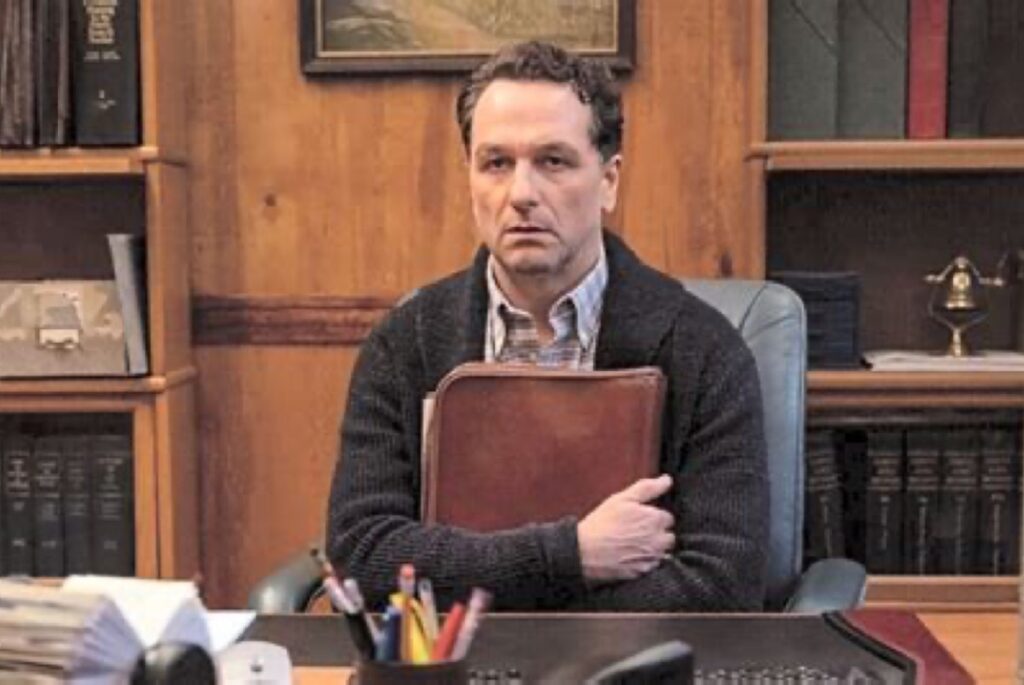
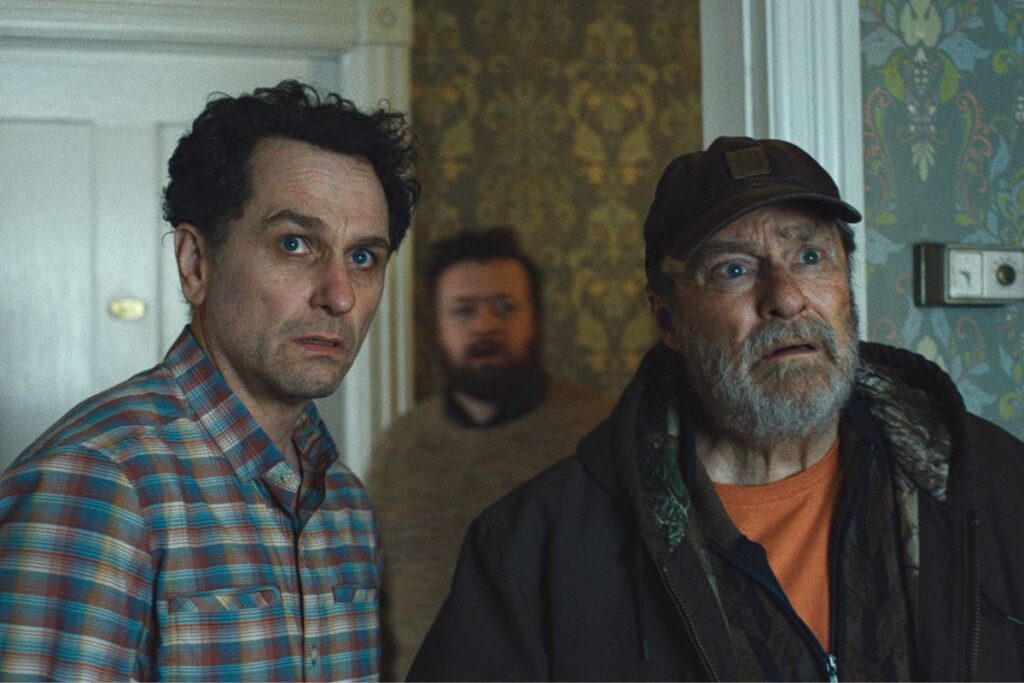
Tom Loftis (Matthew Rhys) is a widower and mayor of Widow's Bay, a quirky little seaside town that has a colorfully bizarre history marked by periodic tragedies. Tom is eager to elevate the town into a trendy summer tourist destination. But the arrival of New York Times travel writer Arthur Lloyd (Bashir Salahuddin), who has the clout to make Tom's aspirations for Widow's Bay come true, coincides with the onset of a mysterious fog. Local resident Wyck (Stephen Root) warns Tom that the fog is an omen that the island is "waking up," meaning more supernatural occurrences are bound to happen.

Initially skeptical, Tom becomes increasingly paranoid after a sailor who got lost in the fog essentially goes mad, with his eyes turning white just before dying. But by then Arthur has published a glowing account of his time in Widow's Bay and tourists start flocking to the island for the summer season. Tom gamely tries to put a positive spin on things. He stays in the local haunted hotel alone overnight to prove it's safe (it isn't), and runs afoul of the legendary Sea Hag during the traditional mayor's inaugural swim to open the beach.

But Tom still refuses to close everything down, despite Wyck's warnings. Tom's assistant, Patricia (Kate O'Flynn), has her own disturbing supernatural experience when she tries to host a "sunset cocktails" event to boost her social status in the town. It doesn't go well and the mayhem is next level. That's all I'm going to say, because the fun lies in the finding out.

Meanwhile, Tom's rebellious teenaged son, Evan (Kingston Rumi Southwick), has fallen in with a delinquent crowd out of sheer boredom, resentful that he's never been allowed to leave the island. That's because local legend holds that anyone born in Widow's Bay cannot leave.  The supernatural energy keeps escalating with each subsequent episode, eventually delving into the island's early history and the town's founding by one Richard Warren (Hamish Linklater). That history still has repercussions for Widow's Bay in the present.

A "dangerous excitement"

Series creator Katie Dippold is best known (until now) as one of the writers on Parks and Recreation, and Widow's Bay actually started out as a spec script for that earlier series. "That version was much jokier," she told Deadline Hollywood earlier this month. "It was more comedic and I think it gave a good idea of my sense of humor." But she described that script as feeling more like a spoof, "and as a horror fan, I just wanna be immersed into the island," she said. "I wanna feel like I could go explore this island and find all the little nooks and crannies and terrifying little spots. That's my dream, but I'm strange."

Mayor Tom Loftis (Matthew Rhys) has big aspirations for Widow's Bay as a summer tourist destination.
Tom's rebellious teenaged son, Evan (Kingston Rumi Southwick) has never left the island.
Tom and Wyck (Stephen Root) eventually become allies as supernatural happenings hint at an awakening island curse.
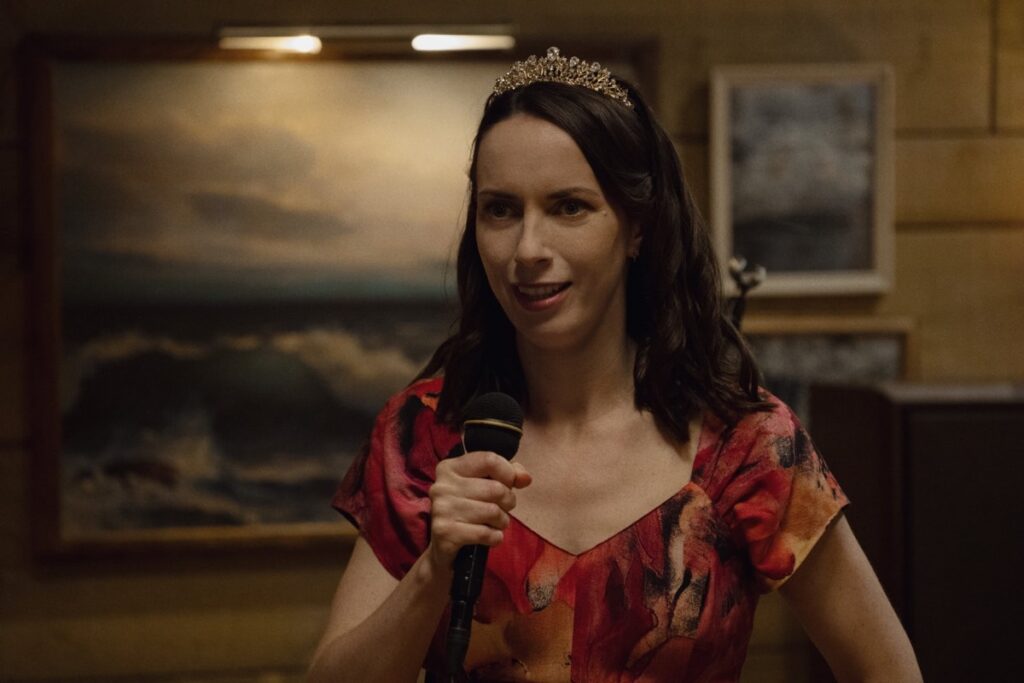
Tom's assistant, Patricia (Kate O'Flynn) tries to throw a "sunset cocktails" shindig to boost her social status.
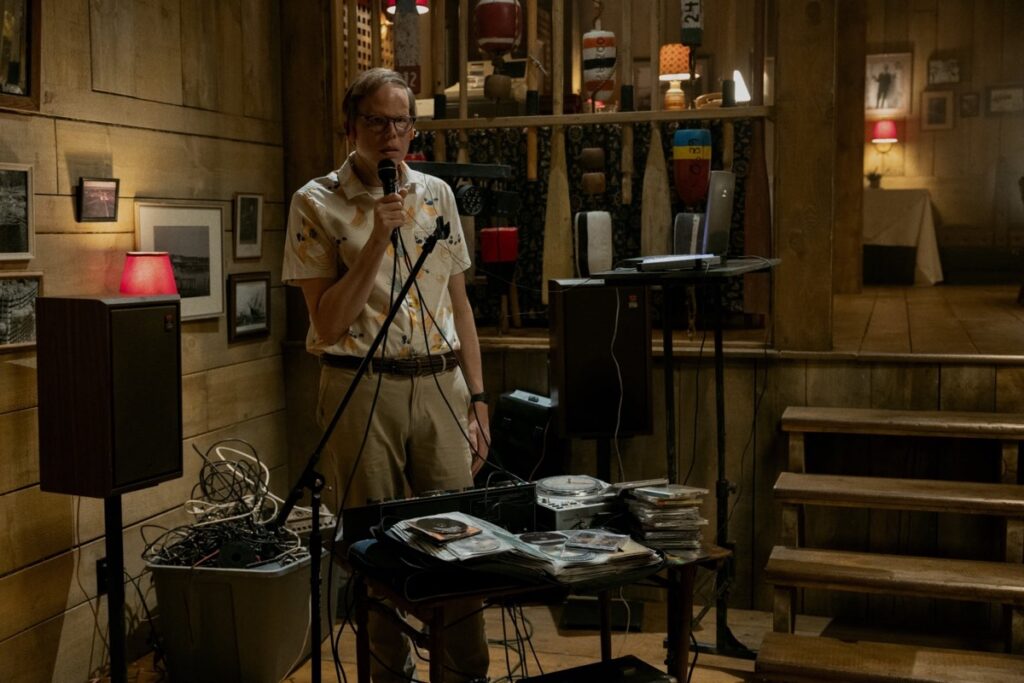
Dale (Jeff Hiller) sits in as DJ
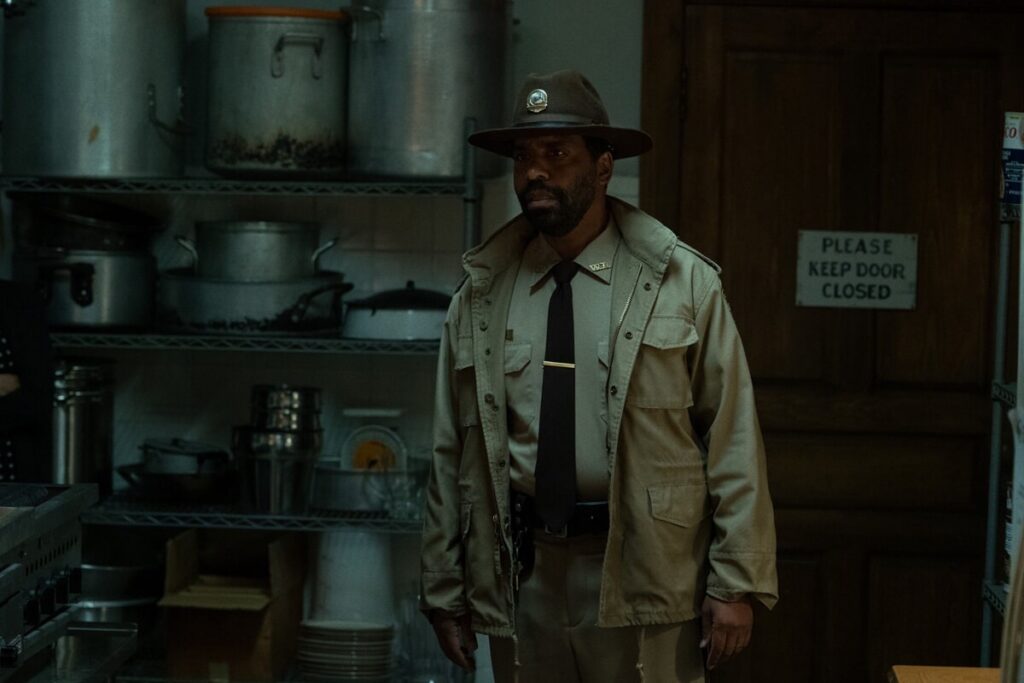
Local sheriff Bechir Clemmons (Kevin Carroll) is increasingly alarmed at the odd occurrences.
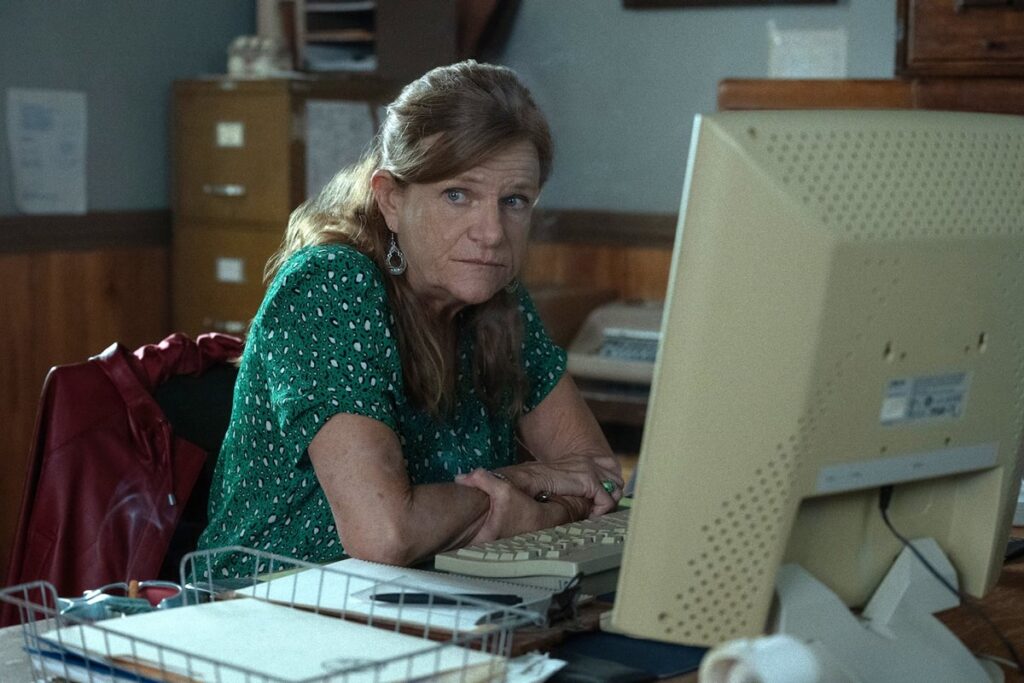
Rosemary (Dale Dickey) might hold some key information about the island.
Todd the Shaman (Chris Fleming), a town drug dealer, has a particular local hallucinogenic mushroom to offer.
A flashback to Widow's Bay founder Richard Warren's (Hamish Linklater) actions might be the source of all the mysterious happenings.

Clearly millions of viewers share Dippold's strangeness. By the time the Patricia-centric fourth episode ("Beach Reads") aired, viewership numbers had tripled since the launch, and those numbers have kept growing as positive word of mouth rapidly spread.

The most impressive aspect of the series is its mastery of tone: a perfect balance between quirky humor and spine-tingling horror that is incredibly difficult to consistently maintain. "I used to get into all sorts of antics when I was young, me and my friends going to check out the abandoned house and then running off," said Dippold of the tone she wanted for the show. "It was almost kind of a dangerous excitement. And I just love that feeling because you’re so scared, but you’re laughing so hard, and I just wanted to get that feeling on television."

It also helps that Dippold has populated her fictional town with such well-drawn, unique characters; even one-off side characters, like Todd the Shaman (Chris Fleming) feel fleshed out and fully realized. That's thanks to the show's terrific cast, of course, but the actors are given a lot to work with in the smart, snappy scripts. And the series' structure is very well plotted: it's part monster of the week, part longer narrative arc. The show is warm and funny in the margins, and genuinely scary when the supernatural antics ramp up. There's not a single false note across all ten episodes.

All episodes of the first season of Widow's Bay are now streaming on Apple TV. A second season is already in the works so we'll be getting even more comically horrific adventures. Dippold wants the show to come back as soon as possible—and so do we. She jokingly told Deadline that S2 will be "about how everything is great on the island and there’s nothing to worry about." Don't you believe it.

Read full article

Comments


Read the whole story
fxer
1 day ago
reply
Bend, Oregon
Share this story
Delete

Doom Composer Bobby Prince Has Died

2 Shares
Video game composer and sound designer Bobby Prince has died at age 81 following an illness. Developer id software shared the news. Engadget reports: Prince was perhaps best known for his pioneering work on the Doom series. The Library of Congress inducted his soundtrack for the original game into the National Recording Registry just last month. "Despite the limitations of the 1993-era sound card drivers, Prince composed the perfect riff-shredding accompaniment for the game's demon-slaying journey to hell and back," the Library of Congress stated. "Taking advantage of his knowledge of MIDI, Prince even worked to ensure that the sound effects he created could cut through the music by assigning them to different MIDI frequencies." Prince also worked on games such as Wolfenstein 3D, Rise of the Triad and Duke Nukem 3D. In 2006, the Game Audio Network Guild honored Prince with a lifetime achievement award.

Read more of this story at Slashdot.

Read the whole story
fxer
2 days ago
reply
Bend, Oregon
Share this story
Delete
Next Page of Stories