17888 stories
·
173 followers

Man wins $835K after sheriff jailed him for a month over Charlie Kirk post

1 Share

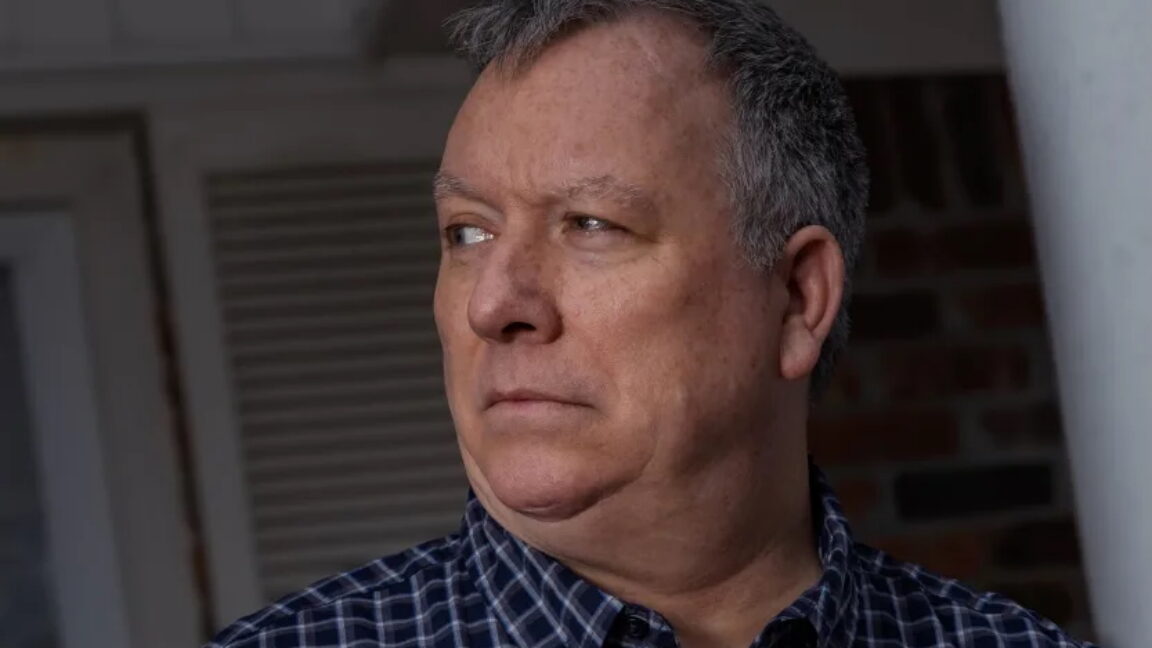
Larry Bushart, a retired Tennessee cop who was jailed for 37 days for posting a Trump meme on Facebook, won an $835,000 settlement Wednesday after suing the county and sheriff that he said jailed him in order to censor him.

In a press release, Bushart's legal team at the Foundation for Individual Rights and Expression (FIRE) confirmed that Bushart agreed to dismiss his lawsuit in exchange for the "substantial settlement."

"I am pleased my First Amendment rights have been vindicated," Bushart said. "The people’s freedom to participate in civil discourse is crucial to a healthy democracy. I am looking forward to moving on and spending time with my family."

The settlement will help assure that Bushart and his wife have a comfortable retirement. That was threatened when Bushart was jailed, as he lost his post-retirement job. But the settlement doesn't make up for other losses. The grandfather missed the birth of his grandchild while he was stuck behind bars for more than a month, as he couldn't afford to pay his eye-popping $2 million bond.

"No one should be hauled off to jail in the dark of night over a harmless meme just because the authorities disagree with its message," Adam Steinbaugh, FIRE senior attorney, said. "We’re pleased that Larry has been compensated for this injustice, but local law enforcement never should have forced him to endure this ordeal in the first place."

Cops came for Bushart after he posted a meme that he neither created nor altered on Facebook. The meme accurately quoted Donald Trump as saying, "we have to get over it," following a school shooting at Perry High School in Iowa.

Bushart posted the meme on a Facebook thread promoting a vigil for Charlie Kirk in Perry County in Tennessee after the right-wing influencer was assassinated.

A county sheriff, Nick Weems, saw the meme and was seemingly offended. He took advantage of the fact that the school referenced in the meme, Perry High School in Iowa, could possibly be confused with his area high school, Perry County High School. And he issued a warrant for Bushart's arrest "based on the absurd notion that the meme could be interpreted as a threat" of a shooting at a high school in his county, FIRE said.

Seemingly, Weems hoped the threat of arrest would pressure Bushart into removing the post, but Bushart refused to be censored.

Video from the arrest shows that Bushart told the arresting officer he never made such a threat, and some cops at the jail seemed similarly confused about the basis of his arrest. In one exchange caught on footage reviewed by The Intercept, Bushart even shared a laugh with an officer over how silly his arrest seemed to be:

"Just to clarify, this is what they charged you with—Threatening Mass Violence at a School," a Perry County jail officer told Bushart.

"At a school?" Bushart asked.

"I ain’t got a clue," the officer responded, laughing. "I just gotta do what I have to do."

"I’ve been in Facebook jail, but now I’m really in it," Bushart said, joining him in laughing.

Weems later admitted that "he knew at the time of the arrest that Larry’s Facebook post was a pre-existing meme that referred to an actual shooting that took place in a different state, over 500 miles away," FIRE said. But he arrested Bushart anyway, violating Bushart's "constitutional rights in retaliation for his protected speech," FIRE said.

FIRE noted that Bushart is one of 600 people that Reuters found were punished for making controversial online statements about Kirk's death, following a government-backed campaign targeting political speech. Bushart's win shows that the First Amendment can stand up to censorship attempts, FIRE staff attorney Cary Davis suggested.

"It’s in times of turmoil and heightened tensions that our national commitment to free speech is tested the most," Davis said. "When government officials fail that test, the Constitution exists to hold them accountable. Our hope is that Larry’s settlement sends a message to law enforcement across the country: Respect the First Amendment today, or be prepared to pay the price tomorrow."

Read full article

Comments


Read the whole story
fxer
35 minutes ago
reply
Bend, Oregon
Share this story
Delete

Plex's 200% Lifetime Pass price hike tries forcing users to another subscription

1 Share

As of July 1, at 12:01 am UTC—or June 30 at 8:01 pm ET—people seeking access to Plex's media server features through a one-time purchase will have to pay $750. That’s three times the current price of $250.

The new price will not affect current Lifetime Plex Pass holders.

A Lifetime Plex Pass allows you to stream from your own Plex Media Server to a device connected to your own network, to stream from the server remotely, and to allow others to stream remotely from your server.

When first launched in 2012, a Lifetime Plex Pass was $75. In 2014, Plex increased the price to $150 because “at 2.5x the price of a yearly, it was priced in an unsustainable way for us,” Plex said in a blog post at the time. Eventually, lifetime passes were available for $120 for years until March 2025, when the price skyrocketed to $250. That brings us to today’s announcement.

In an email and blog post to customers today, Plex said that it sold lifetime passes early in its existence “because we knew many of our customers would rather pay a higher, one-time fee for software that they can depend on every day.” However, as evidenced by several price hikes, Plex has struggled to reconcile lifetime passes with its own financial goals. The company’s message says:

We’ve considered eliminating the Lifetime Plex Pass in the past, given that recurring subscriptions help us sustain long-term development, but we know it’s still a valuable option for many in our community. So instead of retiring it, we’re keeping it available at a price that reflects the real, ongoing value of the software we’re committed to building and maintaining for years to come.

The 200 percent price hike and Plex’s admission that it has mulled killing Lifetime Passes illustrate Plex’s shifting priorities as it seeks profitability. Notably, Plex didn’t announce any pricing hikes for its monthly or annual subscription tiers.

In its blog, Plex offered further reasoning for the upcoming price hike:

Over the years, as our software and product has evolved, the breadth of features and benefits included with your Plex Pass has expanded. This increase ensures we can continue to invest resources into building and maintaining the Plex personal media software, while continuing to offer a Lifetime option.

As noted in the announcement, Plex would rather people pay monthly or annually for its media server features than a one-time fee. With annual subscriptions currently $70, it would take 11 years for a $750 lifetime subscription to be a better value.

Plex's price hike is an extreme example of streaming service providers continuously increasing prices amid struggles to reach and maintain profitability while keeping prices stable and dealing with ongoing costs, like licensing fees for rental movies and app updates.

Plex claims to be working on numerous new features for its platform, including: adding all server and library management features currently available on app.plex.tv to Plex's mobile and, where applicable, TV apps; “boosting dialogue and normalizing loudness,” per today's announcement; transcoding improvements; IPv6 support; and the abilities to group downloads by show, automatically download new episodes, and make and edit playlists in mobile apps. New features that Plex has added recently include the ability to create custom metadata agents and an open API for server integrations.

Beyond new features, Plex has previously cited rising costs for the hike, including supporting various types of devices and codecs.

Plex moving beyond media serving

Plex’s various forays into areas outside of its original media server business also contribute to its rising costs. In recent years, Plex has expanded from a media server company to a streaming service provider that has hundreds of free ad-supported TV (FAST) channels, rents out movies, and dabbles in social features. It also made a failed venture into gaming.

Legacy customers, however, have grown wary of Plex’s expanding interests and their potential impact on Plex's media server users. While adding streaming and social features, Plex killed free remote streaming access and its Watch Together feature and issued a controversial app redesign. Plex also has reason to put more focus on its streaming business since more people have been using Plex’s online streaming service than its media server capabilities since 2022, Scott Hancock, Plex’s then-VP of marketing, said in 2023.

The good news is that Plex has given months of warning before jacking up Lifetime Plex Pass prices. But as Plex seeks profitability, it will continue evolving from the pure-play, affordable media server company that it originally was and, in turn, drum up interest for rival platforms, like Jellyfin, Emby, and Kodi.

Read full article

Comments


Read the whole story
fxer
3 hours ago
reply
Bend, Oregon
Share this story
Delete

Bitwarden Scrubs 'Always Free' and 'Inclusion' Values From Its Website

1 Comment and 2 Shares
Bitwarden appears to be undergoing a quiet shift in leadership and messaging. Its longtime CEO and CFO have stepped down, while the company has removed "Always free" from a prominent password-manager page and replaced "Inclusion" and "Transparency" in its GRIT values with "Innovation" and "Trust." Fast Company reports: In February, longtime CEO Michael Crandell moved to an advisory role, according to LinkedIn, with no announcement from the company. His replacement, Michael Sullivan, former CEO of both Acquia and Insightsoftware, touts his experience with "all facets of mergers and acquisitions" on his own LinkedIn page, including experience working with leading private equity firms. CFO Stephen Morrison also left Bitwarden in April, replaced by former InVision CEO Michael Shenkman. Both Crandell and Morrison joined the company in 2019. Kyle Spearrin, who started Bitwarden as a fun hobby project in 2015, remains the company's CTO. Meanwhile, Bitwarden has made some subtle tweaks to its website. The page for its personal password manager no longer includes the phrase "Always free." Previously this appeared under the "Pick a plan" section partway down the page, but that section no longer mentions the free plan, though it remains available elsewhere on the page. Bitwarden made this change in mid-April, according to the Internet Archive. Bitwarden has also stopped listing "Inclusion" and "Transparency" as tentpole values on its careers page. The company has long defined its values with the acronym "GRIT," which used to stand for "Gratitude, Responsibility, Inclusion, and Transparency." After May 4, it changed the acronym to stand for "Gratitude, Responsibility, Innovation, and Trust." The phrase "inclusive environment" still appears under a description of Gratitude, while "transparency" is mentioned under the Trust heading. They're just no longer the focus.

Read more of this story at Slashdot.

Read the whole story
fxer
3 days ago
reply
Faak, thus begins the long slide into crapware ala LastPass?
Bend, Oregon
dreadhead
3 days ago
RIP. It is decent but not sure I would pay for it. Edit: just looked at the "always free" still shows on the personal plan but the paid plans are certainly more prominent.
Share this story
Delete

Judge probes whether Musk settlement with Trump admin is tainted by corruption

1 Share

A federal judge reportedly said she will not rubber-stamp a settlement between Elon Musk and the Securities and Exchange Commission, saying the deal raises red flags and needs scrutiny over whether Musk is getting special treatment from the Trump administration.

As we reported last week, the Trump administration agreed to let Musk pay a $1.5 million fine to settle a lawsuit that originally sought at least $150 million. In 2022, before buying Twitter outright, Musk purchased a 9 percent stake in the social network and failed to disclose it within 10 days as required under US law. The SEC lawsuit filed during the Biden administration said the late disclosure allowed Musk to keep buying shares at artificially low prices and underpay shareholders by at least $150 million.

Under the settlement with the SEC, a trust in Musk’s name would pay a $1.5 million civil penalty to the government and not admit that Musk committed any violation. The deal requires court approval, and Judge Sparkle Sooknanan expressed skepticism at a hearing yesterday in US District Court for the District of Columbia.

“I am not going to rubber-stamp this settlement, and I cannot rubber-stamp this settlement," the judge said, Bloomberg reported. “Is Mr. Musk getting some kind of special treatment in this case?” Sooknanan was also quoted as saying.

Sooknanan said that dropping the demand for $150 million and imposing the settlement terms on a trust instead of Musk himself are both "red flags," a Reuters report said. "Sooknanan also noted that SEC lawyers at a prior hearing to discuss the case had appeared surprised when lawyers for Musk revealed that they had been in settlement talks with the agency," Reuters reported. Sooknanan called that fact another red flag.

Musk, SEC ordered to answer questions

After yesterday's hearing, Sooknanan issued a short order telling attorneys for Musk and the SEC to submit a brief by June 1 "addressing the Court's questions as stated on the record at today's hearing." Bloomberg's report said Sooknanan told attorneys that the brief should explain "how the parties reached the deal, including why the proposed settlement involves a trust tied to Musk instead of the billionaire himself."

SEC attorney Nicholas Grippo told the judge, “These are important, fair questions. Happy to answer them,” according to Bloomberg. The SEC historically operated with independence from the White House until Trump issued an executive order declaring that independent agencies must take orders from the president.

In a previous order last week, Sooknanan said that precedents require the court to consider whether "the settlement is fair, adequate, reasonable and appropriate under the particular facts," "whether it resolves the claims in the complaint, and whether it was tainted by improper collusion or corruption."

The SEC filed the lawsuit in January 2025 with only days remaining in the Biden presidency. In December 2024, SEC attorneys reportedly asked Musk to pay over $200 million to settle the allegations.

The disclosure rule that Musk was accused of violating is enforced under a “strict liability” standard, meaning that it doesn’t matter whether a rule violation was intentional or inadvertent. Musk unsuccessfully tried to get the lawsuit moved to a Texas court, and Sooknanan rejected his motion to dismiss the case in February 2026.

Read full article

Comments


Read the whole story
fxer
5 days ago
reply
Bend, Oregon
Share this story
Delete

Fired hacker twins forget to end Teams recording, capture own crimes

1 Share

Perhaps you remember Muneeb and Sohaib Akhter, the 34-year-old twin brothers we profiled earlier this week. Although they had the tech chops to commit years of petty crimes (like stealing airline miles), what landed them in truly serious trouble was deleting 96 US government databases in the hour after both were fired last year by the same federal IT contractor, Opexus. (Opexus had just found out that both brothers had previously been in prison for cyberfraud.)

The pair come off less as cybercriminal masterminds than as galumphing galoots—that is to say, a pair of bumbling oafs who thought that asking AI how to cover their tracks was going to keep them out of federal prison.

One of the minor mysteries I encountered while writing the piece was that the government had a verbatim transcript of everything the brothers said to each other during their hour-long deletion spree. The two men lived together in Arlington, Virginia, so it made sense that they might be chatting in the same room rather than by text or instant message. But how the heck had the government gotten access to the audio? Supersecret software bugging? Crazy corporate spyware running on their company laptops? FBI agent in the bushes with a microphone?

I couldn't figure it out, and the answer didn't appear in any of the court documents I read. But a helpful source today pointed me to the answer. It is contained within a court filing that bears the unpropitious name, "UNITED STATES’ RESPONSE IN OPPOSITION TO DEFENDANT’S MOTION TO REVOKE THE DETENTION ORDER."

This is the kind of title that practically begs you not to read its contents. Yet the file turns out to be fascinating. And it reveals that our galumphing galoots were supersecretly recorded by… themselves.

On accident.

Because they forgot to stop recording the Teams meeting in which they were fired.

You can't make this stuff up, folks.

Here's how prosecutors put it:

On February 18, 2025, two human resources (HR) employees of Company-1 [Opexus] scheduled a Microsoft Teams meeting with Sohaib and Muneeb. Sohaib recorded the meeting starting at 4:48pm Eastern Standard Time. The HR personnel left the meeting approximately 2 minutes and 40 seconds into the recording. Apparently unbeknownst to the defendants, the meeting continued recording the next hour of interactions between the brothers.

And what did the pair discuss? Fortunately, this obscure document gives us a much fuller picture. If you've ever wondered what it sounds like to be in the room while cybercriminals do their thing, it sounds something like this:

SOHAIB: “Still connected? Still on the VPN?”

SOHAIB: “Delete all their databases?”

MUNEEB: “Eh, they can recover them…backups, I’m pretty sure.”

SOHAIB: “Daily backups?”

MUNEEB: “Yup.”

SOHAIB: “What’s the plan [then]? We gonna take care of severance or are we gonna do something about…” “Should we retort to whatever they send us by saying we need $25,000 each? Hm?”

MUNEEB: “We are doing petty shit now.”

MUNEEB: “I’m going to wipe my computer clean.”

SOHAIB: “I can’t access the system but I still have the email address for their customers for eCase and FOIAXpress.”

MUNEEB and SOHAIB discuss being compensated by Company-1.

MUNEEB: “I’m not gonna threaten them shit, that’s like could be shown as some sort of . . .”

SOHAIB: “It depends on how you write it. Just say, ‘according to our previous agreement, this is the tally of the amount that I’ve been [paid], if you pay it up front, then I have no reason to communicate with customers.’”

MUNEEB: “I’m good.”

SOHAIB: “Whatcha working on man?”

MUNEEB: “Nothing important, man.”

SOHAIB: “Why won’t you tell me? I ain’t gonna snitch.”

MUNEEB: “Don’t need to. Don’t worry about it.”

MUNEEB: “People are logged out for the day, this is the perfect time.”

SOHAIB: “How do you still have access? When did you connect to their VPN?”

MUNEEB: “10 minutes before their stupid meeting.”

SOHAIB: “You might still have access to it until the end of the day. Until at least 6 hours.”

MUNEEB: “Don’t worry about it man. Don’t worry about it.”

SOHAIB: “I see you are cleaning out their database backups.”

MUNEEB: “Don’t worry about it. You don’t do nothing. Don’t try nothin’. They are looking at you, they are not looking at me.”

SOHAIB: “[G]oing to RDP into their systems and delete all their data.”

[inaudible]

SOHAIB: “The ramifications for that would be worse though.”

MUNEEB: “What are you talking about? I didn’t do nothing. They closed my access when they had that meeting.”

SOHAIB: “Alright, if you have good plausible deniability.”

SOHAIB and MUNEEB then have additional discussion about deleting backups and changing DNS information.

MUNEEB: “Eh, they can recover from yesterday. [The IT manager] will have some work to do.”

MUNEEB and SOHAIB discuss Company-1 customers, including Veteran’s Affairs OIG, Education Department OIG, DHS OIG, and customer data.

MUNEEB: “DHS was a big [customer].”

SOHAIB: “Just go into each of them and start the delete process. It will take its time. . . It will eventually delete all their files.”

MUNEEB: “Sabes, don’t say nothin’, OK, don’t worry about it.”

SOHAIB: “I ain’t sayin’ shit.”

SOHAIB: “You should have thought about it prior, man.”

MUNEEB: “What do you mean? Like had a kill script, what do you mean?”

SOHAIB: “Blackmailing them in for some money would’ve been…”

MUNEEB: “No, you do not do that. That’s proof of guilt, man.”

SOHAIB: “No but the thing was you always have your opinion, I could just communicate with their customers.”

MUNEEB: “Communicate with their customers is a different thing!”

SOHAIB: “So you’re saying these are two separate things?”

MUNEEB: “There ya go. Go say that man, go argue for that, then they’ll think you’re the one behind this shit.”

SOHAIB: “. . . They’re gonna probably raid this place.”

MUNEEB: “Eh, I’ll clean this shit up. I don’t got shit.”

SOHAIB: “We also gotta clean stuff up from the other house man.”

MUNEEB: “Get rid of that shit.”

SOHAIB: “Deleting their filesystems would be a harder fix.”

MUNEEB: “Mhhmm, especially if you clear it out.”

MUNEEB: “Everything that I did, I’m making sure it’s protected. That it’s clean.”

MUNEEB: “Don’t worry, we’ll go to Texas.”

Neither brother is currently in Texas; both are in federal prison. Sohaib was found guilty at trial last week, while Muneeb pleaded guilty in April 2026—but has been furiously trying to take back his plea ever since through a series of handwritten letters to the judge.

Read full article

Comments


Read the whole story
fxer
5 days ago
reply
Bend, Oregon
Share this story
Delete

Desperate Trump taps "Tim Apple," Jensen Huang, Elon Musk to attend Xi summit

1 Share

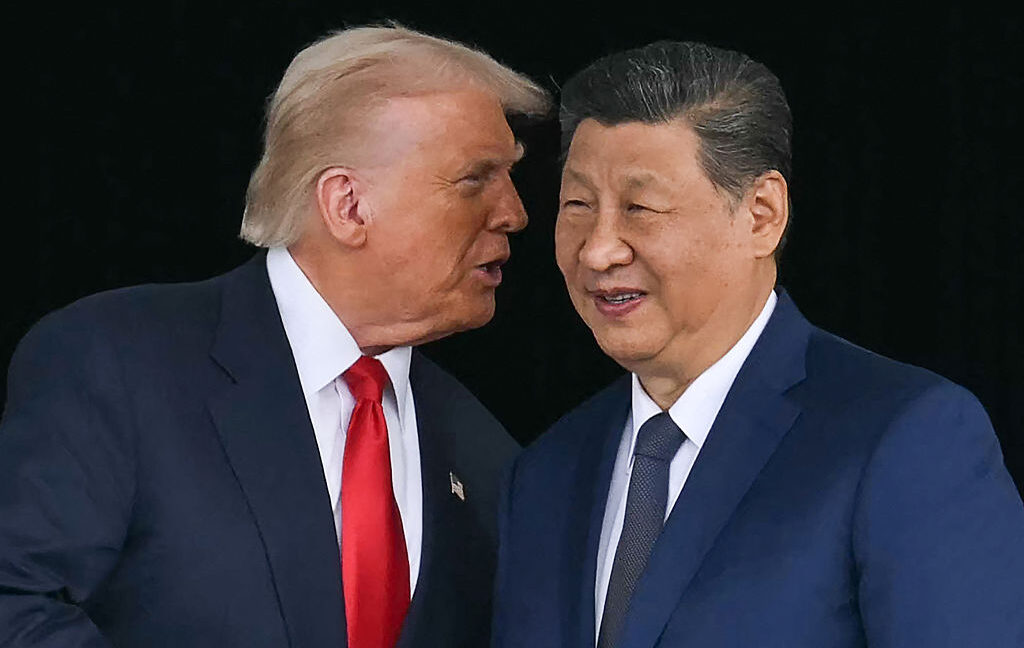
Donald Trump has very little leverage heading into two days of meetings with China's leader, Xi Jinping, in Beijing this week, experts say.

The thinking goes that Trump came into office with a plan that has since largely failed. He hoped to resolve the conflict in Ukraine, settle things down with Israel and Gaza, launch his Liberation Day tariffs, and quickly diversify US supply chains, all of which would have given him substantial leverage over China.

But none of that happened, and instead, Trump's escalations in Iran have only handed China even more leverage heading into talks, and Xi knows it.

Unwilling to appear weak when negotiating with one of America's most critical trading partners and fiercest adversaries, Trump invited executives of some of the biggest US tech firms to tag along.

Among tech leaders joining Trump is Tim Cook, who Trump fondly calls "Tim Apple." The Beijing trip will likely be Cook's "final major diplomatic effort" as Apple's departing CEO, EuroNews noted. Elon Musk will also be there, suggesting that Trump still values the SpaceX CEO's input on foreign policy. And at the last minute, Trump confirmed that Nvidia CEO Jensen Huang will also be attending, which Reuters noted could help Nvidia finally convince China to start buying the high-end chips that Huang convinced the US would be safe to sell to China earlier this year.

Scott Kennedy, a senior adviser at the Center for Strategic and International Studies (CSIS), a bipartisan think tank, recently spent two weeks in Beijing discussing US-China relations with Chinese officials and businesses. At a recent press briefing, he provided insights that could help explain why Trump may have hastily formed this tech gaggle ahead of the summit.

Kennedy suggested that even though China has more leverage, both countries rely on each other at this pivotal moment in the AI race. Nvidia's chips are peerless, Reuters reported, and access to China's rare-earth exports is critical to leading US tech firms.

In the week before the summit, the topic of AI was suddenly added to the agenda, Kennedy noted, with both countries interested in discussing how to manage AI risks after China blocked Meta's acquisition of a Chinese company called Manus.

On Truth Social, Trump said it was an "honor" for tech executives to stand by his side in Beijing, while indicating that his hope was to convince Xi to "open up" China "so that these brilliant people can work their magic and help bring the People’s Republic to an even higher level!"

Possibly, Trump invited the executives to remind China that it depends on US tech firms and can't afford to push Trump too far.

But that doesn't guarantee China will be intimidated by Trump's tech industry pals. Importantly, China has so far resisted buying Nvidia chips while prioritizing advancing chip tech at domestic firms in a bid to be less reliant on the US.

Trump's social media comments caused "deep concerns among China hawks in Washington," Reuters reported. They're worried that Trump will trade away too much, giving China a chance to beef up its military and catch up on AI.

Chris McGuire, a senior fellow for China and emerging technologies at the Council on Foreign Relations and a former official in the Biden administration, told Reuters that Huang's invitation alone should raise eyebrows.

"Any deal that allows Nvidia to sell more chips to ⁠China means fewer Nvidia chips for US firms, and a smaller US lead in AI over China," McGuire said. "It is remarkable that President Trump keeps getting convinced to put Nvidia’s interest ahead of America's."

China wants Trump to pivot on Taiwan

China's top priority at the summit is clear: Xi wants to finally force Trump to discuss Taiwan.

Historically, China has maintained that Taiwan is part of its territory. And the US has treaded lightly, helping Taiwan maintain its self-defense, while cautiously avoiding upsetting China by officially recognizing Taiwan's independence.

In the recent past, China has pressured the US to change the language it uses from "does not support" Taiwan independence to "opposes," and it's possible that Xi sees an opportunity to push Trump to make that symbolic change during the summit, experts suggest.

For Taiwan, the language the US uses matters, as China might be more willing to take military action if Trump's resolve to shield Taiwan remains uncertain.

In an article criticizing Trump's inconsistent stance on Taiwan during his second term, a senior fellow at a progressive think tank called the Center for American Progress, Michael Schiffer, warned that "the administration’s signals on Taiwan have grown so contradictory that neither Beijing nor Taipei can reliably discern American policy."

For example, Trump has accused Taiwan of stealing the US semiconductor industry, but he also authorized the largest arms package the US has ever set aside to aid Taiwan's defense. Rather than align with past administrations' commitments to Taiwan's security, Trump has used the arms package as a bargaining chip to try to force Taiwan to move 50 percent of its semiconductor manufacturing into the US. Perhaps even more frustrating for Taiwan, Trump recently told reporters that whether Xi decides to invade Taiwan is "up to him," Schiffer's piece noted.

"This pattern of strategic flip-flopping broadcasts a dangerous signal to Beijing: For the right price, Taiwan’s security is an expendable line item," Schiffer's piece said. "But this transactionalism is a double-edged sword. Xi likely views any Trump administration commitment with the same skepticism one affords a month-to-month lease, knowing it is liable to reverse course on a whim."

It's important for Trump to clarify his strategic stance on Taiwan, Schiffer said, urging in his article that "strategic instability serves no one’s interests and significantly increases the risk of catastrophic miscalculation. The time to choose a coherent strategy is now, before contradictory signals generate the very crisis they purport to prevent."

In the US, the original strategy was to protect Taiwan to maintain access to its semiconductor industry, which produces over 90 percent of the world's most advanced semiconductor chips.

Trump's trade tactics have set Taiwan on edge. A deputy minister at Taiwan's China-policy-making Mainland Affairs Council, Shen Yu-chung, has confirmed that Taiwan has attempted to "intensify" talks with the US ahead of the meeting, Reuters reported. "We will be watching whether the US makes any changes to its position on Taiwan Strait issues as a result of that meeting," the official said.

Schiffer told Ars that the US shifting its position on Taiwan may not be the worst outcome for Taiwan. Since the COVID-19 pandemic made it clear that supply chains must be diversified, it's no longer practical for Taiwan to expect to maintain overwhelming dominance in the semiconductor industry, he suggested.

Likely, officials in Taiwan are having "complex conversations" about "how to placate Trump," Schiffer said, while coming to terms with the "new world" in which the US can't afford to defend Taiwan's "Silicon Shield" forever.

"Obviously Taipei wants to maintain market share," Schiffer said. "But Taiwan is a single point of failure for the chip market," and it's getting "harder and harder, no matter how well inclined you are towards Taiwan" to argue that the US and "most of the world should depend to that degree on Taiwan as the chip forge for the world."

Most likely, Taiwan will face pressure to move a certain amount of its semiconductor business elsewhere, but the "magic number" that would make that sustainable in the face of a Chinese military threat can't be predicted yet, Schiffer said.

Don't expect a big win for Trump

Experts agree that the US and China will likely extend the temporary trade truce established during Trump's last meeting with Xi, as both sides would benefit from that stability. But it remains unclear how much Trump might be willing to trade as China uses its leverage to push for its biggest asks. Those will likely include the shift on the US position on Taiwan, easing of export restrictions to give China access to more high-end tech, and possibly the removal of Chinese firms from US sanctions lists.

Notably, Trump no longer has emergency tariffs or even his global tariffs to intimidate China, so Xi may get more out of the bargain than Trump likes.

However, China doesn't even need to get any of its biggest asks to emerge as winners from the summit, Kennedy said. "As long as there’s not a blow up in the meeting and President Trump doesn’t go away and look to re-escalate, China basically comes out stronger," Kennedy said.

The best outcome for Trump might be coming out of Beijing with "some pomp and pageantry, but nothing of substance that harms the United States or harms our allies and partners," Schiffer told Ars.

"This may be sort of dialing expectations down, but I would consider that a win at this point," Schiffer said.

At the very least, Trump needs to secure symbolic wins coming out of Beijing, experts agreed, if he wants Republicans to have something to campaign on ahead of the midterm elections.

But if he's really invested in US dominance in AI, he can't actually afford to be short-sighted at the summit, especially after making "massive" cuts to US science funding and research, which drove China to start recruiting top US scientists last year, Kennedy suggested.

"That's really where the competition is going to be won or lost," Kennedy said.

Read full article

Comments


Read the whole story
fxer
5 days ago
reply
Bend, Oregon
Share this story
Delete
Next Page of Stories