17870 stories
·
173 followers

"Notepad++ for Mac" release is disavowed by the creator of the original

1 Share

As its name implies, the venerable Notepad++ text editor began as a more capable version of the classic Windows Notepad, with features such as line numbering and syntax highlighting. It was created in 2003 by Don Ho, who continues to be its primary author and maintainer, and it has been a Windows-exclusive app throughout its existence (older Notepad++ versions support OSes as old as Windows 95; the current version officially supports everything going back to Windows 7).

I'm not a devoted user of the app, but I was aware of its history, which is why I was surprised to see news of a "Notepad++ for Mac" port making the rounds last week, as though it were a port of the original available from the Notepad++ website.

Apparently, this news surprised Ho as well, who claims that the Mac version and its author, Andrey Letov, are "using the Notepad++ trademark (the name) without permission."

"This is misleading, inappropriate, and frankly disrespectful to both the project and its users," Ho wrote. "It has already fooled people—including tech media—into believing this is an official release. To be crystal clear: Notepad++ has never released a macOS version. Anyone claiming otherwise is simply riding on the Notepad++ name."

An escalating back-and-forth

Further communication between Ho and Letov can be found in a Notepad++ GitHub thread, where Ho said he had been contacted by Letov before the Notepad++ for Mac app had launched, but that he hadn't had time to reply.

"The problem is that using the official name Notepad++ and its logo gives the impression that your project is an official macOS version maintained or endorsed by the Notepad++ team, which is not the case," wrote Ho in an email to Letov that he reposted to GitHub. "This create [sic] confusion for users and exposes both you and the project to trademark issues."

Letov responded two days later, saying he hadn't meant to insinuate that Ho was involved with the Notepad++ for Mac project. But he did insist that his port "actually expands notepad++ brand to mac" and expressed hope that Ho would allow him to continue to use the name. Ho responded, again asking Letov to stop using the Notepad++ name and logo and to change the project's URL so that users would not mistake the project for an official Notepad++ port and contact Ho looking for support.

"I will prep for the site and some naming changes," wrote Letov. "Give me a couple of weeks. My intention was to expand your brand. I really hope that at some point in the future you change your mind and see this as a positive growth for your brand."

At this point, Ho seemed to lose patience with Letov's responses, particularly with being asked to allow Letov to continue using the Notepad++ name for "a couple of weeks." Ho reported the use of the Notepad++ trademark to Cloudflare, the CDN of the Notepad++ for Mac site, and asked Letov to take it down.

"Every day that website remains active, you are in further violation of the law," Ho wrote earlier today. "I cannot authorize a 'week or two' of continued trademark infringement."

Letov began changing the website two days ago, though at first he claimed to be making these changes "in coordination with Don Ho." This drew further accusations from other GitHub users that he was trying to misrepresent the port's relationship to the original project.

Those changes continue and have ramped up over the last few hours; the app will now be called "NextPad++," an homage to NeXT Computer, and uses a frog icon rather than the Notepad++ lizard. The original version, along with the authors page that lists Ho beneath Letove, is available via Internet Archive snapshots.

Letov claims that the app's name will change in version 1.0.6. Version 1.0.5, with the Notepad++ logo and branding intact, is available for download. The project's URL also hasn't changed.

A seemingly thoughtful but low-effort port
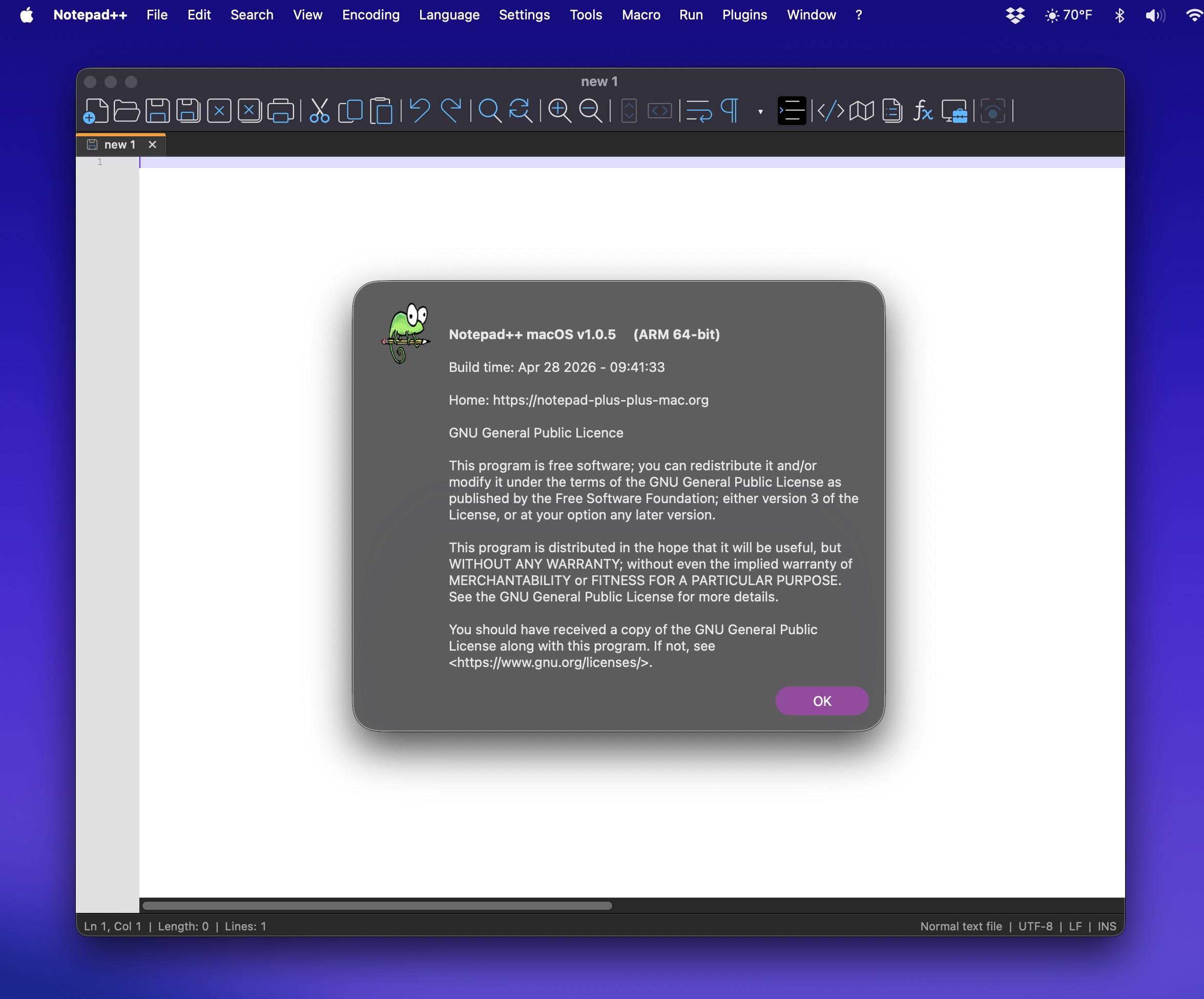
The "Notepad++ for Mac" app looks right, but there are reasons to prefer an "official" port when you can get one. Credit: NextPad++

I had considered writing about Notepad++ for Mac last week, but lost a bit of interest after discovering it was "an independent community port" rather than an official release—independent ports and forks are all well and good, but an official release implies ongoing updates and support, where an "independent community port" might fade away or vanish entirely as soon as its creator gets bored and/or moves on.

But I continued to dig because, at a glance, it seemed like an exceptionally thoughtful community port. It supported macOS versions dating back to 11.0 Big Sur on both Intel and Apple Silicon processors. It was a native macOS app with a Cocoa user interface that replaces the original Win32 interface rather than translating it or using a wrapper. The app seemed to be lightweight and clean, as promised. And it was properly notarized so that users could download and launch it relatively easily—not a given, for many independent and/or open source Mac software projects.

But I paused when I hit Letov's About page, which mentioned being "deep in multi-agent AI" and showed a flurry of GitHub commits that happened exclusively in March and April 2026. The Notepad++ for Mac page made no mention of the project being AI-coded, but when contacted for comment, Letov confirmed that both the Notepad++ for Mac app and the website were created at least partially using Anthropic's Claude CLI.

"I primarily use Claude CLI with some customizations to run multiple agents and also Codex plugin for VSS. I also use Beads," Letov told Ars. "Website is also partly managed using Claude CLI plus some manual work on graphics."

"I run some agents that scan for Issues and general issues reported, list/create options to implement features and fixes. I usually review most and decide on the path," Letov continued when asked how much human oversight the project had. "Also UIs are not as easily tested by AI as backend code and some things have to be thought through and build iteratively."

It's not that I think the use of AI coding tools should be disqualifying in and of itself. AI coding tools do have real utility, and many companies and projects are making at least some use of them; you likely are running or will eventually run an app containing AI-generated code whether you want to or not. But the port being both "independent" and AI-generated heightens my existing concerns about ongoing support and the developer's capability to address bug reports and merge upstream code.

And, as Ho and other users warned in the GitHub thread, downloading an unvetted unofficial port of a project can increase your risk of downloading malware.

"I apologize for sounding paranoid, but I have not verified your code & binaries, and I have no time to do so," wrote Ho, who comes by his concern about hidden malware in Notepad++ honestly.

Read full article

Comments


Read the whole story
fxer
57 minutes ago
reply
Bend, Oregon
Share this story
Delete

GameStop offers $56 billion for eBay, struggles to explain how it'll pay for it

1 Share

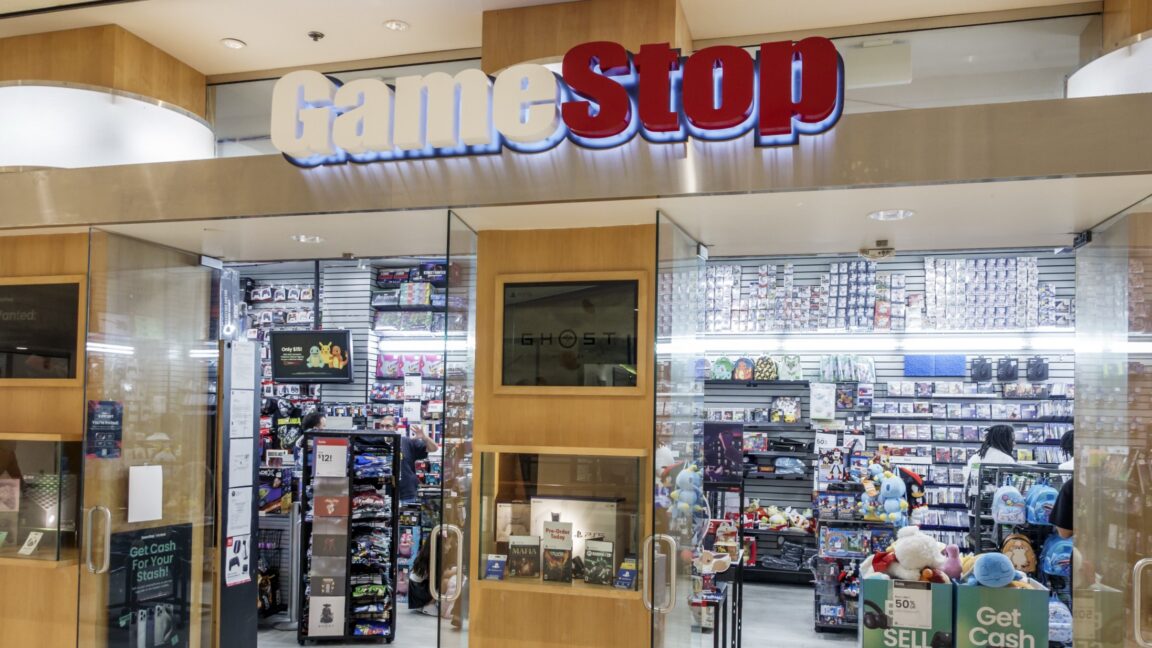
GameStop yesterday made an unsolicited offer to buy eBay for $55.5 billion. GameStop claims that eBay has underperformed and spends too much on sales and marketing and argues that it would become a stronger company if it cuts costs and is combined with GameStop's physical retail locations.

"GameStop’s ~1,600 US locations give eBay a national network for authentication, intake, fulfillment, and live commerce," GameStop Chairman and CEO Ryan Cohen wrote in a letter to eBay Chairman Paul Pressler.

eBay's market capitalization is over four times larger than GameStop's. GameStop faces skepticism about the viability of its offer but says it will obtain debt financing and pay with a mix of cash and stock.

GameStop's proposal envisions a system in which GameStop staff inspect and verify items to be listed on eBay. "GameStop staff already inspect and grade hardware and trading cards every day. Sellers walk in, items are verified on the spot, and listings carry a trust badge," the proposal said.

The stores will "serve as drop-off and shipping nodes," providing "a national fulfillment network without incremental eBay capital expenditure," GameStop said. The stores, according to GameStop's plan, will "double as broadcasting studios. eBay supplies the inventory and the buyer base; GameStop supplies the physical footprint to compete in the live-commerce category." This would apparently help eBay sellers use livestreaming to promote their products.

Cohen intends to become CEO of the post-merger company if eBay accepts the deal and completes it. A GameStop press release said that Cohen "owns ~9% of GameStop and receives no salary, no cash bonuses, and no golden parachute. He will be compensated solely based on the performance of the combined company."

Doubts about GameStop's ability to finance deal

GameStop is still chugging along five years after its meme-stock mania, though it reportedly closed about 470 stores in the US at the beginning of 2026. It also closed 590 US-based stores in 2024. As of this writing, GameStop's stock price had fallen about 2 percent today, while eBay's had risen about 5 percent.

Unsurprisingly, GameStop faces skepticism about its ability to finance a deal to buy a much larger company. GameStop has a market capitalization of about $11 billion, while eBay is worth about $48 billion. GameStop's offer for eBay is $125 per share, half in cash and half in GameStop stock.

Cohen said GameStop had about $9.4 billion in cash and liquid investments as of January 31 and will fund the cash portion of the offer with "cash and liquid investments on GameStop’s balance sheet and third-party equity and debt financing." Cohen's letter said GameStop has "a highly-confident letter from TD Securities for up to $20 billion," indicating that TD is confident it can arrange financing but that the debt portion of GameStop's offer is not yet finalized.

Cohen took questions about the financing on CNBC's Squawk Box today, but co-anchor Andrew Ross Sorkin said the deal math doesn't make sense. Sorkin noted that GameStop's market capitalization, cash, investments, and potential financing from TD add up to $40 billion, leaving a gap of $16 billion to complete the $56 billion deal.

"We'll see what happens," Cohen responded.

Sorkin followed up by asking where the rest of the money comes from. Cohen answered, "it's half cash, half stock."

Sorkin tried again, saying, "that math doesn't get you to the price that you're offering." Cohen responded, "I don't understand your question. We're offering half cash, half stock, and we have the ability to issue stock in order to get the deal done."

CNBC hosts also asked Cohen for evidence that he can grow a consumer business that can rival Amazon, given that GameStop revenue has declined sharply the past few years. GameStop's net sales were $3.6 billion in fiscal year 2025, compared to $6 billion in 2021.

“Didn’t you guys call for GameStop’s demise multiple times? Like, it should have been bankrupt by now?” Cohen said. “Look at our financial performance. Is it better than you guys anticipated? Because you guys said it was going to be doing really, really poorly, and it’s actually doing okay.”

"Fundamentally different" business models

Describing his ambitions, Cohen said that "eBay has the second largest commerce franchise and there's a big opportunity to do something much larger and pull costs out of the system as well as accelerate revenue growth and leveraging our physical infrastructure, our focus on collectibles. It could be a much larger business, but bringing in an entrepreneurial mindset is what I plan on doing."

At another point, Cohen said that GameStop is in a "very difficult business" and "should have been bankrupt multiple times over, and it's doing okay, it's making a few bucks. eBay is in a very, very strong position but it could be in a much stronger position."

GameStop's press release said its $125-per-share offer amounts to a 46 percent premium over eBay's closing price on February 4, the day GameStop started accumulating a stake in the company. GameStop's current stake in eBay is 5 percent.

eBay confirmed that it received the offer in a press release today and said that "eBay had no discussions with or outreach from GameStop prior to receiving the proposal." eBay said its board "will review this proposal with a focus on the value to be delivered to eBay shareholders, including the value of the GameStop stock consideration and the ability of GameStop to deliver a binding, actionable proposal."

Morgan Stanley analysts issued a research note saying that eBay and GameStop have "fundamentally different" business models. "eBay is a 3P [third-party] eCommerce marketplace that doesn't take inventory risk while GameStop is primarily an in-store wholesaler," stated the research note, which was provided to Ars. "Given those dynamics, we struggle to outline meaningful potential cross-sell synergies as most of GameStop's inventory is already available on eBay while the long-tail inventory base of eBay isn't well suited for in-store retail."

GameStop wants to slash eBay marketing budget

Morgan Stanley similarly doubted the potential cost savings. "On the expense side, we also think the potential opportunities would likely be minimal as physical and digital business require different cost bases, as do 3P marketplaces vs. 1P wholesalers. To add another challenge, GameStop has already undergone a series of large cost cuts," the research note said.

Morgan Stanley analysts expressed skepticism about "how a deal would be financed given the material valuation gap." If completed, they said it could end up as the largest leveraged buyout ever, "surpassing the recently announced $55 billion Electronic Arts transaction."

GameStop said that eBay spent $2.4 billion on sales and marketing in fiscal 2025 but added only 1 million net active buyers, increasing the total from 134 million to 135 million. GameStop said it would cut $1.2 billion from eBay's sales and marketing budget, arguing that the current spending "is not producing more users on a marketplace with near-universal brand recognition."

GameStop proposed cutting another $300 million from eBay's product development expenses and $500 million from general and administrative functions. The combined company will consolidate its finance, HR, real estate, legal, IT, and professional services after the merger to save money, GameStop said.

GameStop touted its own financial performance under Cohen, saying that it "moved from a $381 million net loss in fiscal 2021 to $418 million of net income in fiscal 2025." eBay meanwhile said in its press release today that its "board and leadership team are executing a focused strategy to drive sustainable growth and long-term shareholder value."

eBay last week reported Q1 2026 revenue of $3.1 billion, up 19 percent year over year. eBay's GAAP net income was $512 million, up 2 percent.

GameStop, which is on a different fiscal schedule, reported net sales of $1.1 billion in Q4 2026. That was down from $1.28 billion in the prior year's fourth quarter. GameStop's Q4 net income also fell year over year, from $131.3 million to $127.9 million.

Read full article

Comments


Read the whole story
fxer
7 hours ago
reply
Bend, Oregon
Share this story
Delete

Your Biggest Vulnerability is your Shitty Compensation

4 Shares

My fourth month of unemployment. I'm fresh off an interview with a senior technical role advertised with a decent compensation range whose upper end would let me make median rent, and whose lower range would not. At the end of an excellent interview, I am informed that said compensation range, contrary to the Base Compensation tag in the job description, is in fact all inclusive, and that the role actually tops out below the living wage threshold for a three adult household for its base compensation.

I feel it's highly relevant to note that this was a role where I would own the entire technology estate for an employer. Every switch, every firewall, every database, every server, every phone, every laptop, every cloud, every badge system. All data, everywhere, at any time.

Everything.

For an employer in the public safety industry.

Seriously, this is a company first responders rely on for tech, and they want to pay below subsistence wages to senior technical people!

This is not the first time that compensation has been mismatched to the role, but it is the first time it's happened with a role so critically important to a company playing such an outsized role in as critical an area as public safety.

Which got me thinking: have employers just lost the plot on what compensation is actually for? What its intended function is? Because it seems to me that everyone thinks compensation is merely payment for labor and nothing more, a number to be driven down by any means necessary in order to keep more for those at the top.

And oh my god it is so much more than that.

We live in a society. This society has been arranged around using currency to purchase necessities, because some people decided that necessities are not guaranteed. You acquire currency by either investing currency you already have to compound it through the labor of others, or you labor in order to earn less currency than investors do.

Is that a gross oversimplification? You betcha, but I'm really trying to stay on topic and not fill this with reaction GIFs.

Author's Note: I failed.

Anyway, everyone needs currency to afford everything. Rent costs currency, food costs currency, electricity costs currency, water and sewage and garbage and healthcare and childcare and education all cost currency. Only after your essentials have been paid for, can you use excess currency to save for tomorrow - buying a home, or a car, or a retirement if you're really lucky.

Now at some point, the humans involved in handing out currency decided that too many people were living too nicely. The thinking was simple: trading time for currency in the form of labor was a sucker's game, and those with currency deserve more currency because they already had currency. Companies in particular deserved more money than the people who worked for the company, at least according to Powell.

Thus labor was reframed into those terms: wages were merely a payment to those who did labor, and labor was only to be paid the minimal amount possible in the marketplace for said labor, and not one cent more, regardless of external forces (like the cost of living). Minimum wages are bad, because wages should only ever go down relative to inflation and productivity, never up. Only those who own business deserve more currency, because they're the real workers.

Again, a gross oversimplification coming from an openly biased dinosaur. That's not the point.

The point is that wages aren't meant to merely compensate labor; they're also meant to protect the company.

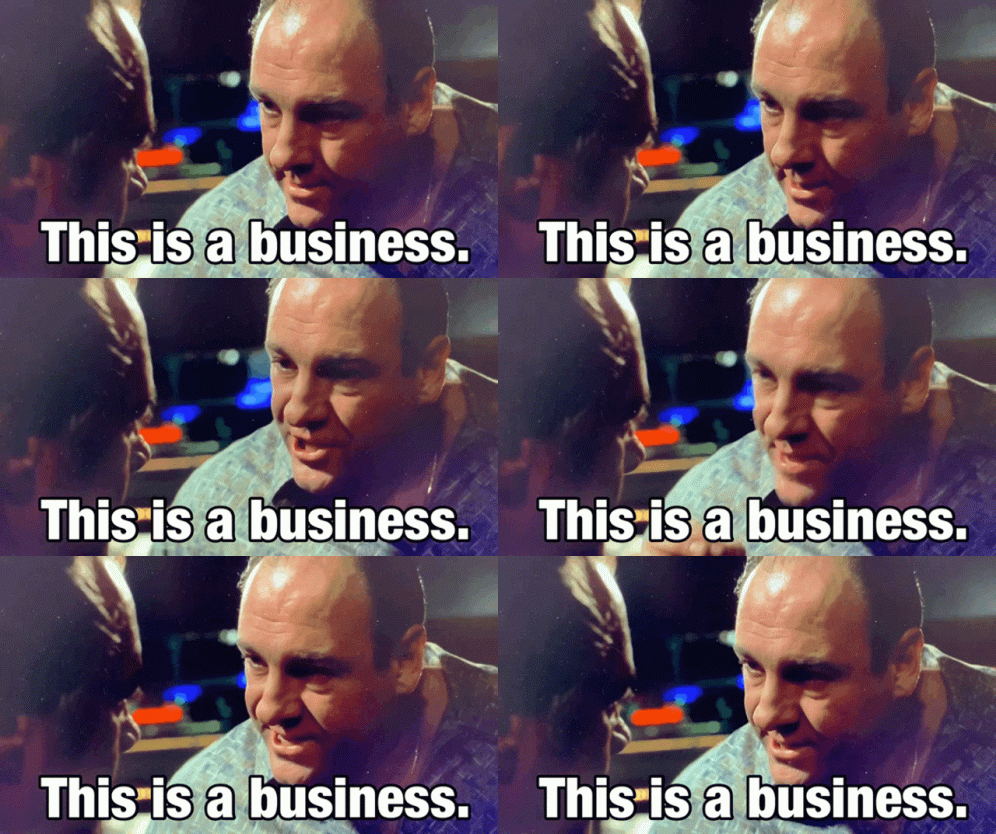
Tony Soprano reminding you that this is a business.

I'll just be blunt: wages are also protection money. They're not just compensation for doing your job, they're compensation for not burning down warehouses, not going on strike, not sabotaging workloads, and not unionizing in the first place. It's the longest unspoken social contract dating back to pre-history: you pay me to live, or else.

Occasionally, employers will call labor's bluff. If twenty-thousand years of history is any indication, their temporary wins are always undone by the sheer ratio of workers to wealthy owners, though not before employers provoke and employ violence first. We are going through such a phase right now, if the above links are any indication.

Employers haven't paid their dues to labor in decades. Labor, kind as we are, have cut back on our lives as much as we're able to. We've given up homeownership, we're dropping out of healthcare, we're begging from food pantries, we're taking on gig work, and we've seen none of the wage gains from productivity our elders enjoyed. It's gotten so bad that, with workers having sacrificed our very ability to move up the socioeconomic ladder, the economy has gone K-shaped.

Despite this, employers seem to think there's more room for workers to yield. I say this because despite median wages being unable to afford median homes, I'm still finding employers offering lower and lower pay for work on their job descriptions. This isn't just economics anymore, this is a security risk, and employers are playing with fire.

Modern employers

Take your CPA, for instance, median pay of $81,680 a year and at moderate exposure to AI displacement according to Anthropic. These are people who know your books better than you. Where every penny goes, and where every penny can be silently swindled. They also audit your fancy new AI financial workflows, making corrections when it goes off the rails, and know where all your financial skeletons are buried.

Do you really want to pay your accountant so little that they can't make rent or buy a home? Do you really want them going to a food bank instead of a grocery store? They're excellent at judging risk, and know exactly what that pay gap is worth to them if the timing is right. Maybe it's blowing the whistle before you can fix an issue and leading to a costly investigation, maybe it's sharing your supply chain costs with a competitor for a higher paying job, or maybe it's committing outright embezzlement that they're sure your fancy AI tooling will miss.

Are you sure underpaying your accountant is a good idea?

Tech work, the last bastion of Middle Class employment, isn't doing any better. Take Computer and Network Architects, with a median pay of $130,390 per year; or the Computer Systems Analysts, median pay of $103,790 per year; or the Systems Administrators, with a median pay of $96,800 per year. These groups have the keys to your systems, your data, your endpoints, your real estate. They can see and do anything with a keystroke, including destroying billion-dollar businesses. The reason for the comparatively high wages was their comparatively high degree of trust.

Instead, employers outsourced to MSPs, then offshored overseas, then on-shored to underpaid and exploited H1Bs shackled to their employer's temporary sponsorship, then briefly hired North Korean spies, and are now attempting to replace the technical workers outright with AI that routinely drops production systems. All the while they lay off workers by the tens of thousands, over and over again.

I feel like there's an example of the consequences of not treating your technical experts with respect in popular media...

Dennis Nedry is a fucking asshole whose actions endangering personnel and guests were reprehensible, but he did repeatedly make it clear he felt undervalued relative to his contributions...

I'm not Dennis Nedry, but I've worked with folks like them before. Brilliant minds who can debug complex architectures and systems, who pour their lives quite literally into the work because they have a passion for it...and increasingly are all too willing to burn it to the ground when they feel slighted. Spend time around actual engineers and the like in most orgs, and you'll see patterns of ill-health: smokers, drinkers, chewers, vapers, over-eaters, out-of-shapers, poor posture, bags under eyes, thinning and greying hair, high amounts of stress, messy desks. All signs of humans sacrificing their own health for their employers, prioritizing work over life, overworked to an early grave.

Most folks aren't as egalitarian as I am, and as someone who has sacrificed physical, mental, emotional, and psychological health to the field for over fifteen years, I sympathize with where my peers are coming from. Most people aren't wired to "do no harm" no matter what, which means most people are a huge security risk if they're undercompensated.

Thing is, undercompensation isn't limited merely to your specialists and senior workers. Fast food workers will slow down lines to give themselves breathing room due to understaffing, and retail workers won't put in the added effort of store maintenance when they can't even maintain a roof over their heads. Office workers doing more menial tasks aren't going to follow through on security best practices if they're more worried about how to pay the electric bill this month while also affording insulin. Your contracted-out security staff aren't likely to pay close attention to camera feeds since they know they'll be replaced in three months before benefits kick in. Your MSP or offshored technical staff won't be invested in your long-term success when their KPIs only cover ticket counts and response times, and their competitors are already preparing to underbid at renewal anyhow.

The workers have been incredibly clear about their problems for twenty years, now, especially the younger cohorts. Employers haven't wanted to listen, believing one more technical control or one more AI system will finally give them the permanent, unassailable leverage they need to keep all the money and fire all the workers.

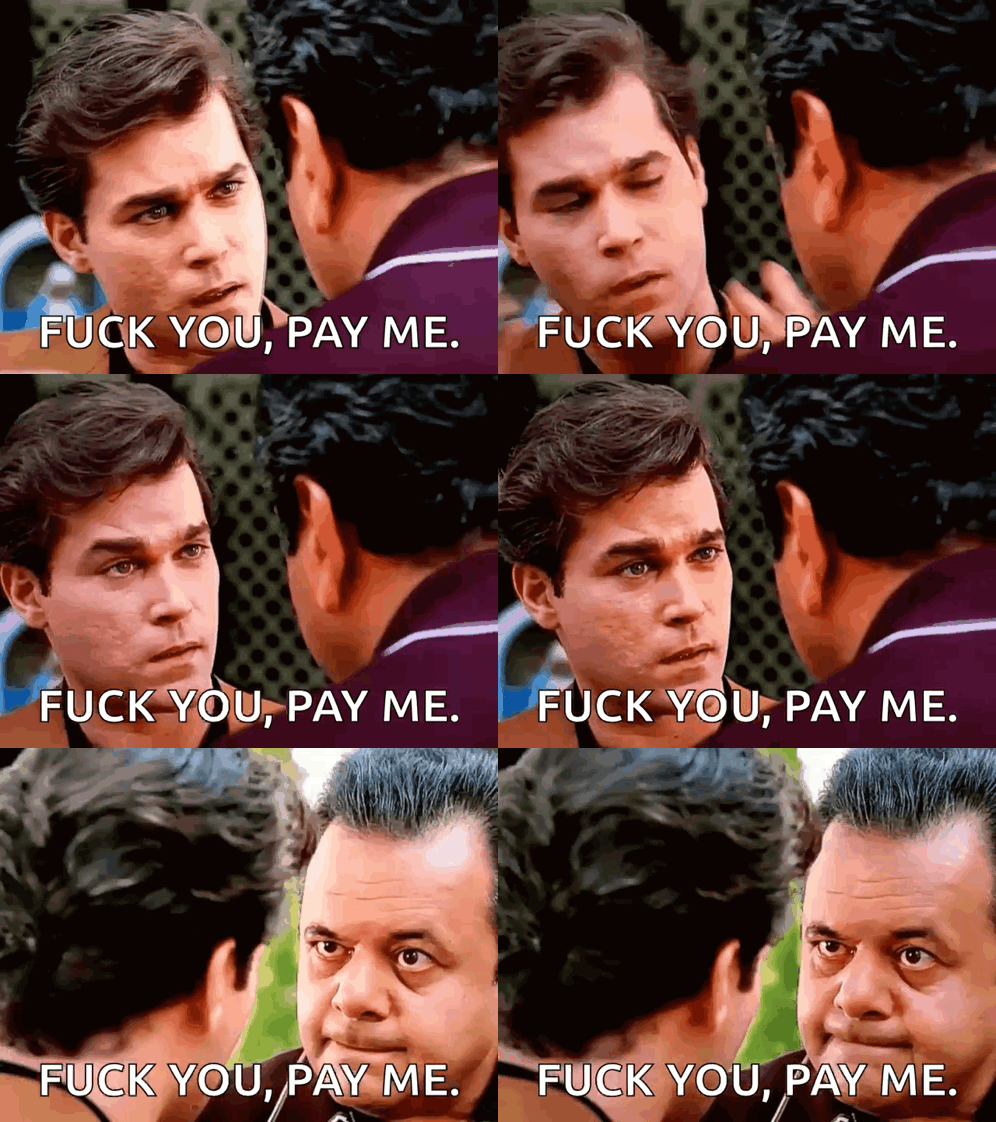
Fuck you, pay me.

I don't really have a positive way to end this. This is a warning, another canary in an increasingly smoke-choked mine. We're at the point that workers are quite literally burning down infrastructure and engaging in violence against leadership, and the response from those who can change things - our politicians, our corporate leaders, the investor class that's richer than ever in human history - don't really seem to give a fuck. There's this thick tension in the air between workers scrambling to survive, and monied classes who feel the demands of the workers are wholly unreasonable.

History paints a pretty clear picture of how this ultimately ends, but for what it's worth, I still feel like I should at least try to warn folks about the consequences of undercompensation.

Failing to pay your workers the money they need to live is breaking the social contract. It's the single biggest security vulnerability in your organization, and I promise you that there is not, and never will be, a technological control that can protect against it.

You gotta pay up, or you're going to get burned down.

Milton was right.

An addendum.

AI is making it faster and easier to brute-force security vulnerabilities at a time when open source is falling apart due to lack of funding and successors. Major companies are firing engineers to replace them with AI tooling, then hiring them back at lower pay packages when the AI fails, but still holding the AI Sword of Damocles over their heads. Software is expanding rapidly at a time when employers seek to eliminate the technical professionals who ensure their safety and prosperity, who can translate institutional processes and knowledge into cost-effective infrastructure.

Housing prices are up. Rent is up. Utilities are up because of AI datacenter builds. Food costs are rising due to global conflicts instigated by America. So too are energy prices, tariffs, inflation, and interest rates.

You, the employer, have a decision to make: do you start raising wages, working with policymakers to immediately address affordability, cease arbitrary layoffs, invest in worker futures, and promote regulatory schemes that reign in the worst myopic excesses of your peers for society's collective benefit?

Or do you take up smoking cigarettes while sitting inside a warehouse of loose gunpowder and dynamite, with a mob of torches and pitchforks right outside?

Coco has had it up to here with your bullshit.
Read the whole story
fxer
2 days ago
reply
Bend, Oregon
acdha
3 days ago
reply
Washington, DC
Share this story
Delete

Apple may take "several months" to catch up to Mac mini and Studio demand

1 Share

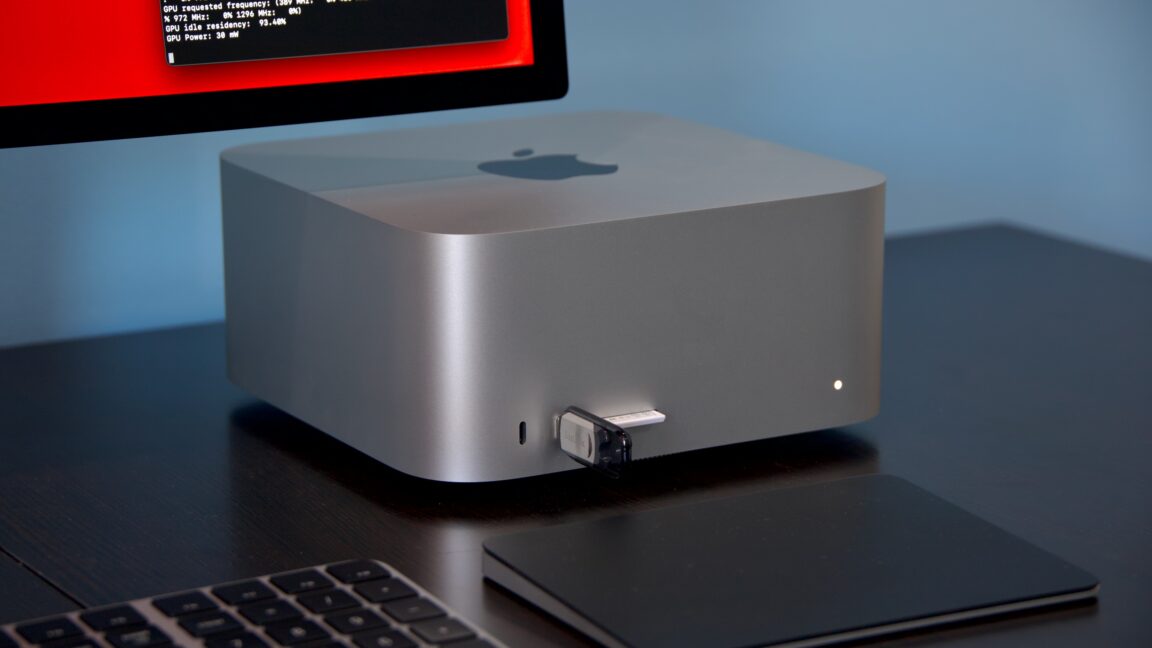
Apple's Mac mini and Mac Studio desktops have been increasingly difficult to buy over the course of the year—multiple configurations are listed on Apple's site as "currently unavailable," which almost never happens, and others will take weeks or months to ship if you order them today. A top-end version of the Mac Studio with 512GB of RAM was delisted from Apple's store entirely.

Current Apple CEO Tim Cook addressed the situation on Apple's Q2 earnings call yesterday as part of a larger conversation about how Apple is navigating component shortages, and he partly blamed the shortage on the popularity of those desktops among users looking to run AI agents and other tools locally.

"Both [the Mac mini and the Mac Studio] are amazing platforms for AI and agentic tools, and the customer recognition of that is happening faster than what we had predicted, and so we saw higher-than-expected demand," said Cook. "We think looking forward that the Mac mini and the Mac Studio may take several months to reach supply-demand balance."

Cook wasn't specific about what components were driving the Mac mini and Studio shortages, though he did say that generally, "availability of the advanced [manufacturing] nodes our SoCs are produced on" was constrained, and "we have less flexibility in the supply chain than we normally would." In other words, it has become harder for Apple to go to TSMC and ask for more chips because TSMC doesn't have the spare manufacturing capacity. Cook said these constraints "primarily" affected the iPhone, though, and only affected the Mac "to a lesser extent."

As we wrote last month, the extent of the shipping delays can probably be blamed on multiple factors. AI-related demand for the desktops and chip shortages are probably factors, but Apple is also said to be planning replacements for both systems with Apple M5-series chips later this year, and it's common for models to see their ship times slip when replacements are imminent. Cook's "several months" estimate could easily include the introduction of new models, plus whatever time Apple needs to catch up to pent-up demand afterward.

Cook also noted that "customer response to MacBook Neo has been off the charts, with higher-than-expected demand" and that Apple "set a March record for customers new to the Mac, partly due to the Neo." (Note that "a March record" is not the same thing as "an all-time record," but regardless, it seems that demand for the Neo has been healthy.)

But MacBook Neo availability has been much better than for the Mac mini or Studio. A Neo ordered directly from Apple will usually arrive in two or three weeks, but this time window has stayed roughly the same since early March. The Neo also remains widely available for same-day shipping or pickup at third-party retailers like Amazon, Walmart, and Best Buy, which is not true of most Mac mini or Studio models.

Supply constraints aside, Apple's Q2 2026 was a successful one for the company. Apple made $111.2 billion in revenue, a 17 percent increase over Q2 of 2025, thanks to strong growth from iPhone 17 sales and its Services division. The Mac also grew 6 percent year over year despite the shortages affecting the Mac mini, Mac Studio, and MacBook Neo. But Apple isn't immune to the industry-wide RAM shortage: Cook said that Apple expected "significantly higher memory costs" for Q3 than it paid in Q2 and that "memory costs will drive an increasing impact on our business" going forward.

Read full article

Comments


Read the whole story
fxer
3 days ago
reply
Bend, Oregon
Share this story
Delete

Microsoft open-sources "the earliest DOS source code discovered to date"

1 Share

Several times in the last couple of decades, Microsoft has released source code for the original MS-DOS operating system that kicked off its decades-long dominance of consumer PCs. This week, the company has reached further back than ever, releasing "the earliest DOS source code discovered to date" along with other documentation and notes from its developer.

Today's source release is so old that it predates the MS-DOS branding, and it includes "sources to the 86-DOS 1.00 kernel, several development snapshots of the PC-DOS 1.00 kernel, and some well-known utilities such as CHKDSK," write Microsoft's Stacey Haffner and Scott Hanselman in their co-authored post about the release.

To understand the context, here's a very brief history of what would become MS-DOS: Programmer Tim Paterson originally created 86-DOS (previously known as QDOS, for "quick and dirty operating system") for an Intel 8086-based computer kit sold by Seattle Computer Products. Microsoft, on the hook to provide an operating system for the still-in-development IBM PC 5150, licensed 86-DOS and hired Paterson to continue developing it, later buying the rights to 86-DOS outright. Microsoft then licensed this operating system to IBM as PC-DOS while retaining the ability to sell the operating system to other companies. The version sold by Microsoft was called MS-DOS, and the proliferation of third-party IBM PC clones over the '80s and '90s made it the version of the operating system that most people ended up using.

This source code is old enough that it hadn't been stored digitally. "A dedicated team of historians and preservationists led by Yufeng Gao and Rich Cini," calling itself the "DOS Disassembly Group," painstakingly transcribed and scanned in code from paper printouts provided by Paterson. This process was made even more difficult because modern OCR software struggled with the quality of the decades-old printout.

Microsoft has also open-sourced several of its other early software projects. In 2014 (and again in 2018), the company open-sourced MS-DOS versions 1.25 and 2.0. It followed that up in 2024 with the oddball MS-DOS 4.0 release. Those versions are all available in the same GitHub repo. Other open-sourced projects include the game Zork and its sequels and 1995's Microsoft 3D Movie Maker (plans to modernize this app and add new features have largely gone nowhere). The open source remake of the old MS-DOS Editor isn't actually the same app as the old EDIT.COM, but its heart is in the right place.

For students of early PC history, this isn't even the first piece of 86-DOS history that has been newly rediscovered this decade. Just two years ago, the earliest known version of 86-DOS was rediscovered and uploaded to the Internet Archive.

Read full article

Comments


Read the whole story
fxer
4 days ago
reply
Bend, Oregon
Share this story
Delete

Stranded traveler gets more than he bargained for in Resident Evil teaser

1 Share

The Resident Evil film franchise has grossed over $1.2 billion worldwide since the first film debuted in 2002, but an attempt to reboot it a few years ago floundered. Sony Pictures is trying again, this time tapping Zach Cregger—who wrote, produced, and directed last year's Oscar-winning horror hit Weapons—for the project. The studio showed the first teaser for Cregger's Resident Evil during CinemaCon and just released it to the wider public.

When the first Resident Evil game debuted in 1996, it was an immediate commercial and critical success, spawning several sequel games, comics, novels, and a very lucrative film franchise directed by Paul W.S. Anderson and starring Milla Jovovich. But those films were only loosely based on the games, keeping a few primary characters and the basic concept, but little else. Reviews were mixed, despite the films' massive box office success.

Work on the first reboot started in 2017, eventually producing 2021's Resident Evil: Welcome to Raccoon City. Director Roberts Johannes wanted to bring a very different tone to his film. He wanted to stay closer to the Resident Evil and Resident Evil 2 games—even employing the same fixed angles of Spencer Mansion in the first game. Alas, Welcome to Raccoon City was critically panned and had a disappointing box office showing, grossing just $42 million globally against its $25 million budget. The studio nixed its plans for a direct sequel, and a 2022 Netflix series was also canceled after a less-than-stellar first season.

But now it's Cregger's turn. According to Cregger, this new film is not a direct game adaptation, but an original story with original characters set in the same fictional universe. He told the audience at CinemaCon that his film will have “no narrative acrobatics, time jumps or disorienting chapter things,” preferring his audience to be “locked in with a protagonist on a foot journey through a world hell-bent on destroying them.” Nor will it be like Weapons; Craggler's Resident Evil vision, he said, is closer to Evil Dead II. But it would, he said, be "true to the spirit of the games."

Per the official logline: "Resident Evil follows Bryan (Austin Abrams), a medical courier who unwittingly finds himself in a nonstop race for survival as one fateful, horrifying night collapses around him in chaos." Joining Abrams (who also appeared in Weapons) in the main cast are Paul Walter Hauser as Carl; Zach Cherry as Dave; Kali Reis as Pauline; and Johnno Wilson as Max.

The new Resident Evil hits theaters on September 18, 2026.

Read full article

Comments


Read the whole story
fxer
4 days ago
reply
Bend, Oregon
Share this story
Delete
Next Page of Stories