Log in


The writer and comedian Megan Koester got her first writing job, reviewing Internet pornography, from a Craigslist ad she responded to more than 15 years ago. Several years after that, she used the listings website to find the rent-controlled apartment where she still lives today. When she wanted to buy property, she scrolled through Craigslist and found a parcel of land in the Mojave Desert. She built a dwelling on it (never mind that she’d later discover it was unpermitted) and furnished it entirely with finds from Craigslist’s free section, right down to the laminate flooring, which had previously been used by a production company.
“There’s so many elements of my life that are suffused with Craigslist,” says Koester, 42, whose Instagram account is dedicated, at least in part, to cataloging screenshots of what she has dubbed “harrowing images” from the site’s free section; on the day we speak, she’s wearing a cashmere sweater that cost her nothing, besides the faith it took to respond to an ad with no pictures. “I’m ride or die.”
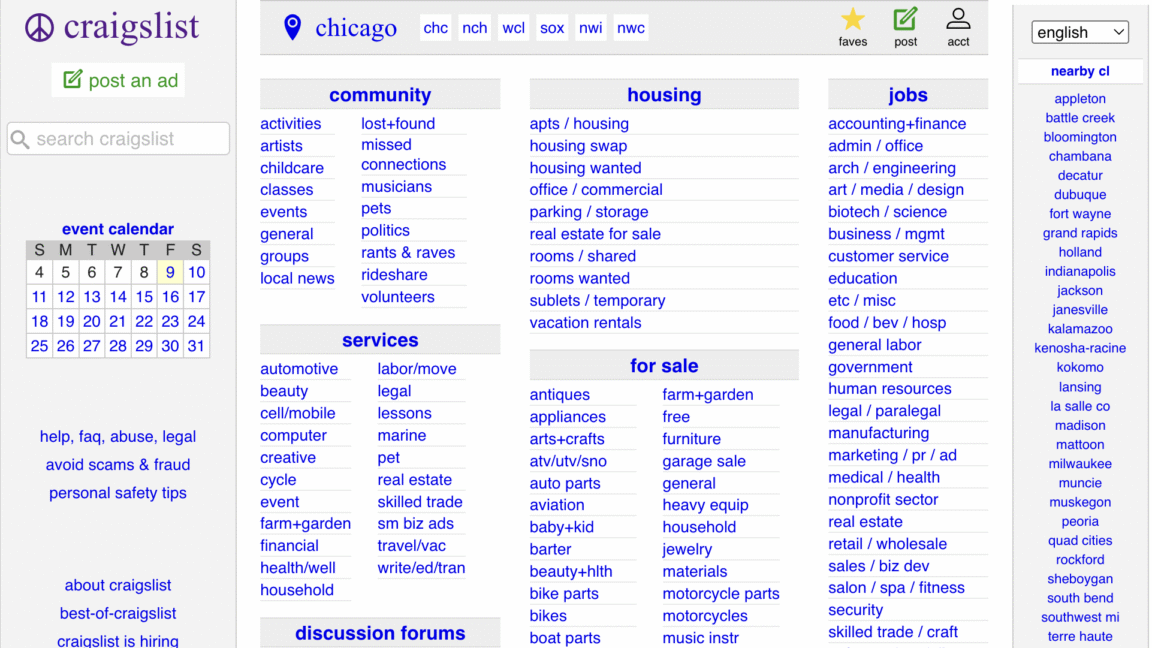
Koester is one of untold numbers of Craigslist aficionados, many of them in their thirties and forties, who not only still use the old-school classifieds site but also consider it an essential, if anachronistic, part of their everyday lives. It’s a place where anonymity is still possible, where money doesn’t have to be exchanged, and where strangers can make meaningful connections—for romantic pursuits, straightforward transactions, and even to cast unusual creative projects, including experimental TV shows like The Rehearsal on HBO and Amazon Freevee’s Jury Duty. Unlike flashier online marketplaces such as DePop and its parent company, Etsy, or Facebook Marketplace, Craigslist doesn’t use algorithms to track users’ moves and predict what they want to see next. It doesn’t offer public profiles, rating systems, or “likes” and “shares” to dole out like social currency; as a result, Craigslist effectively disincentivizes clout-chasing and virality-seeking—behaviors that are often rewarded on platforms like TikTok, Instagram, and X. It’s a utopian vision of a much earlier, far more earnest Internet.
“The real freaks come out on Craigslist,” says Koester. “There's a purity to it.” Even still, the site is a little tamer than it used to be: Craigslist shut down its “casual encounters” ads and took its personals section offline in 2018, after Congress passed legislation that would’ve put the company on the hook for listings from potential sex traffickers. The “missed connections” section, however, remains active.
The site is what Jessa Lingel, an associate professor of communication at the University of Pennsylvania, has called the “ungentrified” Internet. If that’s the case, then online gentrification has only accelerated in recent years, thanks in part to the proliferation of AI. Even Wikipedia and Reddit, visually basic sites created in the early aughts and with an emphasis similar to Craigslist’s on fostering communities, have both incorporated their own versions of AI tools.
Some might argue that Craigslist, by contrast, is outdated; an article published in this magazine more than 15 years ago called it “underdeveloped” and “unpredictable.” But to the site’s most devoted adherents, that’s precisely its appeal.
“ I think Craigslist is having a revival,” says Kat Toledo, an actor and comedian who regularly uses the site to hire cohosts for her LA-based stand-up show, Besitos. “When something is structured so simply and really does serve the community, and it doesn't ask for much? That’s what survives.”
Toledo started using Craigslist in the 2000s and never stopped. Over the years, she has turned to the site to find romance, housing, and even her current job as an assistant to a forensic psychologist. She’s worked there full-time for nearly two years, defying Craigslist’s reputation as a supplier of potentially sketchy one-off gigs. The stigma of the website, sometimes synonymous with scammers and, in more than one instance, murderers, can be hard to shake. “If I'm not doing a good job,” Toledo says she jokes to her employer, “just remember you found me on Craigslist.”
But for Toledo, the site’s “random factor”—the way it facilitates connection with all kinds of people she might not otherwise interact with—is also what makes it so exciting. Respondents to her ads seeking paid cohosts tend to be “people who almost have nothing to lose, but in a good way, and everything to gain,” she says. There was the born-again Christian who performed a reenactment of her religious awakening and the poet who insisted on doing Toledo’s makeup; others, like the commercial actor who started crying on the phone beforehand, never made it to the stage.
It’s difficult to quantify just how many people actively use Craigslist and how often they click through its listings. The for-profit company is privately owned and doesn’t share data about its users. (Craigslist also didn’t respond to a request for comment.) But according to the Internet data company similarweb, Craigslist draws more than 105 million monthly users, making it the 40th most popular website in the United States—not too shabby for a company that doesn’t spend any money on advertising or marketing. And though Craigslist’s revenue has reportedly plummeted over the past half-dozen years, based on an estimate from an industry analytics firm, it remains enormously profitable. (The company generates revenue by charging a modest fee to publish ads for gigs, certain types of goods, and in some cities, apartments.)
“It’s not a perfect platform by any means, but it does show that you can make a lot of money through an online endeavor that just treats users like they have some autonomy and grants everybody a degree of privacy,” says Lingel. A longtime Craigslist user, she began researching the site after wondering, “Why do all these web 2.0 companies insist that the only way for them to succeed and make money is off the back of user data? There must be other examples out there.”
In her book, Lingel traces the history of the site, which began in 1995 as an email list for a couple hundred San Francisco Bay Area locals to share events, tech news, and job openings. By the end of the decade, engineer Craig Newmark’s humble experiment had evolved into a full-fledged company with an office, a domain name, and a handful of hires. In true Craigslist fashion, Newmark even recruited the company’s CEO, Jim Buckmaster, from an ad he posted to the site, initially seeking a programmer.
The two have gone to great lengths to wrest the company away from corporate interests. When they suspected a looming takeover attempt from eBay, which had purchased a minority stake in Craigslist from a former employee in 2004, Newmark and Buckmaster spent roughly a decade battling the tech behemoth in court. The litigation ended in 2015, with Craigslist buying back its shares and regaining control.
“ They are in lockstep about their early ’90s Internet values,” says Lingel, who credits Newmark and Buckmaster with Craigslist’s long-held aesthetic and ethos: simplicity, privacy, and accessibility. “As long as they're the major shareholders, that will stay that way.”
Craigslist’s refusal to “sell out,” as Koester puts it, is all the more reason to use it. “Not only is there a purity to the fan base or the user base, there’s a purity to the leadership that they’re uncorruptible basically,” says Koester. “I’m gonna keep looking at Craigslist until I die.” She pauses, then shudders: “Or, until Craig dies, I guess.”
This story originally appeared on wired.com.




 reply
reply

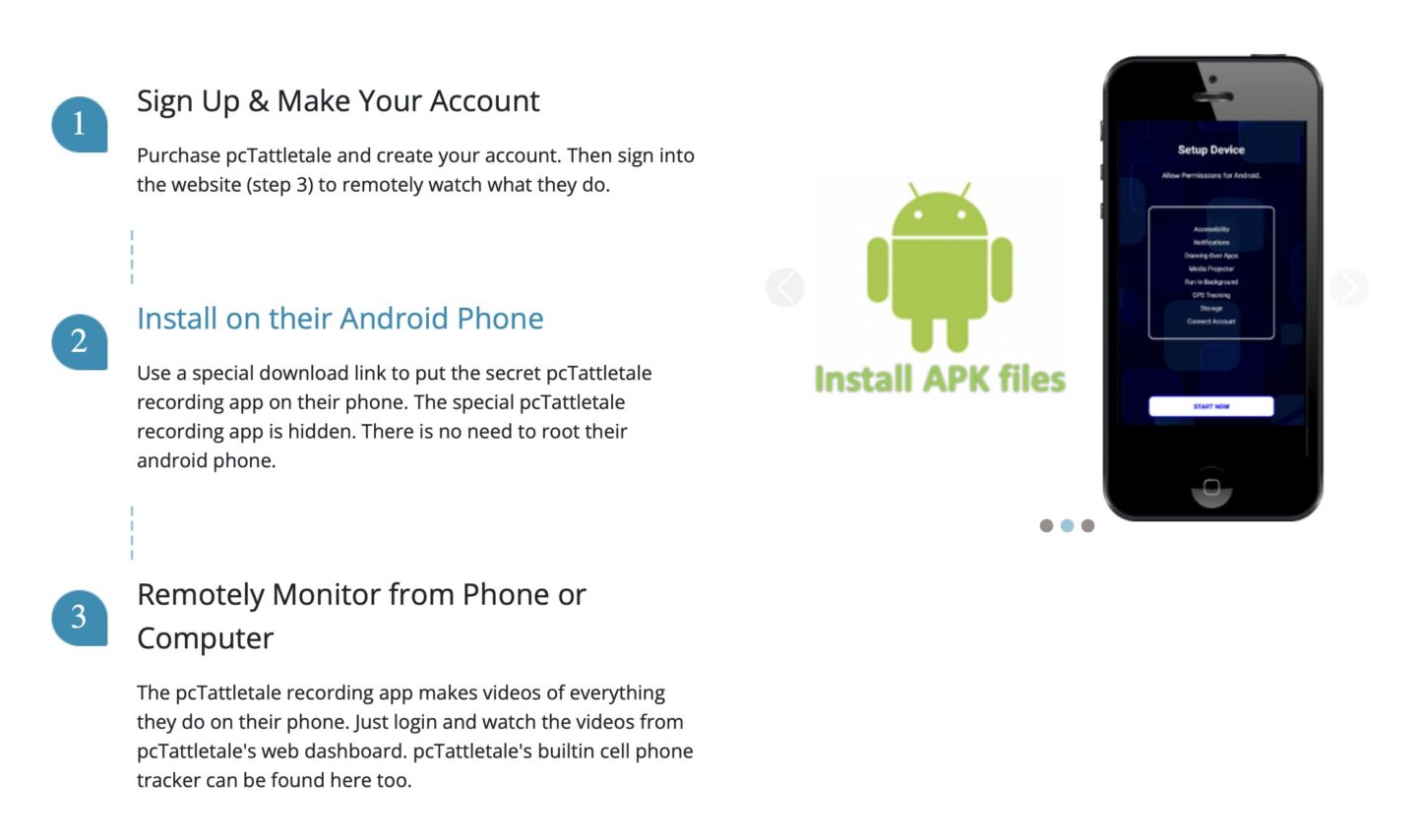 This is how pcTattletale used to describe its install process.