17757 stories
·
175 followers

Tesla kills Models S and X to build humanoid robots instead

1 Comment

Yesterday afternoon, following the end of trading on Wall Street for the day, Tesla published its financial results for 2025. They weren't particularly good: Profits were almost halved, and revenues declined year on year for the first time in the company's history. The reasons for the company's troubles are myriad. CEO Elon Musk's bankrolling of right-wing politics and promotion of AI-generated revenge porn deepfakes and CSAM has alienated plenty of potential customers. For those who either don't know or don't care about that stuff, there's still the problem of a tiny and aging model lineup, with large question marks over safety and reliability. Soon, that tiny lineup will be even smaller.

The news emerged during Tesla's call with investors last night. As Ars and others have observed, in recent years Musk appears to have grown bored with the prosaic business of running a profitable car company. Silicon Valley stopped finding that stuff sexy years ago, and no other electric vehicle startup has been able to generate a value within an order of magnitude of the amount that Tesla has been determined to be worth by investors.

Musk's attention first turned away from building and selling cars to the goal of autonomous driving, spurred on at the time by splashy headlines garnered by Google spinoff Waymo. Combined with ride-hailing—a huge IPO by Uber took the spotlight off Tesla long enough for it to become a new business focus for the automaker too—Musk told adoring fans and investors that soon their cars would become appreciating assets that earned money for them at night. And as an intermediary, Tesla would take a hefty cut for connecting the rider and the ridee.

Autonomy remains a stated goal for Tesla: last week it announced it's moving to a purely subscription-based approach for its FSD partially automated driving assist for all new Teslas purchased from mid-February. At the same time, it's doing away with Autopilot entirely, it's a less-capable, partially automated driving assist. The company's goal is more ambitious, involving selling two-seat robotaxis that lack even a steering wheel or pedals, but only once it has proven the technology, something it's currently attempting with little success on the streets of Austin, Texas.

But even robotaxis have lost some of their shine. For Musk, the real action is with his humanoid robot. These will sell in the billions, Musk has claimed, adding up to $20 trillion to Tesla's market capitalization at some point in the future. And he needs factory space to build these Optimus robots, which Tesla claims will go on sale in 2027. And that means an end to the Model S sedan and Model X SUV.

Once a world-beater

The Model S wasn't Tesla's first car, but it was the first one it built from scratch. At the time, it was simply revolutionary. EVs from traditional automakers were still firmly in the realm of the compliance car—hasty conversions of internal combustion engine-powered models with the batteries and control electronics crammed wherever possible, plus maybe some aerodynamic smoothing to try to eke out a little more range.

By contrast, the Model S was designed as an EV from the ground up, with a big enough battery to go 265 miles (426 km) on a full charge—something unthinkable in any other EV on sale. It didn't hurt that the car was seriously quick in a straight line and came with infotainment that made anything else on the road seem dated. When Ars tested one in 2013, we were impressed.

Over the years, the Model S got more power and more advanced driver assists—and eventually, a cosmetic facelift. But as rivals responded with vehicles like the Porsche Taycan and Lucid Air, the Model S stagnated rather than being replaced.

Similar neglect was shown to the Model X, the brand's SUV-cum-minivan. The lengthy and troubled gestation for the Model X was a forerunner of the problems Tesla has faced developing each successive product; in this particular case, the "falcon wing" doors, created as an alternative to the minivan's traditional sliding door, proved particularly problematic to get right. Indeed, I still remember being smacked in the head by one at my first introduction to the ungainly people-mover. And yet, compared to the other SUVs on sale in 2016, the Model X still stood out.

A decade later, it's fair to say the Model X still stands out, but like a sore thumb. Its looks never became more gainly, and there is now vast competition for large, luxurious electric SUVs, whether that's from Chinese startups like BYD and Xiaomi, American startups like Rivian and Lucid, or the traditional automakers that now have a handle on electrification.

That has been reflected in the sales. Right-hand drive cars for markets including the UK, Australia, New Zealand, and Japan ended production in 2023. And each quarter, production and sales of the Model S and X slipped more and more. Even lumped together with the poorly selling Cybertruck—which is only offered in the US—these deliveries fell by more than half in Q4 2025, and by 40 percent for the year.

Is there much reason to expect that the development of the Optimus robot will be any smoother than the "development hell" that beset the Model X, 3, Y, and Cybertruck? On last night's call, Musk admitted—contrary to previous claims—that the robots are not doing any useful work at the Tesla factory, and the idea that the company will build 10,000 robots this year seems in conflict with Optimus still being "very much at the early stages" and "still in the R&D phase," to use Musk's own words.
Read full article

Comments


Read the whole story
fxer
6 hours ago
reply
Savage. Love it.
Bend, Oregon
Share this story
Delete

Custom machine kept man alive without lungs for 48 hours

1 Share

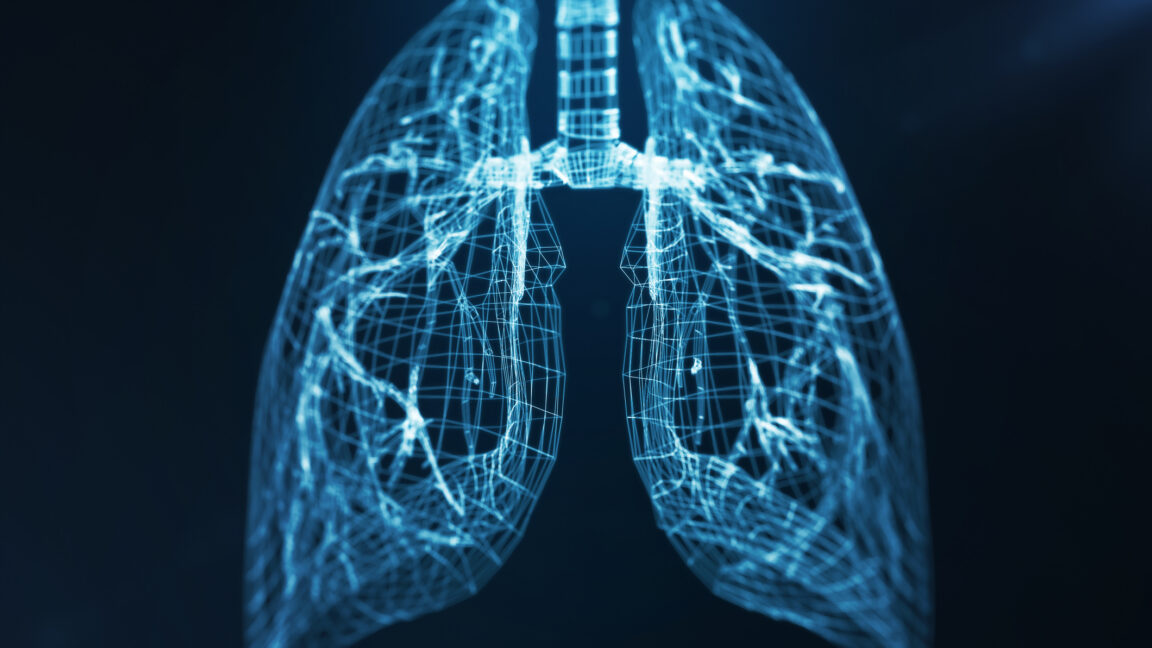
Humans can’t live without lungs. And yet for 48 hours, in a surgical suite at Northwestern University, a 33-year-old man lived with an empty cavity in his chest where his lungs used to be. He was kept alive by a custom-engineered artificial device that represented a desperate last-ditch effort by his doctors. The custom hardware solved a physiological puzzle that has made bilateral pneumonectomy, the removal of both lungs, extremely risky before now.

The artificial lung system was built by the team of Ankit Bharat, a surgeon and researcher at Northwestern. It successfully kept a critically ill patient alive long enough to enable a double lung transplant, temporarily replacing his entire pulmonary system with a synthetic surrogate. The system creates a blueprint for saving people previously considered beyond hope by transplant teams.

Melting lungs

The patient, a once-healthy 33-year-old, arrived at the hospital with Influenza B complicated by a secondary, severe infection of Pseudomonas aeruginosa, a bacterium that in this case proved resistant even to carbapenems—our antibiotics of last resort. This combination of infections triggered acute respiratory distress syndrome (ARDS), a condition where the lungs become so inflamed and fluid-filled that oxygen can no longer reach the blood.

In this case, the infections were necrotizing—the cells in the lungs were dying, turning his lung tissue into a liquid. The surgeons faced a seemingly impossible choice. The patient needed a transplant to survive, but he was in refractory septic shock. His kidneys were shutting down, and his heart was failing to the point where it completely stopped shortly after hospital admission. The doctors had to bring him back with CPR.

He was too sick for a transplant, yet the very organs that needed replacing were the source of the infection fueling his decline. "When the infection is so severe that the lungs are melting, they’re irrecoverably damaged," Bharat explained. "That’s when patients die."

But this patient did not die.

The empty chest problem

To save him, Bharat’s team had to remove the infected lungs, a procedure called a bilateral pneumonectomy, to remove the source of the sepsis. We have machines that can oxygenate the blood. But removing both lungs creates a lethal mechanical problem for the heart.

The human heart is two pumps in one. The right side, called the pulmonary circuit, pumps oxygen-poor blood returning from the body into the lungs, which remove its carbon dioxide and load it with a fresh supply of oxygen. The left side, known as the systemic circuit, receives freshly oxygenated blood and pumps it to the rest of the body. The pulmonary vascular bed, all these miles of tiny vessels inside the lungs, facilitates this gas exchange. But it also acts as a capacitor, absorbing the pressure and volume of the blood ejected by the right ventricle.

If you remove the lungs and simply shut the pulmonary arteries, the right ventricle has nowhere to pump—it would experience an immediate, massive pressure spike, distend like a balloon, and fail within minutes. At the same time, the left side of the heart would have no blood returning to it, leading to a total collapse of blood pressure and systemic circulation.

This is the reason why most double-lung transplants are performed sequentially: The surgeons replace one lung, get it up and running, and then move on to the second. But desperate times require desperate measures.

The last line of defense

In rare cases where both lungs must be removed at once, a patient can still be supported by the Extracorporeal Membrane Oxygenation (ECMO), a mechanical lung that takes blood out of the body, removes the carbon dioxide, adds oxygen, and pumps it back in. The problem is that while ECMO can support a person for up to over a year when their lungs are still in their body, the risks of using it skyrocket when the lungs are removed.

The empty chest cavity creates a void where blood and fluids can pool, leading to huge internal bleeding. The heart, which relies on the physical presence and pressure of the lungs to maintain its proper anatomical position, can flop around or collapse. Finally, circulating blood through complex machinery significantly increases the risk of stroke or clotting.

Because of all these risks, surgeons always treat removing both lungs as the last line of defense, one they can only rely on for a short time—the shorter the better. Bharat and his colleagues, though, had to keep their patient this way until the sepsis had been dealt with.

It wasn’t enough for the team to keep the patient alive without lungs in his body until the transplant arrived. In this lungless state, somehow, they had to improve his health.

Synthetic lungs

To make this happen, Bharat’s team engineered a device they called the “flow-adaptive extracorporeal total artificial lung system" (TAL), a complex circuit designed to mimic the physics of the missing organs. At its core was a pump and an oxygenator borrowed from the standard ECMO setup, but it also used four new components to replace biological functions.

The first was a dual-lumen cannula, essentially a single tube with two separate channels inside. Inserted through the internal jugular vein, this tube acted as the primary drain. It allowed the team to pull deoxygenated blood directly from the right side of the heart, unloading the right ventricle to prevent it from distending.

The second component was something the researchers called a flow-adaptive shunt, which connected the right pulmonary artery back to the right atrium. When the right ventricle pumped out more blood than the external pump could handle, the excess blood would safely recirculate back into the atrium through this low-resistance path, protecting the heart and the surgical staples from pressure spikes. During the 48 hours the patient was supported by the TAL, this shunt self-regulated its flow to anywhere between 1.1 and 6.3 liters per minute, based on the patient's needs.

To ensure the left side of the heart stayed full and active, the team used a device called dual left atrial return. It comprised two 10 mm grafts that returned oxygenated blood from the ECMO artificial lung directly into the left atrium. This, the team said in a paper that describes the hardware, maintained what’s called Starling physiology: the principle that the heart pumps better when it is properly filled. It also prevented blood from stagnating and forming clots inside the heart chambers.

Finally, to prevent the heart from physically shifting and damaging vital vessels in the empty chest cavity, the surgeons used bovine pericardium to reconstruct the heart's protective sac and filled the empty space with tissue expanders and surgical sponges.

Lungless recovery

The results of hooking the patient up to TAL were immediate.

Within hours of the surgery, the patient’s septic shock began to resolve. His lactate levels, a key marker of tissue oxygen starvation, dropped from a dangerous 8.2 mmol/L to a normal level of less than 1.0 mmol/L within 24 hours. The medications used to keep his blood pressure up were discontinued after just 12 hours.

For two days, the patient lived as a human being with no lungs, stabilized by a machine that breathed and buffered his circulation with surgical precision. When donor lungs became available 48 hours later, the patient's body was no longer suffering from sepsis.

He was ready for the transplant, which the team successfully performed. And after putting in the new lungs, they focused on the lungs they had removed.

When lungs die

Conventionally, patients with ARDS do not get transplants because doctors hope that with the right treatment and support, the diseased lungs will eventually heal. But the examination of the infected lungs removed from Bharat’s patient told a different story and helped define the clinical point of no return, when a lung is truly dead.

Based on the spatial transcriptomics, a set of techniques that let scientists see which genes are active at different sites in the tissue, the team built a high-resolution molecular map of the removed lungs. What they found was a landscape of total devastation.

The lungs were filled with aberrant basaloid cells—a signature of failed regeneration. The stem cells required to rebuild the lungs were almost entirely gone. The architecture was uniformly destroyed and replaced by cells that were laying down scar tissue.

“People think if you get severe ARDS, you keep supporting them and ultimately the lungs will get better,” Bharat says.  The data collected by his team suggested no amount of waiting or life support would have brought this patient’s lungs back to life. “In my practice, young patients die almost every week because no one realized that transplantation was an option,” Bharat added.

Tough choices

In many hospitals, patients with severe, acute lung infections are often allowed to die because they are considered too unstable for surgery. While Bharat’s study offers some hope that this situation might improve in the future, the team admits that their approach currently requires immense expertise and access to a highly specialized medical center with donor lungs. Making expertise and resources more accessible will take some time.

And that’s not the only thing we have to wait for. Bharat and his colleagues note in their paper that one key challenge in ARDS is determining whether the injury is reversible. His study offers some initial insights into diagnosing irreversible damage, but the researchers note that their conclusions were based on a single case. The features of lungs that are beyond repair may differ across various pathogens, stages of disease, or the way individual patient’s body responds to the disease.

For Bharat’s patient, though, all possible stars aligned. The paper says that two years after the procedure, he has returned to a normal, independent life with excellent lung function.

Med, 2026. DOI: 10.1016/j.medj.2025.100985

Read full article

Comments


Read the whole story
fxer
6 hours ago
reply
Bend, Oregon
Share this story
Delete

People complaining about Windows 11 hasn't stopped it from hitting 1 billion users

1 Share

Complaining about Windows 11 is a popular sport among tech enthusiasts on the Internet, whether you're publicly switching to Linux, publishing guides about the dozens of things you need to do to make the OS less annoying, or getting upset because you were asked to sign in to an app after clicking a sign-in button.

Despite the negativity surrounding the current version of Windows, it remains the most widely used operating system on the world's desktop and laptop computers, and people usually prefer to stick to what they're used to. As a result, Windows 11 has just cleared a big milestone—Microsoft CEO Satya Nadella said on the company's most recent earnings call (via The Verge) that Windows 11 now has over 1 billion users worldwide.

Windows 11 also reached that milestone just a few months quicker than Windows 10 did—1,576 days after its initial public launch on October 5, 2021. Windows 10 took 1,692 days to reach the same milestone, based on its July 29, 2015, general availability date and Microsoft's announcement on March 16, 2020.

That's especially notable because Windows 10 was initially offered as a free upgrade to all users of Windows 7 and Windows 8, with no change in system requirements relative to those older versions. Windows 11 was (and still is) a free upgrade to Windows 10, but its relatively high system requirements mean there are plenty of Windows 10 PCs that aren't eligible to run Windows 11.

Windows 10's long goodbye

It's hard to gauge how many PCs are still running Windows 10 because public data on the matter is unreliable. But we can still make educated guesses—and it's clear that the software is still running on hundreds of millions of PCs, despite hitting its official end-of-support date last October.

StatCounter, one popularly referenced source that collects OS and browser usage stats from web analytics data, reports that between 50 and 55 percent of Windows PCs worldwide are running Windows 11, and between 40 and 45 percent of them run Windows 10. StatCounter also reports that Windows 10 and Windows 7 usage have risen slightly over the last few months, which highlights the noisiness of the data. But as of late 2025, Dell COO Jeffrey Clarke said that there were still roughly 1 billion active Windows 10 PCs in use, around 500 million of which weren't eligible for an upgrade because of hardware requirements. If Windows 11 just cleared the 1 billion user mark, that suggests StatCounter's reporting of a nearly evenly split user base isn't too far from the truth.

Although Windows 11's reputation could be part of the reason for Windows 10's tenacity, it's easy to explain away the older OS's continuing popularity in other ways. Just a few years ago, Windows 10 was the most ubiquitous version of Windows since XP, and when Windows 11 launched, its requirements mostly excluded PCs older than three or four years.

Because it would be catastrophic if all of those Windows 10 PCs completely stopped getting security patches or anti-malware protection, Microsoft has built a three-year off-ramp for the operating system—one year of free (but opt-in) security updates for consumer PCs, up to three years of paid security updates for businesses and other large institutions, and updates to and basic support for core apps like Windows Defender, Microsoft Office, and Microsoft Edge through at least 2028.

Microsoft executives are at least paying lip service to Windows 11's real and perceived reputational issues. Pavan Davuluri, Microsoft's president of Windows and devices, said in a statement to The Verge that the company would be "swarming" engineers over the next few months to "urgently fix Windows 11's performance and reliability issues" and to modernize more of the barely buried parts of the operating system that still look a lot like they did in Windows 7 or XP or NT.

Assuming those issues are addressed—and that Microsoft can fix them without adding fun new bugs along the way—it would fix some of what ails Windows 11. But Davuluri didn't acknowledge the aspects of Windows 11 that make it annoying even when it's working as designed: the mandatory Microsoft account sign-in prompts, the continual reminders and upsell notifications about OneDrive, Game Pass, and other Microsoft services, and the periodic reminders to use Edge and Bing that come back no matter how many times they're dismissed.

People are definitely switching to and using Windows 11. For people already used to Windows 10, it's still the software update of least resistance. What Microsoft needs to do now is ensure that Windows 11 doesn't frustrate people so much that it's the last version of Windows they use.

Read full article

Comments


Read the whole story
fxer
6 hours ago
reply
Bend, Oregon
Share this story
Delete

LG joins the rest of the world, accepts that people don’t want 8K TVs

1 Share

Technology companies spent part of the 2010s trying to convince us that we would want an 8K display one day.

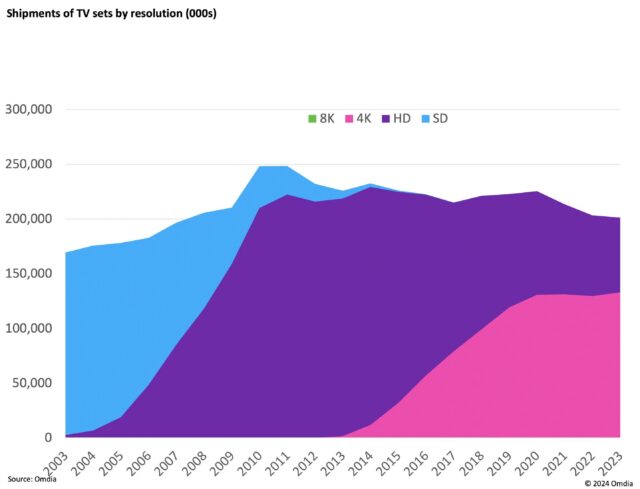
In 2012, Sharp brought the first 8K TV prototype to the CES trade show in Las Vegas. In 2015, the first 8K TVs started selling in Japan for 16 million yen (about $133,034 at the time), and in 2018, Samsung released the first 8K TVs in the US, starting at a more reasonable $3,500. By 2016, the Video Electronics Standards Association (VESA) had a specification for supporting 8K (Display Port1.4), and the HDMI Forum followed suit (with HDMI 2.1). By 2017, Dell had an 8K computer monitor. In 2019, LG released the first 8K OLED TV, further pushing the industry's claim that 8K TVs were "the future."

A marketing image with three TVs next to the words "the future of TV is 8K: By future-proofing an already game-changing technology, you take an unmatched cinematic experience to new levels, paving the way." A marketing image for 8K TVs that's (still) on LG's US website. Credit: LG
However, 8K never proved its necessity or practicality.

TV companies are quitting 8K

LG Display is no longer making 8K LCD or OLED panels, FlatpanelsHD reported today. Earlier this month, an LG Display representative told FlatpanelsHD that the panel supplier is “taking a comprehensive view of current display market trends and the trends within the 8K content ecosystem.”

“As our technical readiness is already complete, LG Display is fully prepared to respond immediately whenever the market and customers determine that the timing is right,” LG Display's representative said.

LG Electronics was the first and only company to sell 8K OLED TVs, starting with the 88-inch Z9 in 2019. In 2022, it lowered the price-of-entry for an 8K OLED TV by $7,000 by charging $13,000 for a 76.7-inch TV.

FlatpanelsHD cited anonymous sources who said that LG Electronics would no longer restock the 2024 QNED99T, which is the last LCD 8K TV that it released.

LG's 8K abandonment follows other brands distancing themselves from 8K. TCL, which released its last 8K TV in 2021, said in 2023 that it wasn’t making more 8K TVs due to low demand. Sony discontinued its last 8K TVs in April and is unlikely to return to the market, as it plans to sell the majority ownership of its Bravia TVs to TCL.

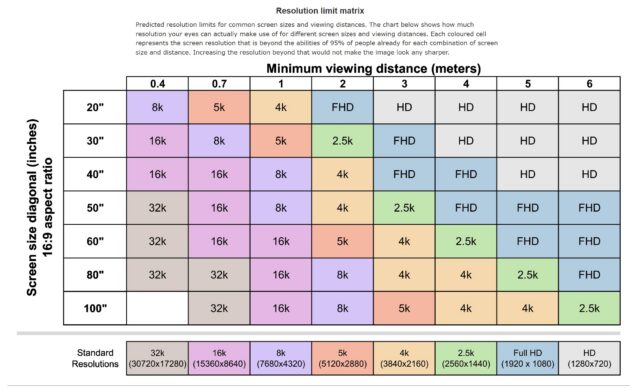
The tech industry tried to convince people that the 8K living room was coming soon. But since the 2010s, people have mostly adopted 4K. In September 2024, research firm Omdia reported that there were “nearly 1 billion 4K TVs currently in use.” In comparison, 1.6 million 8K TVs had been sold since 2015, Paul Gray, Omdia’s TV and video technology analyst, said, noting that 8K TV sales peaked in 2022.

Graph showing "SHipments of TV sets by resolutions (000s) from 0 to 300,000 and 2003-2023. Omdia's 2024 data shows demand shifting toward 4K TVs. Credit: Omdia
That helps explain why membership at the 8K Association, launched by stakeholders Samsung, TCL, Hisense, and panel maker AU Optronics in 2019, is dwindling. As of this writing, the group’s membership page lists 16 companies, including just two TV manufacturers (Samsung and Panasonic). Membership no longer includes any major TV panel suppliers. At the end of 2022, the 8K Association had 33 members, per an archived version of the nonprofit’s online membership page via the Internet Archive’s Wayback Machine. Upon its debut, the 8K Association said that its goals include “promoting 8K TVs and 8K content to consumers and professionals” and “helping secure 8K native content for members."

Where 8K failed

It wasn't hard to predict that 8K TVs wouldn't take off. In addition to being too expensive for many households, there's been virtually zero native 8K content available to make investing in an 8K display worthwhile. An ongoing lack of content was also easy to predict, given that there's still a dearth of 4K content, and many streaming, broadcasting, and gaming users still rely on 1920×1080 resolution.

Gaming was supposed to be one of the best drivers for 8K adoption. The PlayStation 5 (PS5) Pro was originally marketed as supporting 8K. Sony officially rescinded that promise in June 2024, though. Due to bandwidth limitations, the PS5 Pro could only deliver 8K via Display Stream Compression over HDMI 2.1, making the feature incompatible with some 8K TVs.

There’s also the crucial question of whether people would even notice the difference between 4K and 8K. Science suggests that you could, but in limited situations.

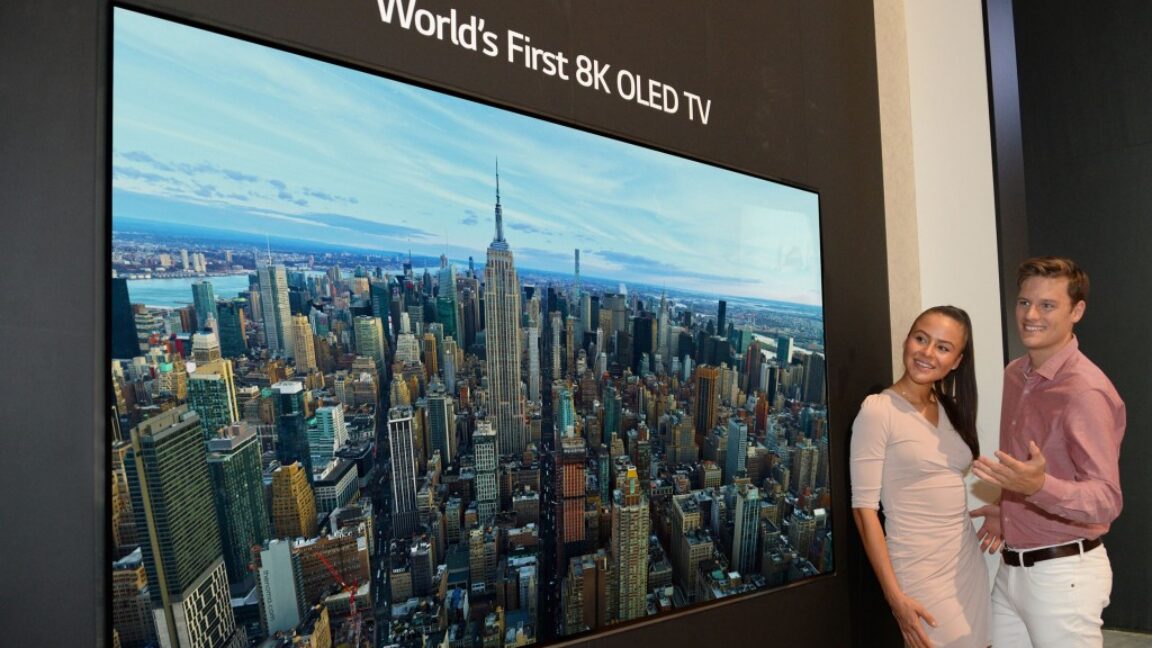
The University of Cambridge’s display resolution calculator, which is based on a study from researchers at the university’s Department of Computer Science and Technology and Meta, funded by Meta, and published in Nature in October, suggests that your eyes can only make use of 8K resolution on a 50-inch screen if you’re viewing it from a distance of 1 meter (3.3 feet) or less. Similarly, you would have to be sitting pretty close (2–3 meters/6.6–9.8 feet) to an 80-inch or 100-inch TV for 8K resolution to be beneficial. The findings are similar to those from RTINGs.com.

The University of Cambridge's resolution limit matrix. The University of Cambridge's resolution limit matrix. Credit: Computer Laboratory, University of Cambridge
8K's future

Even those interested in spending a lot of money on new-age TV technologies are more likely to investigate features other than 8K, like OLED, HDR support, Micro LED, quantum dots, or even the newer Micro RGB panel tech. Any of those is likely to have a more dramatic impact on home theaters than moving from 4K to 8K.

With the above-mentioned obstacles, many technologists foresaw 8K failing to live up to tech companies' promises. That's not to say that 8K is dead. You can still buy an 8K TV from Samsung, which has 8K TVs with MSRPs starting at $2,500 (for 65 inches), and LG (until stock runs out). With manufacturers refraining from completely ruling out a return to 8K, it's possible that 8K TVs will become relevant for enthusiasts or niche use cases for many years. And there are uses for high-resolution displays outside of TVs, like in head-mounted displays.

However, 8K TV options are shrinking. We're far from the days when companies argued over which had the most "real 8K" TVs. If there is a future where 8K TVs reign, it's one far from today.

Read full article

Comments


Read the whole story
fxer
8 hours ago
reply
Bend, Oregon
Share this story
Delete

Apple's AirTag 2 is easier to find thanks to new chip

1 Share

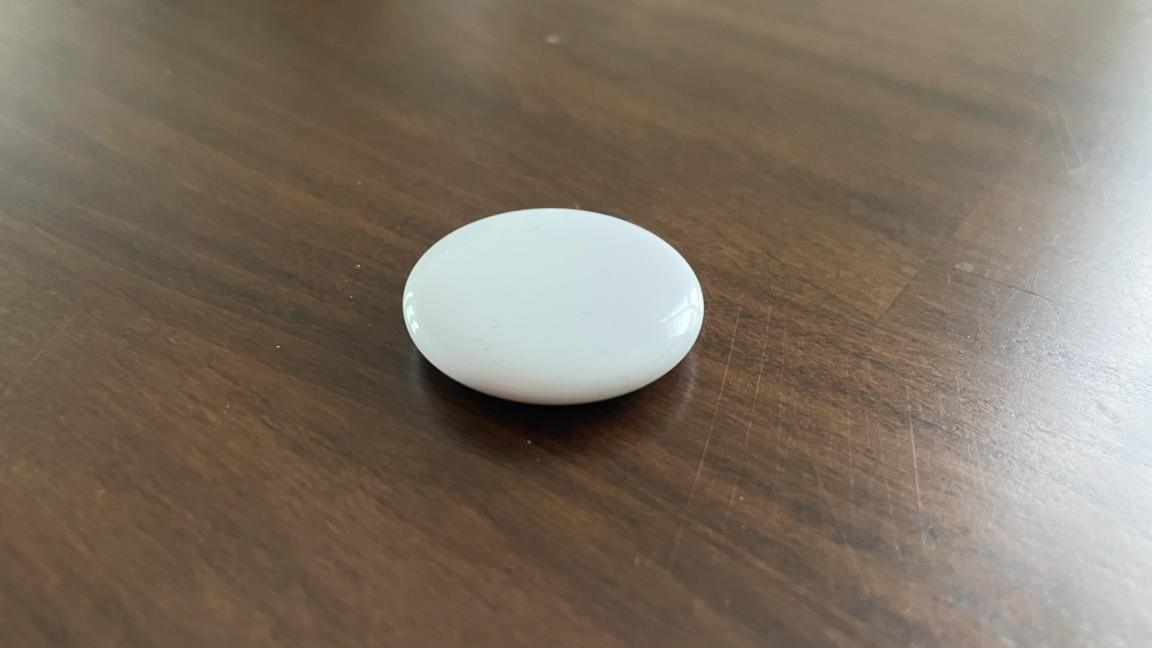
Apple is introducing a new version of its AirTag tracking device—simply dubbed "the new AirTag"—and claims it offers substantial improvements thanks to a new Bluetooth chip.

The original AirTag came out five years ago now, and it became popular in a variety of contexts. There were some problems, though—there was real concern about unwanted tracking and stalking with the devices, based on real stories of it being used for that. The company gradually introduced new features and protections against that, getting it to a much better place.

This new version is focused on making the device more effective in general. Thanks to the inclusion of the second-generation Ultra Wideband chip (the same one found in other recently released Apple devices like the iPhone 17), Apple says the new AirTag can work with the Precision Finding feature in the Find My app to direct users to the AirTag (and whatever lost item it's stored with or attached to) from up to 50 percent farther away.

Additionally, the speaker in the AirTag is now 50 percent louder, Apple says. These two things together address some user complaints that, as useful as an AirTag can be in ideal circumstances, sometimes it is frustrating trying to get things just right to find something. It won't eliminate all edge cases, but it ought to help.

Apple used this announcement to also talk up some of the features of the AirTag, including the encryption that it says prevents anyone but the AirTag owner from using it, and an arrangement with airlines where users can temporarily give airlines the ability to use Apple's network to find a specific AirTag to locate lost luggage and the like.

To be clear, the new AirTag doesn't introduce any major new features that aren't already offered in the previous generation—this is just an update to the device's accuracy, volume, and range.

The price remains unchanged, at $29 for one AirTag or $99 for a pack of four. The new model is available for order on Apple's website now and will hit physical stores later this week.

Read full article

Comments


Read the whole story
fxer
3 days ago
reply
Bend, Oregon
Share this story
Delete

Australian plumber is a YouTube sensation

1 Share
Warning: Unclogging a restaurant's grease trap is not for the faint of heart.

Large swathes of the US were blanketed in snow and ice over the weekend, and what better way to spend a snow day than going down a YouTube rabbit hole? Everyone has their favorite oddity: ASMR, jazzy pop song covers, cooking channels, or what have you. But DIY enthusiasts in particular are missing out if they're not watching Drain Cleaning Australia, featuring an Australian plumber known only as Bruce as he goes about his daily business of shooting high-powered water jets into stubborn clogged drainage systems. It's "the YouTube channel you never knew you needed." And it's done so well that he's now launched a second channel, Bruce the Plumber.

I stumbled upon the Drain Cleaning Australia channel via Amy Poehler's Good Hang podcast episode with Kate McKinnon, who is a big fan and does a dead-on delivery of Bruce's trademark lines ("You little rippah!"). Bruce never appears in his videos, apart from his hands and the occasional shadow as he films various challenging jobs with his intrepid smartphone. He seems to have struck a good balance between online popularity and protecting his personal privacy. (Bruce did not respond to our interview request. It's okay, mate, we know all those drains Down Under aren't going to unclog themselves.)

Armed with his trusty collection of jet nozzles and "Mister Plungey," Bruce has removed all manner of nasty things from drains over the years: masses of human hair from shower drains; tree roots; plastic bags and other refuse that somehow found their way into drainage systems; and the less said about the many clogged toilets, the better.

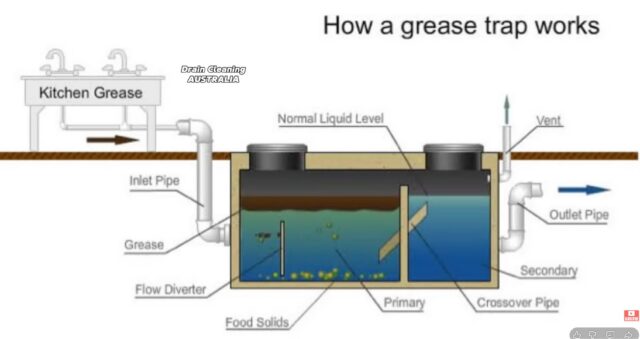
My personal favorites are when Bruce takes on clogged restaurant grease traps, including the one at the top of this article in which he pulls out a massive greaseberg "the size of a chihuahua." When it's Bruce versus a nasty grease trap, the man remains undefeated (well, almost—sometimes he needs to get a grease trap pumped out before he can fix the problem). And I have learned more than I probably ever needed to know about how grease traps work.

schematic illustration showing how a grease trap works Credit: YouTube/Drain Cleaning Australia
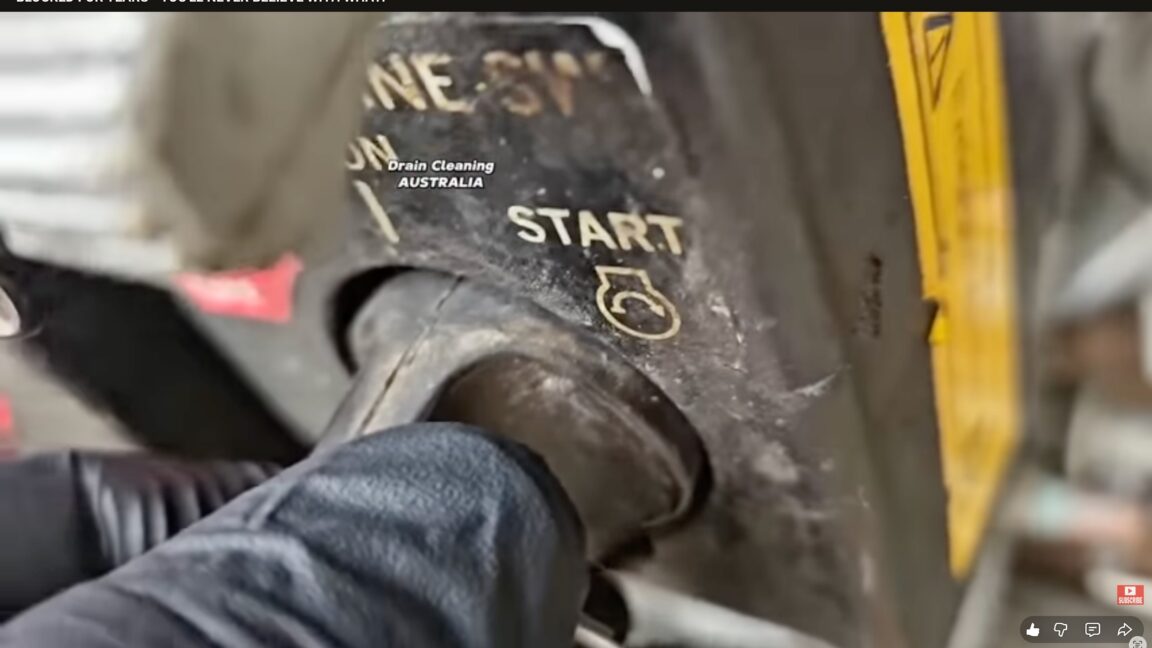
Each video is its own little adventure. Bruce arrives on a job, checks out the problem ("she is chock-a-block, mate!"), and starts methodically working that problem until he solves it, which inevitably involves firing up "the bloody jet" to blast through blockages with 5,000 psi of water pressure ("Go, you good thing!"). This being Australia, he'll occasionally encounter not just cockroaches but poisonous spiders and snakes. And he's caught so many facefulls of wastewater and sewage while jetting that he really ought to invest in a hazmat suit. Even the cheesy canned techno-music playing during lulls in the action is low-budget perfection.

Bruce isn't the only plumber with a YouTube channel—it's a surprisingly good-size subgenre—but he's the most colorful and entertaining. His unbridled enthusiasm for what many would consider the dirtiest of jobs is positively infectious. He regularly effuses about having the best job in the world, insisting that unclogging gross drains is "living the dream," and regularly asks his audience, "How good is this? I mean, where else would you rather be?" Sure, he says it with an ironic (unseen) wink at the camera, but deep down, you know he truly loves the work.

And you know what? Bruce is right. It might not be your definition of "what dreams are made of," but there really is something profoundly satisfying about a free-flowing drain—and a job well done.

Read full article

Comments


Read the whole story
fxer
3 days ago
reply
Bend, Oregon
Share this story
Delete
Next Page of Stories