17881 stories
·
173 followers

Twin brothers wipe 96 gov't databases minutes after being fired

1 Share

In the US, fired and laid-off workers often have their digital credentials deactivated before they learn about the loss of their jobs; indeed, the inability to log in to a corporate system may be the first an employee knows of the situation.

Although not a generous or humane approach to staff reduction, it does follow from the simple fact that a fired employee with access to company systems is a security risk.

Just ask the Akhter twin brothers, accused of wiping out 96 databases hosting US government information in the minutes after both were fired last year from their shared employer.

DROP DATABASE

Muneeb and Sohaib Akhter, now both 34, had been in trouble before. Back in 2015, the brothers pled guilty in Virginia to a scheme involving wire fraud and computers. Muneeb was sentenced to three years in prison, while Sohaib got two.

After their stints in jail, the brothers worked their way back into the tech world. In 2023, Muneeb got a job with a Washington, DC, firm that sold software and services to 45 federal clients; Sohaib got a job at the same company a year later.

According to the government, however, the two couldn't stay out of trouble. For instance:

On Feb. 1, 2025, Muneeb Akhter asked Sohaib Akhter for the plaintext password of an individual who submitted a complaint to the Equal Employment Opportunity Commission’s Public Portal, which was maintained by the Akhters’ employer. Sohaib Akhter conducted a database query on the EEOC database and then provided the password to Muneeb Akhter. That password was subsequently used to access that individual’s email account without authorization.

This was not a one-off. Muneeb had been assembling usernames and passwords—5,400 of them taken from his own company's network data. He then built custom Python scripts to try these logins against common websites; for instance, his "marriott_checker.py" application tested the logins against Marriott's hotel chains. Muneeb managed to log in successfully hundreds of times, including to DocuSign and airline accounts. Sometimes, if victims had airline miles stored, Muneeb would book travel for himself.

The brothers' employer appears to have learned about their criminal past at some point in February. On February 18, 2025, the brothers—who lived together in Virginia—were both called into a Microsoft Teams meeting and summarily fired.

The call took place at the end of the day, wrapping up at 4:50 pm. Five minutes later, Sohaib was already trying to access his (now former) employer's network—but found that his VPN access and Windows account were terminated.

Muneeb's account had been overlooked, however, and he immediately embarked on a campaign of destruction.

At 4:56 pm, Muneeb accessed a US government database that his company maintained. He "issued commands to prevent other users from connecting or making changes to the database, and then issued a command to delete the database," the government said.

At 4:58 pm, he wiped out a Department of Homeland Security database using the command "DROP DATABASE dhsproddb."

At 4:59 pm, he asked an AI tool, “How do i clear system logs from SQL servers after deleting databases?" He later asked, “How do you clear all event and application logs from Microsoft windows server 2012?"

In the space of a single hour, Muneeb deleted around 96 databases with US government information. He downloaded 1,805 files belonging to the EEOC and stashed them on a USB drive, then grabbed federal tax information for at least 450 people.

Smart ideas

While this was going on, the brothers held a running conversation. (The government is not clear about whether this took place over text, instant message, or in person.)

“I see you cleaning out their database backups," Sohaib said as he watched Muneeb's work. As the database casualty list grew, Sohaib said, "Alright—if you have good plausible deniability."

Muneeb didn't appear to consider his actions a big deal. “Eh, they can recover from yesterday,” he said, referring to daily database backups.

"Yeah, they could," Sohaib agreed.

Muneeb noted that an employee they knew would "have some work to do" when the destruction was revealed.

Sohaib fed Muneeb more suggestions.

“Delete their filesystem as well?” he said.

"Smart idea," said Muneeb.

Sohaib then wondered if they had been too hasty. Perhaps, he said, "You shoulda had a kill script. Like, blackmailing them for some money would have been—”

"No, you do not do that, that's proof of guilt, man," Muneeb said.

“No, but the thing was, you always have your opinion," Sohaib complained, and the two then bickered about whether they might try to blackmail their company's customers instead.

As the data destruction went on, Sohaib said, “They’re gonna probably raid this place.”

"I’ll clean this shit up," Muneeb said.

After wiping out the databases and event logs, the brothers reinstalled the operating systems on their corporate laptops with the help of an unnamed co-conspirator.

God guide my words

Sohaib was right—the feds did raid them. It just took three weeks.

On March 12, 2025, a search warrant was executed at Sohaib's home in Alexandria. Agents grabbed plenty of tech gear but also turned up seven firearms and 370 rounds of .30 caliber ammunition. Given his former crimes, Sohaib should have had none of this.

The brothers remained free for another nine months as the investigation proceeded, but both were eventually arrested on December 3 and indicted for a host of crimes (you can read the indictment here).

Muneeb signed a plea deal on April 15, 2026, admitting to the major allegations in the indictment.

Sohaib took his case to trial. He lost. On May 7, 2026, a jury found him guilty of conspiracy to commit computer fraud, password trafficking, and possession of a firearm by a prohibited person. He will be sentenced in September.

The cases would seem to be basically over, except that Muneeb has begun filing handwritten petitions from jail, arguing that his lawyer has been ineffective. More recently, the filings have taken aim at his signed guilty plea.
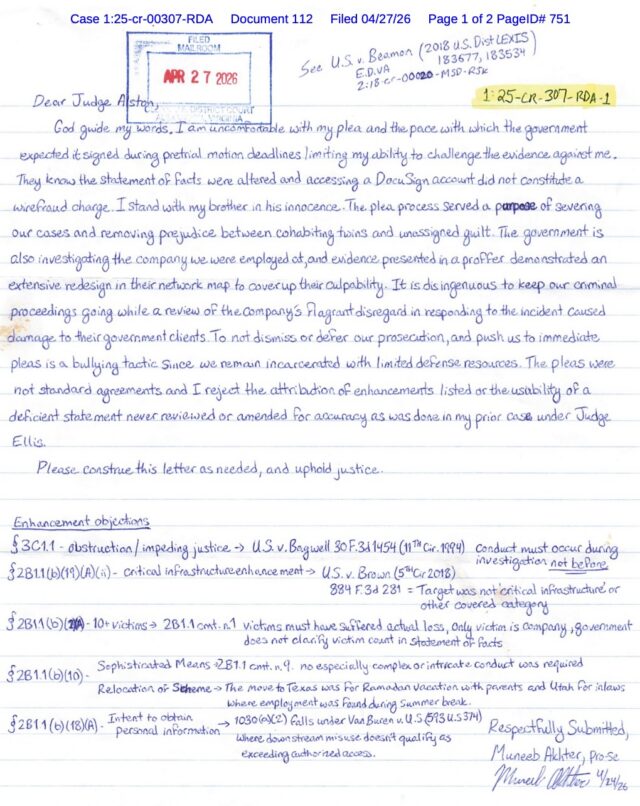
Photo of one of Muneeb's letters from prison. One of Muneeb's letters from prison.

"God guide my words," he wrote in a one-paragraph letter to the judge on April 27. "I am uncomfortable with my plea and the pace with which the government expected it signed during pretrial motion deadlines limiting my ability to challenge the evidence against me... I stand with my brother in his innocence." (As mentioned above, Sohaib was found guilty several days later.)

Another brief handwritten letter, filed on May 5, claims that Muneeb is innocent of count 10, "since accessing DocuSign account does not grant anything of value nor did he obtain or intend to obtain anything of value from it." It says nothing about deleting the 96 databases.

A third letter, also filed on May 5, asks for permission to proceed pro se—that is, with Muneeb functioning as his own lawyer. This is generally the "kiss of death" for federal cases. Still, like many intelligent-but-overconfident defendants with plenty of time on their hands, Muneeb wants to give it a shot. It may well turn out to be one more of his "smart ideas."

Update: The company that employed the brothers went unnamed in court documents but was identified in the press as Opexus. An eagle-eyed Ars reader points out that, back in December, the company gave a series of quotes to Cyberscoop about the entire incident. Though Opexus did background checks, the company admitted that "additional diligence should have been applied," it acknowledged that "the terminations were not handled in an appropriate manner," and it said that "the individuals responsible for hiring the twins are no longer employed by Opexus." Clearly, the failure here was all-encompassing.
Read full article

Comments


Read the whole story
fxer
1 hour ago
reply
Bend, Oregon
Share this story
Delete

The physics of how Olympic weightlifters exploit barbell's "whip"

1 Share

Olympic weightlifting consists of three basic movements performed on a barbell: the snatch, the clean, and the jerk (with the latter two executed in combination). At such an elite level, athletes seek to exploit every possible advantage, including how a barbell bends and recoils in response to loaded weight and applied force—a property known as flexural bending in physics and dubbed the "whip" by Olympic athletes. Scientists are learning more about the underlying mechanisms of the whip, according to a presentation at this week's meeting of the Acoustical Society of America in Philadelphia.

Joshua Langlois, a graduate student at Pennsylvania State University, competes in Strongman competitions as a hobby. He also has friends who compete at the national level in Olympic weight-lifting events. "They told me how they use the whip," Langlois said during a media briefing. "When they dip down, they can feel when the bar flexes back up and use that to accelerate the movement upward to increase the amount they can lift."

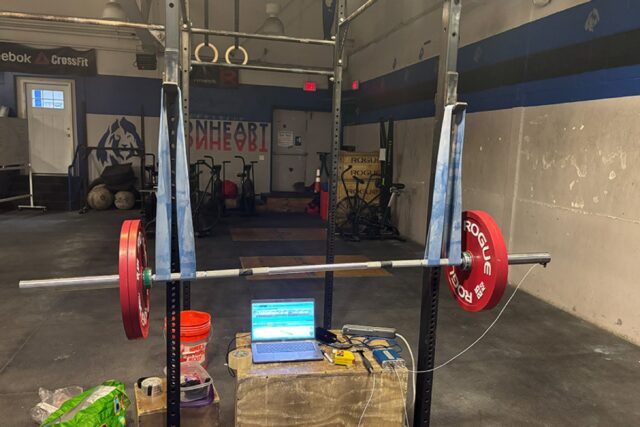
Langlois decided to conduct a modal analysis, i.e., how an object moves or vibrates, to quantify the whip and better understand the mechanics, as well as what makes for a good barbell at the elite level. He suspended four 20-kg men's barbells (women use 15-kg barbells)—with 50 kg loaded on each end—from elastic resistance bands so that the bar was essentially floating in space. Then he attached accelerometers at each end of the bar where the vibrational mode patterns occur. Next, he tapped set locations across the bar with a small hammer, measuring the acceleration at the endpoints, which enabled him to map out how the bars moved in response. He compared the vibrations of different barbells, as well as a single barbell loaded with different weights.

Sleeves or no sleeves?

Langlois found that the standard motion of a bar floating freely in space has a higher frequency without sleeves—i.e., the outer, thicker area of the bar that holds the weights and can rotate independently of the central shaft—than with sleeves. This was an expected result, per Langlois, since adding mass to the ends of a bar will typically decrease the rate of oscillation and also shift the nodes (the points where the bar is stationary).

The surprise came when he looked more closely at the higher bending (flexural) modes: in that case, the frequency increased at higher loads. "The bar becomes more fixed so the actual wavelength of the bar is less," Langlois explained. "With a set wave speed, wavelength is inversely proportional to the rate of oscillation, so we get a higher frequency. This is something we did not foresee happening. So the barbell is likely to matter."

The experimental setup used to determine the vibrations of barbells used in Olympic weightlifting. The experimental setup used to determine the vibrations of barbells used in Olympic weightlifting. Credit: Joshua Langlois
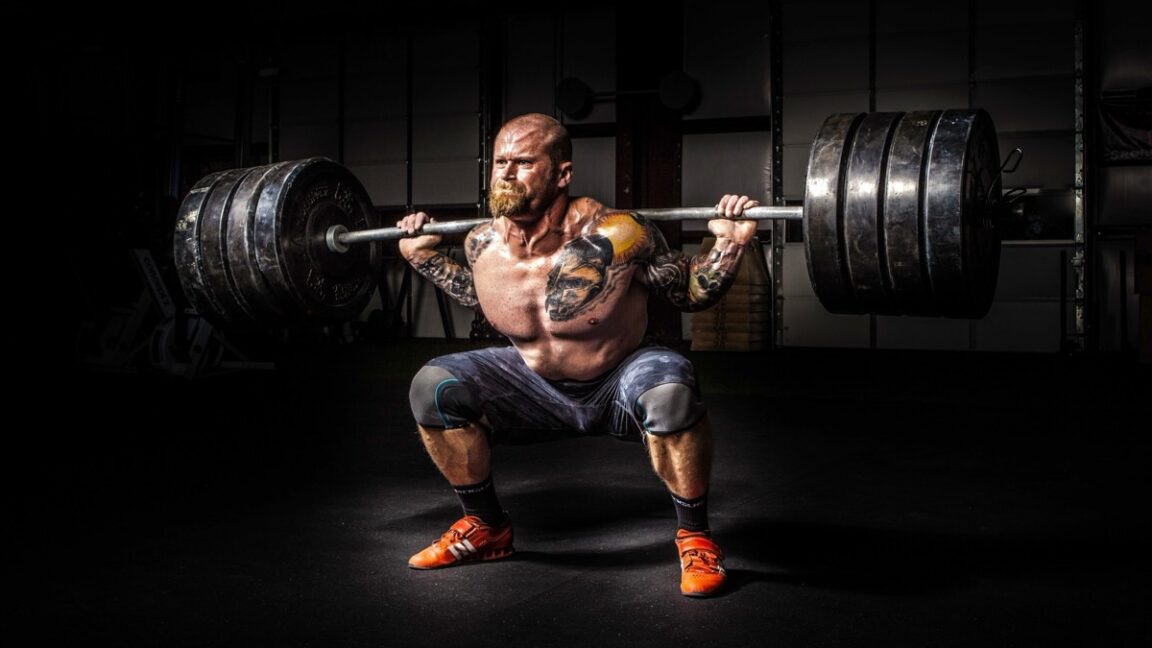
Granted, it's a small effect, in the range of a single percent, per Langlois. "But for elite sports, a single percent makes all the difference," he said. "I am not an expert Olympic weightlifter. I have a hard time timing the whip, it's hard for me to feel it exactly. There's a similar thing with golfers. The best golfers in the world can actually feel how the golf club bends as they swing, and they can use that to change how the balls hit. So I don't expect casual lifters to be able to use this very well. It's just for the very elite level."

Precisely which features make for the best barbell is still a puzzle. Olympic barbells have the same weight, diameter, and length, but other aspects can differ from brand to brand, such as the materials used. Most are made of some sort of steel, with stainless and chrome-coated being the most common, and the respective mechanical properties can make a small difference to a given bar's whip, according to Langlois. Specifically, the stiffness of the bar (the Young's modulus) can vary quite a bit. "We don't have a good feel for this because no barbell manufacturers will tell you exactly how they make the bar," he said. "It's all proprietary."

There can also be variation in the coupling mechanism between the shaft (where you hold onto the bar) and the sleeve (where you load the plates), which can affect how much the bar bends. Sleeves can be bearing (with moving bearings inside for faster rotation), bushing (a solid piece with no moving parts), a hybrid of the two, or just bare steel. Barbell manufacturers typically recommend bushing sleeves for slower, heavy lifts and bearing sleeves for faster Olympic lifting. "The coupling mechanism varies between bushings, bearings, or bare steel," said Langlois. "Bearings seem to have the best coupling, and that's what most expensive barbells use."

So what's next? "We know that the bar matters," said Langlois. "We know that it changes shape, changes frequency, with load. So now we're going to take data with real Olympic weightlifters [men and women] so we can see exactly how they use the whip and how the bar matters for them."

Read full article

Comments


Read the whole story
fxer
1 hour ago
reply
Bend, Oregon
Share this story
Delete

MAGA as right wing affinity fraud

1 Comment

As an ideological movement, MAGA is fairly straightforward and uncomplicated: America is a nation founded by and for white Christians (“Christian” here has the rather specialized meaning it’s given in white Christian nationalist discourse, i.e., white Protestant evangelicals), and those who aren’t both members of this tribe and committed to maintaining or re-establishing its cultural and political dominance aren’t Real Americans, properly understood.

People who say Donald Trump doesn’t have any real political beliefs or ideology are obviously wrong about that: his whole public career is a many-decades long testimony to the fact that one big reason be became the unchallenged leader of the white Christian nationalist cult is that, to the extent he has political beliefs and ideological commitments, they’re just standard issue white Christian nationalism. In other words, Trump, like the tens of millions of Americans who make up his political base, is a white supremacist.

The greatest trick white supremacism ever pulled in America was convincing people that if you weren’t literally in the KKK and publicly advocating for Jim Crow and prophylactic lynchings you weren’t a white supremacist, just a “normal American” who was in favor of a color-blind meritocracy and what’s racist about that, political correctness/critical race theory/wokeism is the real racism [that one sentence from that one speech MLK gave that one time goes here]. White supremacy is merely the belief that it’s the natural order of things for white people to be running everything, and that this natural order will continue to exist, absent massive and per se wrongful intervention by a “socialist” government (“socialism” in right wing discourse means above all using the powers of the government to try to ameliorate the effects of white supremacy). This is what John Roberts believes today every bit as much as George Wallace believed it in 1960, although it’s considered extremely impolite to point this out.

As I say Donald Trump believes this too, not because he’s thought it through of course, since thinking things through has never been a practice of his, but because old white people in America are usually white supremacists, because that’s the factory setting, culturally speaking.

All this is true, but I believe it’s also fair to say that Trump’s fundamental life goal is not to advance white supremacy, which in his case like in that of so many others is merely a largely unconscious and reflexive set of beliefs, but rather to rip people off, brazenly and continuously:

Nearly 600,000 Trump supporters paid $100 each towards a gold smartphone that, nearly a year on, does not exist.

The Trump Mobile T1 phone was announced in June 2025 by Donald Trump Jr. and Eric Trump as a patriotic alternative to Apple and Samsung, retailing at $499, and promising a ‘Made in the USA’ build.

An estimated 590,000 buyers paid a $100 deposit to secure one, collectively handing the venture roughly $59 million. 

Can you guess what happened next?

As of May 2026, not a single confirmed customer has received the device. Now, a fresh wave of anger is spreading across MAGA forums after buyers received communication making clear that their money is, for all practical purposes, gone.

Wait, Donald Trump promised something in exchange for money, took the money, and then didn’t provide the thing promised? This actually happened?

The clearest signal yet that buyers may never see either a phone or their money came with a revised terms of service published on 6 April 2026. The updated document states explicitly that paying a deposit ‘does not constitute a completed purchase and does not create a binding legal contract.’ The payment is described as ‘a conditional opportunity to buy the device if Trump Mobile eventually chooses to sell it,’ with the company retaining all control over whether a phone is produced at all.

I’m sorry Padre, but you opted for our “never pay” policy, which quite clearly states that no claim you make will be honored. So there it is.

The T1 was sold from day one on the strength of a single, politically loaded promise: it would be built in America. Within days of the June 2025 launch, that language vanished from the Trump Mobile website. ‘MADE IN THE USA’ became ‘American-proud design,’ then ‘Brought to life right here in the USA,’ language that supply chain experts noted was legally and commercially meaningless.

Springsteen should do a song called “Made in the USA,” so that people can miss the point again.

Commenter DocAmazing sums up the state of play succiently:

The wonderful thing about right-wing affinity fraud: the victims learn nothing and don’t care about the victimization of others. There’s an unending crop of marks.

Speaking of which, Truth Social, a publicly held company, was just required to publish its first quarter financials, and . . .

For the first quarter, TMTG generated net sales of $871,200, up 6% year over year. The company reported a $405.9 million net loss and a $387.8 million adjusted EBITDA (earnings before interest, taxes, depreciation, and amortization) loss for the first quarter of 2026. The vast bulk of the losses were “non-cash losses including unrealized losses on digital assets, digital assets pledged, and equity securities ($368.7 million), accreted interest ($11.5 million), and stock based compensation ($11.8 million),” the company said in a press release.

Translation: Trump’s media company is generating slightly less than one dollar in revenue for every four hundred dollars it spends. P.T. Barnum and H.L. Mencken are spinning in their graves faster than neutron stars.

The post MAGA as right wing affinity fraud appeared first on Lawyers, Guns & Money.

Read the whole story
fxer
3 days ago
reply
lol those truth social revenue numbers
Bend, Oregon
Share this story
Delete

How a melting glacier led to a 500-meter-high tsunami

1 Share

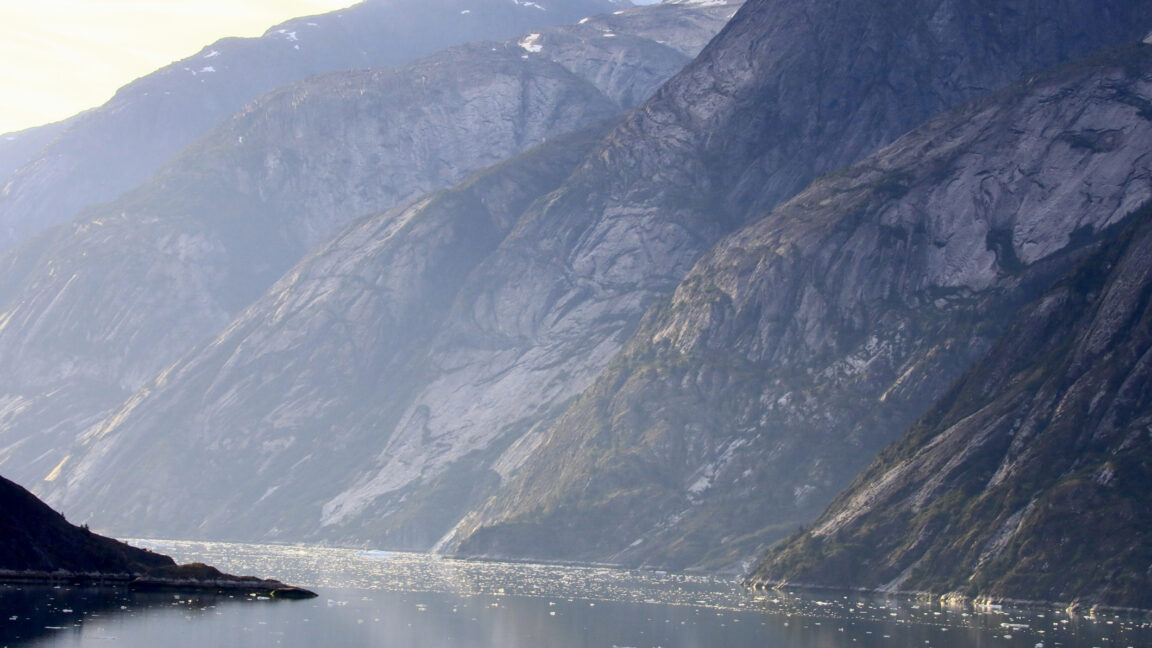
At 5:26 am local time on August 10, 2025, a massive wedge of rock with a volume of at least 63.5 million cubic meters detached from a mountain above Alaska’s Tracy Arm fjord. The falling rock plummeted into the deep waters at the terminus of the South Sawyer Glacier and caused an initial 100-meter-high breaking wave that tore across the fjord at speeds exceeding 70 meters a second. When this wave hit the opposite shoreline, it surged up the steep rocks to a height of 481 meters above sea level.

“It was the second highest tsunami ever recorded on Earth,” says Aram Fathian, a researcher at the University of Calgary and co-author of a recent Science study that reconstructed this event in detail. “But until now, almost nobody heard about it because it was a near-miss event,” he adds. There were no injuries or fatalities reported following the Tracy Arm fjord tsunami, mostly because it happened early in the morning. But we might not be so lucky next time.

Landslide megatsunamis

Earthquake-generated tsunamis usually reach runup heights of a few tens of meters when they strike land. Landslide tsunamis, like the one that happened in Tracy Arm, are often more localized but also way more violent. When millions of tons of rock suddenly fall into a confined body of water like a narrow fjord, the variation in water depth and the direct displacement of the water column produce extremely high waves. Since 1925, scientists have documented 27 such events with runups exceeding 50 meters. The highest was the 1958 Lituya Bay tsunami, which reached 530 meters.

The source of the 2025 Tracy Arm tsunami was a steep rock wedge on the northern side of the fjord. Its headscarp, the uppermost boundary of a landslide or rockfall, sat roughly 1,025 meters above sea level. For centuries, the structural integrity of this slope was maintained by a massive wall of ice known as the South Sawyer Glacier. But South Sawyer, like many other glaciers in the Stikine Icefield, has been in a state of retreat due to the warming climate.

Climate-driven disaster

“We studied the event from several aspects, from different lenses,” Fathian says. The team used high-resolution satellite images taken before and after the event to reconstruct the shape and geometry of the slide, as well as its axis and direction. Satellite images were also used to evaluate glacial thinning in the area, which, the team concluded, was the root cause of the Tracy Arms event.

The collapse, according to the study, was made more likely by the industrial-era warming of the planet. Researchers calculating the regional temperature trends found a 1.1° C increase in summertime temperatures since around 1875, driving up snowline elevations by roughly 169 meters. The local ice also got significantly thinner. Between 2013 and 2022 alone, the glacier ice bracing the failure site thinned by 100 to 130 meters.

Without millions of tons of ice pressing against the rock, the slopes were left too steep to support their own weight. In July 2025, just weeks before the event, glacial retreat exposed the very base of the slope that would soon fail. The icy straitjacket that kept the rocks from collapsing was no longer there. But there were other signs of an impending disaster.

Cracks in the rock

Retrospective analysis of optical and radar satellite imagery from the weeks preceding the slide showed no visible tension cracks or major deformational scarring on the slope. From the outside, it looked perfectly sound. But deep within the rock, surfaces were already grinding. Regional seismometers registered localized repeating earthquakes beginning as early as August 5. By August 9, these mini earthquakes were happening once every hour. In the six hours leading up to the main failure, the gaps between these seismic signals shrank to between 30 to 60 seconds.

The cause of this uptick in microseismicity was the small patches of rock and ice snapping as a huge part of the cliff began to inch its way downward. About an hour before the landslide, the signals merged into a continuous, grinding slip. And then, the rock fell.

The impact of 63.5 million cubic meters of rock hitting the fjord released forces large enough to be registered globally. The seismic waves that cascaded across the planet were recorded by sensor stations worldwide and were equivalent in energy to a magnitude 5.4 earthquake. The sloshing water within the fjord established a 66-second long-period seiche, a standing wave, that reverberated back and forth for 36 hours.

“It could easily turn into a catastrophic disaster,” Fathian says. It could, because Tracy Arm is a highly frequented tourist destination.

A close call

During the summer, more than 20 boats navigate the Tracy and Endicott arms every day, including up to six large cruise ships. Had the landslide occurred a few hours later, in the middle of the tourist day, the outcome could have been tragic. But even at 5:26 in the morning, the tsunami was enough to terrify the few people present in the vicinity.

About 55 kilometers away on Harbor Island, a group of kayakers saw the water flowing past their tents 20 minutes after the landslide. The surging tide took away some of their gear and one of the kayaks. Nearby in No Name Bay, observers on a motor vessel reported a 2-2.5-meter cresting wave coming along the beach from the direction of Tracy Arm, followed by a secondary 1-meter wave.

Farther away, 85 kilometers from the source, the crew of the small cruise boat anchored in Fords Terror saw a surge of water pouring over a nearby sandbar; it then physically lifted their vessel three meters despite a falling tide. The surge, they reported, lasted until 11 am, only to leave their small skiff stranded on dry land a few minutes later as the water receded.

At the mouth of the fjord, a National Geographic Venture cruise ship carrying around 150 people was anchored in dense fog. The captain noted currents, white water, and a significant amount of ice and debris near the edges of the fjord. Because the jagged, shallow seabed near the fjord's mouth acted like a speed bump that sapped the wave's energy, people onboard the cruise ship came out of the event unscathed. “It was a miraculous kind of luck we had that nobody got hurt,” Fathian claims.

But that luck may not last. With the warming climate, the team is convinced we’re going to have more Tracy Arms in the future.

Early-warning system

As climate change accelerates the retreat of tidewater glaciers and thaws the permafrost holding Arctic mountains together, the structural integrity of these landscapes is failing. “These conditions exist in many locations worldwide: Canada, Alaska, New Zealand, Greenland, Norway, and many other places,” Fathian claims. “And a similar event could happen in these areas.”

At the same time, our exposure to these hazards is on the rise. The number of cruise ship passengers visiting Alaska has increased from roughly 1 million in 2016 to 1.6 million in 2025. “Some of these cruise ships carry up to 6,000 passengers. This is literally a floating city,” Fathian says. “Imagine one of these ships getting hit by a mega tsunami wave.”

The researchers hope their study will provide scientific tools we could use to predict such events in advance. “Tracy Arm was not on the radar—it was not on anyone’s hazard or risk map,” Fathian explains. The goal for the team now is a better understanding of precursory warning signals they could detect with seismological techniques like mini earthquakes recorded around Tracy Arm a few days prior to the tsunami.

“These signals could be promising for developing early warning systems in similar conditions or areas,” Fathian says. “Hopefully this kind of data ends up on desks of policymakers and regulators to come up with practical and appropriate measures.”

Science, 2026.  DOI: http://dx.doi.org/10.1126/science.aec3187

Read full article

Comments


Read the whole story
fxer
3 days ago
reply
Bend, Oregon
Share this story
Delete

DNA identifies four more crew members of doomed Franklin expedition

1 Share

Archaeologists continue to use DNA analysis to identify the recovered remains of the doomed crew members of Captain Sir John S. Franklin's 1846 Arctic expedition to cross the Northwest Passage. They can now add four more names to the list of previously identified crew members. The findings were reported in two papers, one published in the Journal of Archaeological Science and the other in the Polar Record.

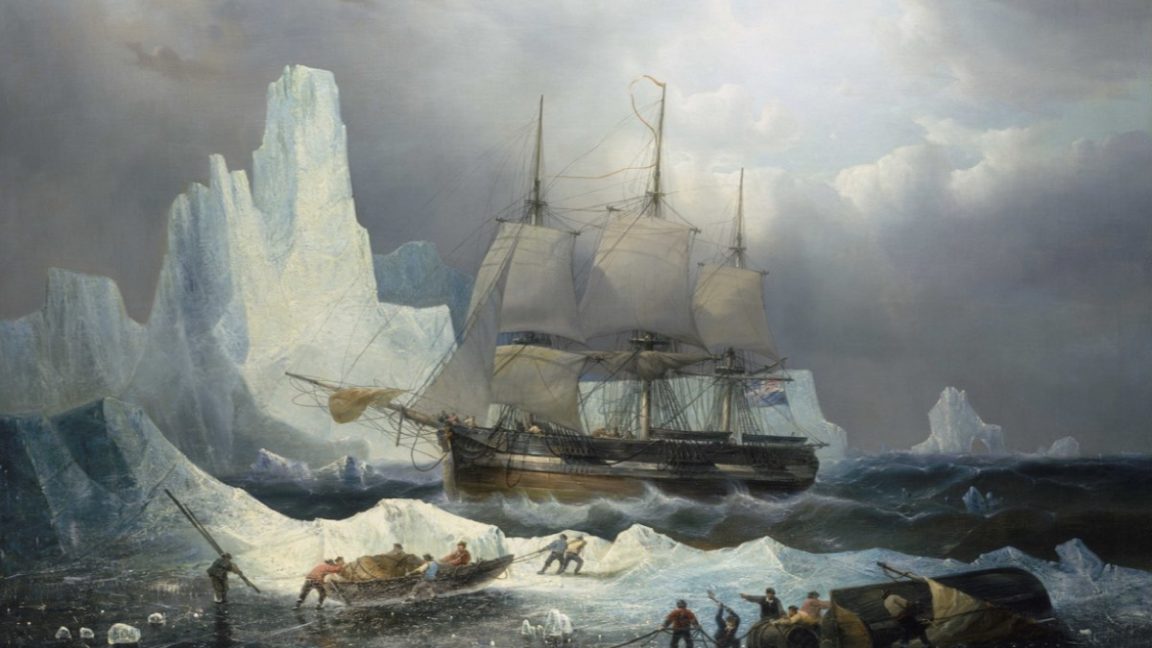
As we've reported previously, Franklin’s two ships, the HMS Erebus and the HMS Terror, became icebound in the Victoria Strait, and all 129 crew members ultimately died. It has been an enduring mystery that has captured imaginations ever since. The expedition set sail on May 19, 1845, and was last seen in July 1845 in Baffin Bay by the captains of two whaling ships. Historians have compiled a reasonably credible account of what happened: The crew spent the winter of 1845–1846 on Beechey Island, where the graves of three crew members were found.

When the weather cleared, the expedition sailed into the Victoria Strait before getting trapped in the ice off King William Island in September 1846. Franklin died on June 11, 1847, per a surviving note signed by Fitzjames dated the following April. HMS Erebus Captain James Fitzjames had assumed overall command after Franklin’s death, leading 105 survivors from their ice-trapped ships. It’s believed that everyone else died while encamped for the winter or while attempting to walk back to civilization.

There was no concrete news about the expedition’s fate until 1854, when local Inuits told 19th-century Scottish explorer John Rae that they had seen about 40 people dragging a ship’s boat on a sledge along the south coast. The following year, several bodies were found near the mouth of the Back River. A second search in 1859 led to the discovery of a location some 80 kilometers to the south of that site, dubbed Erebus Bay, as well as several more bodies and one of the ships' boats still mounted on a sledge. In 1861, yet another site was found just two kilometers away with even more bodies. When those two sites were rediscovered in the 1990s, archaeologists designated them NgLj-3 and NgLj-2, respectively.

The actual shipwrecks of the HMS Erebus and the HMS Terror were not found until 2014 and 2016, respectively. Thanks to the cold water temperature, lack of natural light, and the layers of silt covering many of the artifacts, the ship and its contents were in remarkably good condition. Even some of the windowpanes were still intact. The first underwater images and footage showing the ships' exteriors and interiors were released in 2019.

It's in the DNA

2D forensic facial reconstruction of David Young, Boy 1st Class from the HMS Erebus, who died at Erebus Bay. 2D forensic facial reconstruction of David Young, Boy 1st Class from the HMS <em>Erebus</em>, who died at Erebus Bay. Credit: Diana Trepkov
For several years, scientists have been conducting DNA research to identify the remains found at these sites by comparing DNA profiles of the remains with samples taken from descendants of the expedition members. Some 46 archaeological samples (bone, tooth, or hair) from Franklin expedition-related sites on King William Island have been genetically profiled and compared to cheek swab samples from 25 descendant donors. Most did not match, but in 2021, they identified one of those bodies as chief engineer John Gregory, who worked on the Erebus.

By 2024, the team had added four more descendant donors—one related to Fitzjames (technically a second cousin five times removed through the captain’s great-grandfather). That same year, DNA analysis revealed that a tooth recovered from a mandible at one of the relevant archaeological sites was that of Captain James Fitzjames of the HMS Erebus. His remains showed clear signs of cannibalism, confirming early Inuit reports of desperate crew members resorting to eating their dead.

We can now add three more crew members identified through their DNA. As before, to make the identifications, the team extracted DNA from archaeological samples and compared it with mitochondrial and Y-chromosome DNA from descendants. These included a molar and humerus shaft from NgLj-3; two molars, a premolar, and a temporal cranium bone from NgLj-2; and a sample taken from a left humerus found in 2018 at NgLj-1. The researchers were able to identify three individuals: William Orren, able seaman; David Young, boy 1st class; and John Bridgens, subordinate officers’ steward. All served on the HMS Erebus, and they all died at Erebus Bay.

Meanwhile, the Polar Reports paper focused on identifying an unburied skeleton found in 1859 on the south shore of King William Island. The skeleton was found with a seaman's certificate and other papers in a leather pocketbook belonging to Petty Officer Harry Peglar of the HMS Terror. However, the clothing found scattered around the remains was not of the sort usually worn by seamen or officers. The items included a double-breasted waistcoat and a black silk neckerchief tied in a bowknot, more indicative of what would be worn by a steward or officer's servant, as well as a clothes brush.

For a long time, the consensus was that the remains were most likely those of a steward. There were four on each of the two ships in the Franklin expedition, with the best candidates being Thomas Armitage, gunroom steward, or William Gibson, subordinate officers' steward, both of whom served on the HMS Terror. The authors estimated the skeleton's height via osteological analysis and compared DNA samples taken from the skeleton to those of descendants of six of the eight stewards and Harry Peglar. The DNA revealed that the skeleton was, in fact, Peglar.

DOI: Journal of Archaeological Science, 2026. 10.1016/j.jasrep.2026.105739  (About DOIs).

DOI: Polar Reports, 2026. 10.1017/S003224742610031X  (About DOIs).

Read full article

Comments


Read the whole story
fxer
5 days ago
reply
Bend, Oregon
Share this story
Delete

Canvas Down!

1 Share

ShinyHunters, a black-hat hacking group, has brought down Canvas across a significant portion of America’s higher education system:

Students were unable to access Canvas on Thursday afternoon after cybercrime group ShinyHunters shut down Penn’s access to the interface. 

The May 7 data breach comes after ShinyHunters — notorious in the hacking community for large-scale data breaches — claimed responsibility for breaching Instructure, the company that manages Canvas, last week. In the message posted on Penn’s Canvas page, the hackers wrote that any university that does not wish to have its data released should contact the group before May 12.

A request for comment was left with a University spokesperson. 

“ShinyHunters has breached Instructure (again),” the warning read. “Instead of contacting us to resolve it they ignored us and did some ‘security patches.’”

I am being told by professionals that ShinyHunters is angling for direct payouts from individual institutions. Good thinking to pull this in the midst of Finals Week. OMG we’re basically living in season two of The Pitt! Pay up, admins! Or don’t. I don’t really care, honestly. Also, “scheduled maintenance” is a nice cover story…

… actual footage from the Office of the President…

The post Canvas Down! appeared first on Lawyers, Guns & Money.

Read the whole story
fxer
5 days ago
reply
Bend, Oregon
Share this story
Delete
Next Page of Stories