17925 stories
·
174 followers

The truth lies in the past in Silo S3 trailer

1 Share

In April, we got a short teaser for the third season of Silo, the critically acclaimed Apple TV series based on the trilogy by novelist Hugh Howey, which hinted at a mysterious origin story dating back centuries. Apple TV just released the full trailer, and it looks like our heroine is again facing conflict and danger because she just keeps asking so many inconvenient questions.

As previously reported, Silo is set in a self-sustaining underground city inhabited by a community whose recorded history dates back only 140 years. The outside is a toxic hellscape that is only visible on big screens in the silo’s topmost level. The second season expanded Silo‘s world to incorporate the survivors in the second Silo 17; everyone else died in a revolt to escape to the surface. We discovered that there are 50 silos in all. Meanwhile, another revolution was brewing in Juliette’s (Rebecca Ferguson) original Silo 18 against Holland (Tim Robbins). And even more secrets were revealed.

In the season finale, Juliette returned to her silo and warned the residents not to leave, but she and Holland ended up locked in the incinerator just as it was being fired up. The final scene was a flashback, showing a woman questioning a congressman in Washington, DC, about possible retaliation after the US dropped a dirty bomb on Iran. And that brings us to S3. Per the official premise:

Season three of Silo continues the saga of a dystopian society of 10,000 people living underground under mysterious circumstances, while revealing an origin story set centuries earlier. In the present, Juliette Nichols (Ferguson) survives her forced ‘cleaning’ but returns with memory loss as the silo recovers from rebellion and faces a dangerous new threat. Meanwhile, in the ‘Before Times,’ journalist Helen Drew (Jessica Henwick) and Congressman Daniel Keene (Ashley Zukerman) uncover a conspiracy that pulls them into a chain of events with catastrophic, irreversible consequences.

In addition to Ferguson, returning cast members include Common as head of security Robert Sims; Harriet Walter as agoraphobic electrical engineer Martha; Avi Nash as IT systems analyst Lukas; Rick Gomez as maintenance worker Patrick; Chinaza Uche as chief deputy Paul Billings; Shane McRae as Knox; Remmie Milner as Shirley; Alexandria Riley as Camille Sims; Clare Perkins as Carla; Billy Postlethwaite as Deputy Hank;  and Steve Zahn as Jimmy Connor/"Solo,” sole survivor of the Silo 17 rebellion. In addition to Henwick and Zukerman, other new cast members include Laura Innes, Jessica Brown Findlay, Morven Christie, Reed Birney, Matt Craven, and Colin Hanks.

Coming to an end

The trailer opens with a flashback to Juliette's rescue from the incinerator; apparently, she was in that "box of fire" for three minutes. (There is no sign of Holland.) And three months later, she still has no memories "other than those you've given her," although she does occasionally get "splinters of memories." We also catch a glimpse of a mysterious note urging "Don't take the pills"—advice she doesn't seem to have taken.

It all matters because Juliette is the only inhabitant who has ever gone outside and survived. And it seems the silo residents might not have much time left. "If the founders cared so much, why do they need to kill a silo?" Juliette asks, while Camille worries that even asking such questions will get them all killed. Juliette has a plan to protect everyone, but it just might cost her life. And then we go far into the past, watching scores of people entering what looks like a new silo. "The end of the world cannot be stopped," someone named Pierce tells Zukerman's Congressman. "It can only be survived."

The third season of Silo premieres on Apple TV on July 3, 2026, with new episodes airing every Friday through September 4. It has already been renewed for a fourth and final season.

Read full article

Comments


Read the whole story
fxer
1 hour ago
reply
Bend, Oregon
Share this story
Delete

Dabbawalas: The men who fed Mumbai - and are slowly disappearing

2 Shares

Bloomberg via Getty Images Dabbawala Dasharath Kedari carries a crate of tiffin boxes while walking past a train at the Santacruz railway station in Mumbai, IndiaBloomberg via Getty Images
The number of registered dabbawalas has fallen from around 4,500 in 2018 to roughly 1,500 today

Every morning, before the city has fully woken up, men in white caps and shirts arrive at Mumbai's suburban railway stations on bicycles stacked high with lunchboxes.

They load these boxes onto trains, cross the city and then spread out on foot and bikes to deliver hot, home-cooked meals to office workers.

After a short break, they do it all in reverse - collecting the empty boxes and returning them to the kitchens they came from by mid-afternoon.

These men are called dabbawalas and for more than a century they have kept Mumbai fed through a delivery system so precise it became world famous.

The lunchboxes - called dabbas - usually carry rice, lentils, vegetable curries, rotis (flatbread) and sometimes meat that is freshly cooked in homes across the city's suburbs.

For generations of office workers in Mumbai, home-cooked meals have remained deeply tied to family routine, culture and dietary preferences - making the daily lunchbox an essential part of working life in the fast-paced city.

Each box is marked with an alphanumeric code that tells a dabbawala where it came from, where it is going, which floor of which building it belongs to and how to get it back again. No apps or GPS - just a system passed down through generations of workers who know Mumbai's trains and streets instinctively.

The trade has brought Mumbai - India's financial capital - global attention. Harvard Business School studied it as a masterclass in low-cost logistics. In 2003, even the future King Charles spent some time with dabbawalas on a trip to Mumbai.

The service became synonymous with something Mumbai prided itself on, that beneath the noise and the rush, some things still worked with unshakeable precision.

Now, the men who built that reputation are struggling to survive.

Shahid Sheikh Traditional metal lunchboxes displayed on two shelves in a museum, showing different shapes and sizes used in tiffin delivery systems.Shahid Sheikh
A museum in Mumbai city showcases the 130-year-old history of dabbawalas

The dabbawala system is believed to have begun in the late 19th Century, when Bombay (now Mumbai) - then under British colonial rule - was rapidly expanding and office workers needed a way to eat fresh, home-cooked food during the day.

At a time when restaurants and canteens were limited, carrying meals from home mattered deeply in a city where food was tied to culture, religion and family routine.

The idea is generally tracked back to a Parsi banker, who hired a man to pick up his lunch from home each morning, deliver it to his office and return the empty box later. A simple system, which soon caught on.

In 1890, a man named Mahadeo Bachche organised the system in its modern form with about 100 workers, according to Shobha Bondre's book Mumbai's Dabbawala: The Uncommon Story of the Common Man.

Early dabbawalas transported lunchboxes on bicycles and marked them with coloured threads so they could be sorted and returned accurately. Over time, those markings were replaced with a unique alphanumeric code system, while deliveries came to rely on bicycles, motorbikes and Mumbai's suburban train network.

At its peak, nearly 4,500 dabbawalas delivered around 50,000 lunch boxes across Mumbai every day, according to organisations that regulate and monitor the service.

But the pandemic disrupted that system. As offices shut and people began working from home, daily deliveries were no longer needed in the same way.

Dabbawalas who once served 20 or 25 office workers a day were suddenly left with only a handful of customers - some with none at all.

With little savings to rely on, many left the trade altogether.

Offices have since reopened, but remote and hybrid work models have sharply reduced the daily demand that once kept Mumbai's dabbawala network running at full scale.

Shahid Sheikh A man wearing a white kurta pajama and a cap sits in a train berth with lunchboxes placed on the floorShahid Sheikh
Most lunchboxes have colour or code markings to show who they belong to and where they should go

"After the lockdown, work-from-home started," says Kiran Gavande, secretary of the Mumbai Tiffin Box Suppliers Association. "Some people now go to the office only two or three times a week. This had a big impact on Mumbai's dabbawalas."

The number of registered dabbawalas has fallen from around 4,500 in 2018 to roughly 1,500 today, according to the association.

At the same time, Mumbai's relationship with food has changed.

Online food delivery apps like Swiggy and Zomato, alongside a growing number of cloud kitchens offering restaurant meals at low prices, have given people a new set of choices.

Where the dabbawala once had little competition - delivering home-cooked meals for just 2,000 rupees ($21; £16) a month - they now compete with everything from biryani to burgers at the tap of a screen.

Balu Bhagu Shinde spent 20 years as a dabbawala before leaving the trade.

The 41-year-old once earned about 20,000 rupees a month delivering lunchboxes to 15 to 20 customers a day - enough to support a family of five in one of India's most expensive cities. By the end of 2020, only two customers remained.

He waited for offices to reopen but the customers never returned in substantial numbers. Eventually, Shinde became a tuktuk driver.

He now earns around 15,000 rupees a month - less than what he made delivering lunchboxes, but is hobbled by a lack of options.

"There are no customers, no money - what should we do?" Shinde says.

"We are struggling to survive. I am cutting down on household expenses, but I have three children whose education matters the most. At times I have had to borrow money."

For the people who stayed, survival increasingly means working two jobs to just get by.

Shahid Sheikh A person in a white outfit and cap stands with arms crossed beside a black-and-yellow auto rickshaw parked on the roadside.Shahid Sheikh
Balu Bhagu Shinde quit as a dabbawala as customers dwindled after the pandemic

Mauli Bachche, 40, has been a dabbawala for two decades. His day starts at 07:00 from his home in a Mumbai suburb. By 10:30, he has collected lunchboxes from homes and small kitchens across his neighbourhood and loaded them onto trains bound for offices across the city.

By early afternoon, the deliveries are complete. At 14:00, the return cycle begins.

Then comes his second job, where he collects small daily savings deposits from shopkeepers on behalf of a finance company before finally returning home around 22:00. By then, he has spent up to 15 hours working and travelled more than 100km (62 miles) across the city.

He has two children - a daughter in her final year of school and a son in Grade 10 who hopes to become a cricketer.

"Before Covid, I used to deliver 25 dabbas. Some of those people are now working from home, some have lost their jobs - only 15 customers remain," he says.

"Income from dabbawala work is very low. Everyone is doing more than one job."

For the older men in the business, the worry is not so much for themselves - it is for what comes after them.

"In our time, we managed to survive," says Baban Kadam, who has worked as a dabbawala for 35 years. "But with today's cost of living, the younger generation will not come into this work. Everyone wants a better-paying job or business."

Ramdas Baban Karvande, president of the Mumbai Tiffin Box Suppliers Association, says the network no longer delivers across all parts of the city as it once did.

The association is now considering shift-based work so dabbawalas can take up part-time jobs alongside their morning deliveries.

"This will allow them to earn from other work or small businesses," Karvande says.

Even so, he is unsure how long the system can survive.

"We are continuing for now," he says. "But we cannot say what will happen in the future."

For the time being though, each morning, Mumbai's trains carry men weaving through crowded platforms with stacks of steel lunchboxes - preserving a tradition that was once synonymous with the pace of the city, but now risks being left behind by it.

Follow BBC News India on Instagram, YouTube, X and Facebook.

Read the whole story
fxer
17 hours ago
reply
Bend, Oregon
acdha
3 days ago
reply
Washington, DC
Share this story
Delete

Yes. Running government like a business has always been a terrible idea.

2 Shares

Yes. Running government like a business has always been a terrible idea.

Read the whole story
fxer
17 hours ago
reply
Bend, Oregon
Share this story
Delete

The SpaceX IPO is great for Elon Musk and terrible for you

2 Shares
Elon Musk looking up with stock tickers and Space X rockets.
Number go up? | Image: Cath Virginia / The Verge, Getty Images

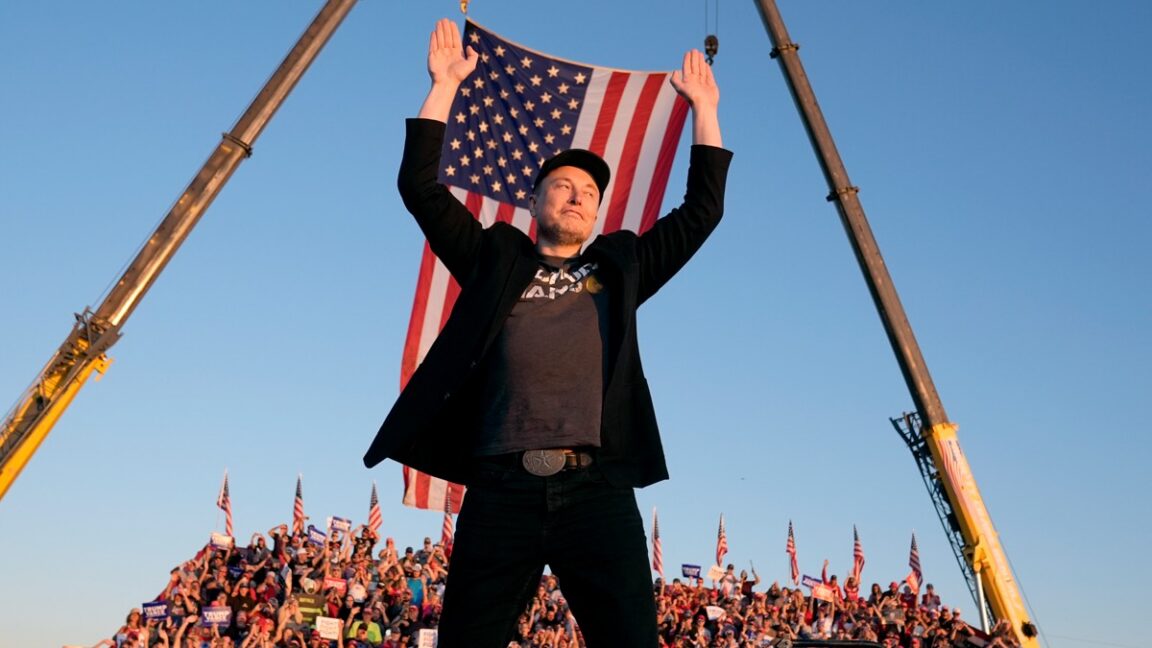
I haven't seen anything as stupid as the WeWork IPO document in a very long time - that is, until Elon Musk filed to take SpaceX public. WeWork was a joke. SpaceX is a threat. And if Musk and his bankers have their way, you are going to be their bagholder.

Lots of the top-line details leaked long before the S-1 filing itself became public. There's the rumored valuation of more than $1 trillion. That's despite the nearly $5 billion in losses last year. The total addressable market (TAM) for SpaceX - the amount of revenue SpaceX thinks it could make if won over what it thinks is its entire customer base - was listed as $28.5 trillion. By way …

Read the full story at The Verge.

Read the whole story
fxer
17 hours ago
reply
Bend, Oregon
Share this story
Delete

The fall of Ben Shapiro

Vox
1 Share
Ben Shapiro, wearing a sport coat with a white buttonup shirt, gestures while speaking from behind a podium.
Ben Shapiro speaks during Turning Point USA's annual AmericaFest conference on December 18, 2025. | Olivier Touron/AFP via Getty Images

Just a few years ago, Ben Shapiro was the defining voice of right-wing media. His podcast sat near the top of the charts. Posts from the Daily Wire, his media company, routinely dominated the competition on Facebook. His team was even coming for Hollywood, putting out “anti-woke” comedies and an epic fantasy series that cost millions per episode.

All that feels like a distant memory now. Shapiro’s social media traffic has collapsed, as the Washington Post’s Drew Harwell recently reported; the Daily Wire has gone through multiple rounds of layoffs since 2025. The epic fantasy series flopped. Shapiro’s struggle to stay relevant is clear on his YouTube page, where you can find painfully forced videos of the pundit reacting to trending culture.

So what happened? Ryan Broderick, a longtime internet culture reporter who publishes the Garbage Day newsletter, has a succinct explanation: “The age-old problem with working at the racism factory! They eventually make a new racism that includes you,” he wrote in May.

To learn more about the Daily Wire’s decline, Today, Explained co-host Noel King spoke with Broderick about how Charlie Kirk’s murder precipitated a MAGA vibe shift that has left Shapiro out in the cold, the new media figures rising to replace him, and whether we will miss Shapiro once he’s gone. (We very likely will.)

 Below is an excerpt of their conversation, edited for length and clarity. There’s much more in the full podcast, so listen to Today, Explained wherever you get podcasts, including Apple Podcasts, Pandora, and Spotify.

Explain your “racism factory” line, please. 

It was a pithy way to describe what I think is happening to Ben Shapiro right now, which is that he’s found himself on the wrong side of a far-right vibe shift that’s happening. 

The question of “Should American conservatives support Israel?” I think, has quickly become the deciding factor in canonizing the new wave of MAGA, or even post-MAGA conservatism in America. There’s a lot of creators on one side who say we should not be involved with Israel. They say that largely for antisemitic purposes, but also because they’re xenophobic and isolationists, but they know that this is a red line that they can go across. 

Ben Shapiro cannot follow them there because he is an Orthodox Jew who supports Israel and is a fairly standard conservative, all things considered. And so this is among the many other problems that Shapiro is having right now in trying to hold his digital media empire together.

Alright, so Ben Shapiro’s on one side. As you said, he is unlikely to ever turn his back on Israel. On the other side are people who are going hard at Israel and have been since approximately, I don’t know, October 8, 2023. Who are they? Who are the players here?

The biggest one is Nick Fuentes. He is the de facto leader of this far-right splinter cell movement, the “Groypers.” He’s got a live stream that he’s on every single day, and he’s just the most vile kind of far-right personality you could imagine. But you also have more and more creators, I think, sensing this vibe shift and moving towards him. 

Candace Owens was going so far as to even claim that Charlie Kirk was killed by Mossad. You also have Tucker Carlson, Megyn Kelly — a lot of these people I would sort of put in the camp of pretty run-of-the-mill conservative commentators who understand that Trump is not popular, and so they’re trying to feel out new territory there. And then you also have “manosphere” guys like Tim Dillon who have even started to kind of go against Israel. 

It is this thing that is happening, and social media, I think, always prioritizes the newest, most taboo idea. And so this would be a new taboo that has been discovered by far-right commentators.

So in that camp of people, you have critics of Israel that run the gamut from Candace Owens, who seems kind of nutty, to Megyn Kelly, who often seems pretty straight. What do they all have in common? Is it just their criticism of Israel?

No, my read on this is that it all stems from Charlie Kirk, actually.

The MAGA movement is not one movement. It is not one ideology. The 2024 winning coalition was this weird mismatch of far-right live streamers, manosphere podcasters, neoconservatives and the TPUSA/Charlie Kirk kind of middle-of-the-road MAGA people. I think Charlie Kirk was very instrumental in holding a lot of this together, if only because it seemed like — to them at least — he was possibly a replacement for Trump. 

I’ve read into it as the MAGA movement was trying to home-grow their own version of Trump. Charlie Kirk may have been that figure. He dies, and the whole thing starts to fall apart. And I have to give, unfortunately, some credit to Nick Fuentes here, who has always hated Charlie Kirk.

So Charlie Kirk is killed, and then these alliances form and they fracture and they reform and they refracture. What events of the last, say, eight months do we place in the post-Charlie Kirk’s assassination moment?

It’s a lot of reading the tea leaves of online discourse, I would say. But you know when the movement is working and when they’re all falling in lockstep with one another.

Sydney Sweeney’s jeans would be a good example of [that], or Cracker Barrel. They’ve been able to get this talking point to surface out of their DMs and into the general consciousness. And if you look back at the months immediately after Charlie Kirk’s murder, that hasn’t really been happening the same way. They’re not really working together. They’re fighting with each other a lot, and they’re also telling on each other. 

These people are very messy. Even as we speak, Ashley St. Clair is on TikTok sharing secrets from inside the MAGA movement and going on Hasan Piker’s stream. All these guys are unfollowing each other and fighting with each other. And it’s a lot of right wingers who are super dependent on internet attention and monetizing internet attention, and they’re really, really nervous about the internet landscape the same way all digital media publishers are. I think that’s having a negative impact on the stuffiest of the digital media-era people. And Ben Shapiro is the stuffiest.

There is something else that I’ve been thinking about a lot, which is: Ben Shapiro, when he started out, he was so young, and it was like this young man that appealed to people who were much older because he was super well-spoken and he was pugnacious. 

Now he just sort of seems old. He seems like he doesn’t really know what he should be doing on TikTok. He seems like he doesn’t really know who in the culture is relevant anymore. You could make the same argument about Tucker Carlson, even though he’s surviving, but he openly seems scared of Nick Fuentes. 

Do you think that the guys that we were used to are now the old guys and they know it, and the young guys that are coming after them are worse?

I would say that Ben Shapiro from the very beginning was much better at talking to old people than talking to young people. And it seems like what he was doing was creating a digital media company that looked hip and cool to old people, who would then give him money and he would spend that money on advertising and sort of dominate Facebook and create this flywheel that allowed him to grow pretty quickly. 

A lot of the weird preoccupations the Daily Wire has had with dominating Hollywood, for instance, feel very old to me. It feels like an 80-year-old conservative’s fever dream of what the internet could be. Just very strange stuff. 

I think it’s only gotten stranger in the last year or two, because it also feels like the Trump movement has kind of moved beyond the need for someone like Ben Shapiro. In the era of DOGE and Project 2025 and ICE occupations [and] JD Vance/AI stuff, none of it feels like Ben Shapiro is really in the mix anymore.

Do you think we’re going to look back in a few years and miss Ben Shapiro for his sort of sobriety?

Yes. I think that when digital publishers on the right, in the early 2010s, began to really lean into the internet, they inadvertently connected American conservatism and by extension global conservatism with the sea changes and tides of internet discourse. And that’s always going to go towards the thing that feels the most dangerous and the most taboo, because that’s what’s most exciting on social media. 

If you have every major conservative figure in America making money directly from the internet, there’s no real incentive for them to become more moderate. They’re going to be hitting themselves in the face with hammers and smoking meth and attacking people on the street and going full white nationalist, race-science Substack nonsense. We’re already seeing this. The days of Prager University or the Daily Wire trying to do a sensible conservative’s reaction to Cardi B’s “WAP” or whatever are just not going to come back.

Read the whole story
fxer
19 hours ago
reply
Bend, Oregon
Share this story
Delete

Ceres’ Surface Is Much More Complex Than Previously Thought

1 Share

The dwarf planet Ceres as seen by NASA's Dawn mission.  Credits: NASA/JPL-Caltech/UCLA/MPS/DLR/IDA

The dwarf planet Ceres has a surface that seems to get more perplexing with each new study. A recent paper presented at EGU26 in Vienna only adds to its mystery.

Read the whole story
fxer
20 hours ago
reply
Bend, Oregon
Share this story
Delete
Next Page of Stories