17961 stories
·
174 followers

20 years of Intel Macs: Why Apple switched, and why it switched again

1 Share

The release of macOS 27 later this fall won't quite close the book on the Intel Mac. The last handful of models that could run macOS 26 Tahoe will be eligible for security and Safari updates for two more years, and elements of the Rosetta compatibility layer for running Intel code on Apple Silicon Macs will be with us in some form for some indeterminate amount of time after that.

But macOS 26 is definitely the last chapter of the Intel Mac story. Anything that happens after this is a coda or an epilogue.

Most of our WWDC coverage has been forward-looking, so indulge us if you will in a look backward at the full history of the Intel Mac, a partnership between two companies that made Macs dramatically better, until it started making them worse.

"Project Marklar"
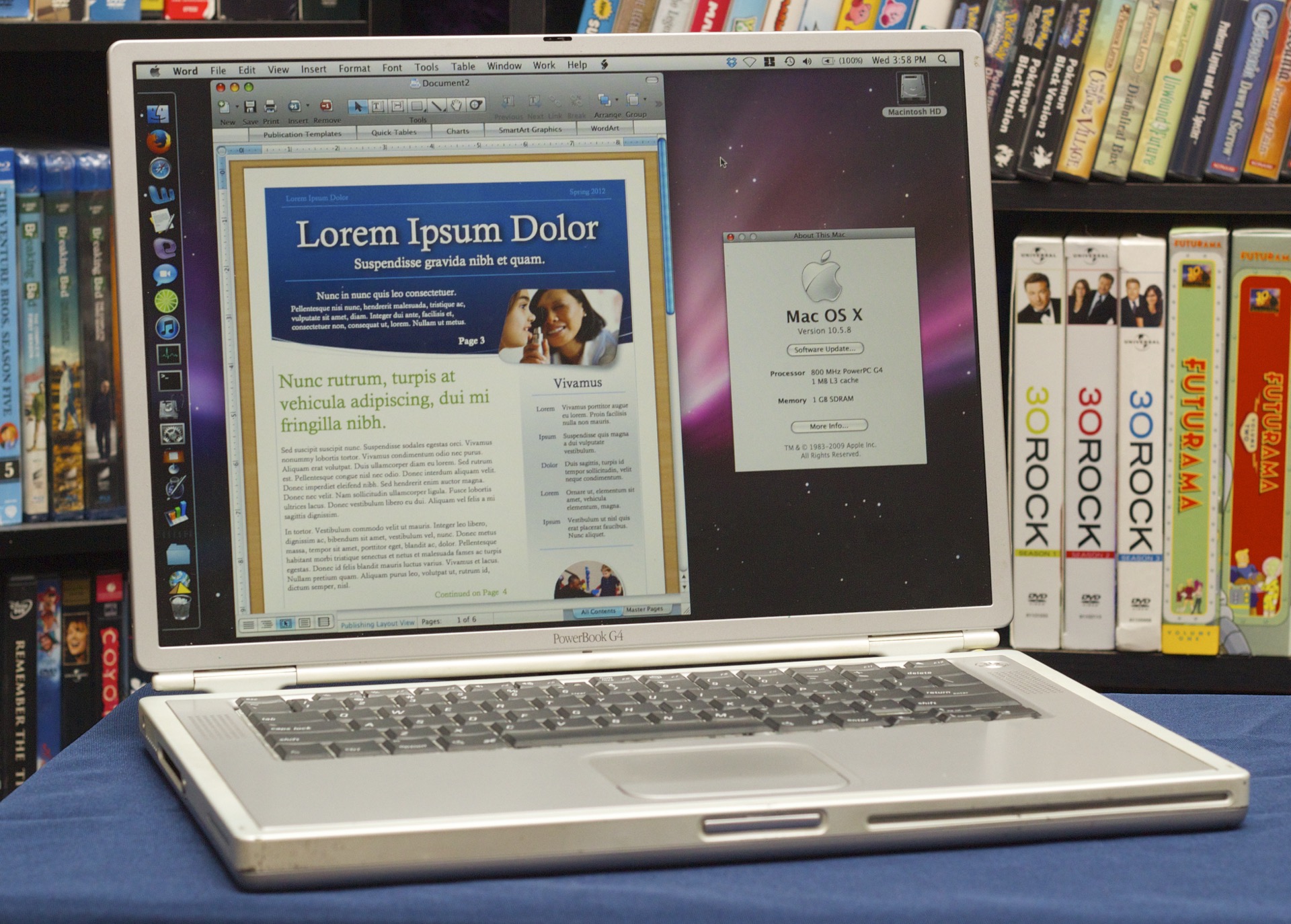
An early 2000s-era titanium PowerBook G4 running Mac OS X Leopard. Apple was never able to squeeze the PowerPC G5 into a laptop. Credit: Andrew Cunningham

The Mac's history with Intel didn't start with version 10.4.4, the first Mac OS X version to ship on a commercially available Intel Mac. But we won't go as far back as the x86-compatible versions of NeXTSTEP or Apple's abortive '90s efforts to make a version of classic Mac OS that could be licensed for third-party x86-based systems.

Let's begin with JK Scheinberg, an Apple engineer in June of 2000, who was looking for a solo project to help him transition to working from home. His pitch? A version of the then-still-in-progress Mac OS X that could run on Intel processors.

"I've been working on the Intel platform for the last week getting continuations working," Scheinberg wrote to his boss in an email shared by his wife. "I've found it interesting and enjoyable, and, if this (an Intel version) is something that could be important to us I'd like to discuss working on it full-time."

At the time, all Macs still used PowerPC processors co-developed by Apple, IBM, and Motorola, as they had since 1994. Early Mac OS X versions ran on G3 and G4 chips, and the 64-bit G5 processor was launched in mid-2003. A version of Mac OS X that ran on Intel's chips wasn't strictly necessary, and for around a year and a half, it existed only as a sort of hobbyist side project codenamed "Marklar."

By early 2002, Marklar had attracted more attention within Apple, and then-CEO Steve Jobs briefly flirted with the idea of allowing Mac OS X to run on Sony's Vaio laptops. By that August, a dozen or so engineers had been added to the project as it grew from "proof-of-concept" to "contingency plan."

That's because Apple was having problems with PowerPC chips. Jobs promised that the desktop version of the G5 would climb in clock speed from 2 GHz to 3 GHz within a year, a promise that never came to pass. And Apple was never able to squeeze the hot, power-hungry processor into a laptop—iBooks and PowerBooks were stuck with revised versions of the G4. Future CEO Tim Cook called a G5-based laptop "the mother of all thermal challenges."

Jobs had been fuming about PowerPC chips for a while; Walter Isaacson's Jobs biography describes a heated call between Jobs and Motorola CEO Chris Galvin in 1997, in which Jobs declared that PowerPC chips "sucked." And he may have harbored other bad feelings; Geoffrey Cain's Steve Jobs in Exile says that Apple's PowerPC switch doomed further development of the Motorola m68k chips that NeXT's computers relied on, helping to kill NeXT's already-struggling hardware business.

And IBM, for its part, didn't want to devote its resources to developing a bunch of chips that would be used exclusively in the low-volume Mac lineup (in 2003, Apple shipped roughly 3 million Macs; the company no longer reports unit sales in its earnings reports, but analysts peg that number at just under 26 million Macs in 2025).

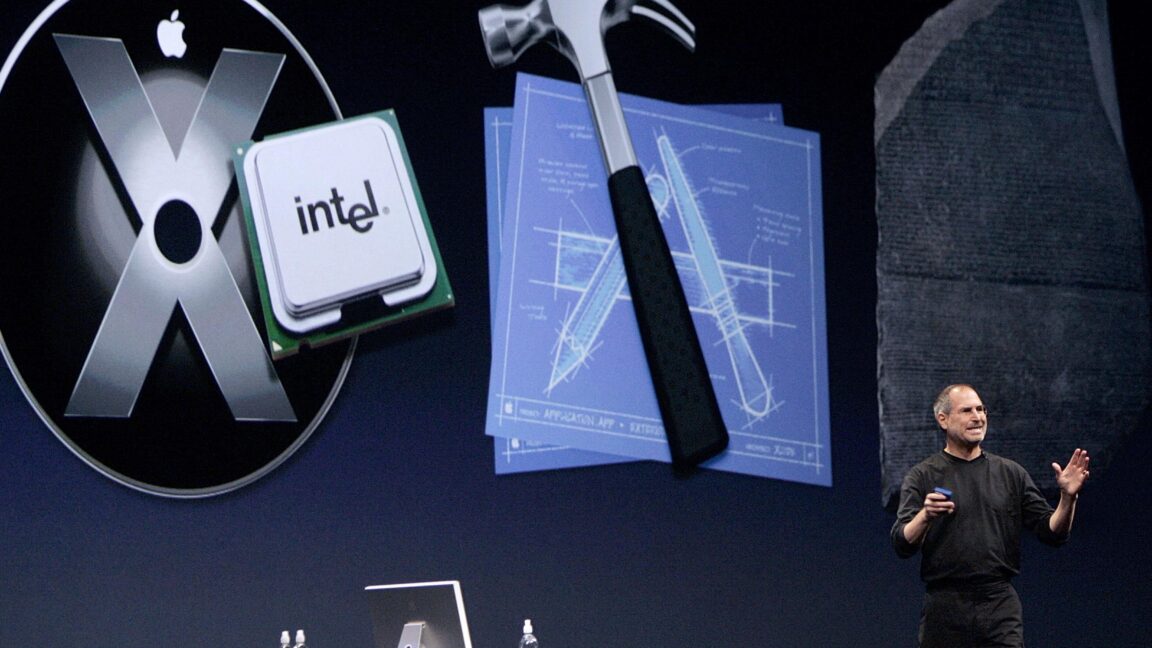
Intel's Paul Otellini helped convince Jobs to jump to Intel's chips, and Apple didn't need to start the software switch from scratch because of its existing work on Marklar. In June of 2005, Apple publicly demonstrated Mac OS X 10.4 running on Intel hardware for the first time. His presentation obliquely mentioned Marklar, though not by name.

"And so today for the first time, I can confirm the rumors that every release of Mac OS X has been compiled for both PowerPC and Intel," announced Jobs. "This has been going on for the last five years. Just in case."

The transition

The "first" Intel Mac was a Developer Transition Kit (DTK) made available to software developers after WWDC 2005. It was essentially a Pentium 4-based PC inside a Power Mac G5 case, and it was available strictly as a loan to developers who could pay $499 per year for a developer account and another $999 for the kit. Few, if any, of these DTK kits survived; Apple required developers to return the systems by the end of 2006 and offered to trade them for a real retail Intel Mac to seal the deal.

The WWDC keynote laid out the timeline, in addition to the tools Apple would use to help developers and users navigate the transition. The next version of Mac OS X, version 10.5 Leopard, would be compatible with both PowerPC and Intel Macs. A compatibility layer called Rosetta would run most PowerPC apps tolerably well while developers worked on Intel-native versions, which could be distributed as universal binaries that supported both CPU architectures. This transition worked well enough that Apple essentially handled the Intel-to-Apple-Silicon switch the exact same way.

Apple would also take advantage of the fact that its computers would use the same hardware as other PCs. Right from the start, Apple officially supported running Windows directly on Intel Macs via Boot Camp; a Mac OS X app would handle partitioning the Mac's disk and downloading Windows drivers for the Mac you were using, and a Windows-side app supported rebooting back into Mac OS (and eventually provided some other nice-to-haves like read-only access to HFS+ formatted volumes).

By January of 2006, Apple started shipping the first Intel Macs, starting with a new iMac and a renamed MacBook Pro to replace the outgoing PowerBook series. These first systems were externally almost indistinguishable from the PowerPC models they replaced, another strategy Apple recycled for the first Apple Silicon Macs—the implied message was "maybe these machines were different on the inside, but they're still the Macs you know and love."
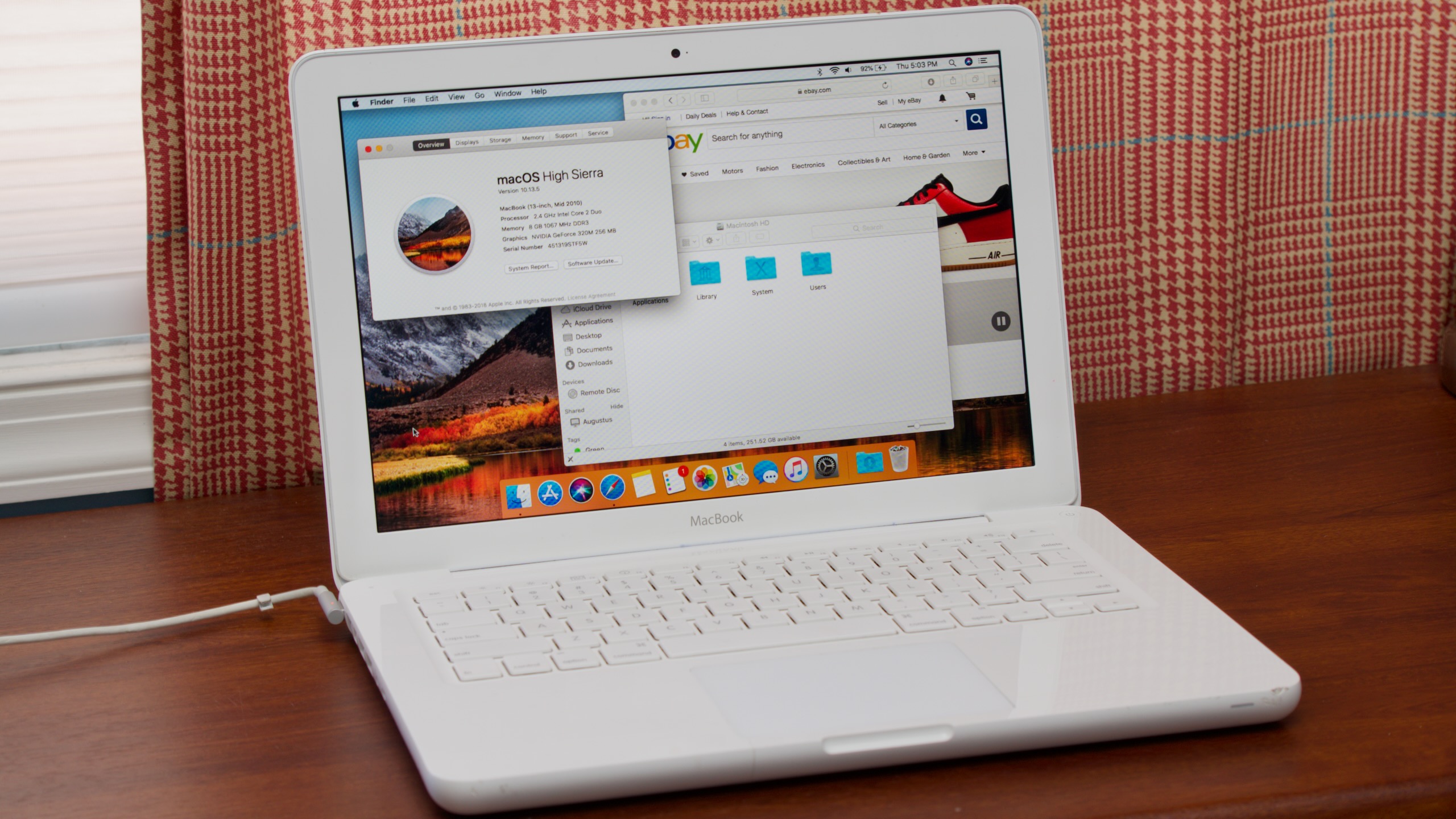
A 2010-era white plastic MacBook. The first-generation version of this design was Apple's signature consumer laptop during the early Intel era. Credit: Andrew Cunningham

The first new design of the Intel Mac era came later that year, when Apple launched the MacBook to replace the old iBook. Like the iBook, this laptop was made mostly of white plastic (a black version, inexplicably several hundred dollars more expensive, was also available eventually), and it used slower processors with Intel's integrated graphics rather than the MacBook Pro's dedicated graphics chips. But it was a popular machine—I was a college student at the time, and it was definitely the laptop you'd see the most often when you were out and about on campus (or maybe the second-most-often, if you added up every single permutation of "something cheap from Dell").

During the WWDC 2005 presentation, Jobs predicted that the Intel transition would be mostly complete by the end of 2007. Unlike the 3GHz G5 prediction, this one actually wasn't optimistic enough: Apple completed its switch from PowerPC to Intel chips with the announcement of a new Mac Pro and Intel-based Xserve in August of 2006.

A productive partnership

"As we look ahead, we can envision some amazing products we want to build for you, and we don't know how to build them with the future PowerPC roadmap," said Jobs while explaining the rationale for the switch. (It's funny to think of now, but some of the Mac's staunchest loyalists did react to the switch with disproportionate dismay.)

For the first few years of the Intel era, updates came fast and often. The first wave of Intel Macs briefly reverted to 32-bit chips, a retreat from the 64-bit architecture of the G5; this was fixed the next year with a switch to 64-bit Intel Core 2 Duo processors. A flashy new aluminum-and-glass iMac overhaul came in 2007, defining an aesthetic that is still recognizable in today's Apple products. By the early 2010s, Intel's rapidly improving integrated GPUs enabled the Mac's first high-resolution "Retina" displays.

But the tastiest fruit of the early Apple-Intel partnership, a machine that wouldn't have been possible with PowerPC chips, was the MacBook Air. For that first model, Intel had even made a special version of its Core 2 Duo CPU with 60 percent smaller packaging, something that helped Apple cram an entire laptop into something that could fit in a manila envelope.

That first Air was a bit too ahead of its time; its 4,200 RPM spinning hard drive in particular helped bog it down, and the things it was missing felt like bigger compromises in 2008 than they would have just a few years later. But fast solid-state storage soon became a standard feature, and within just a few years, the MacBook Air was what virtually all laptops looked like. This was something Intel both enabled and encouraged.

Signs of trouble
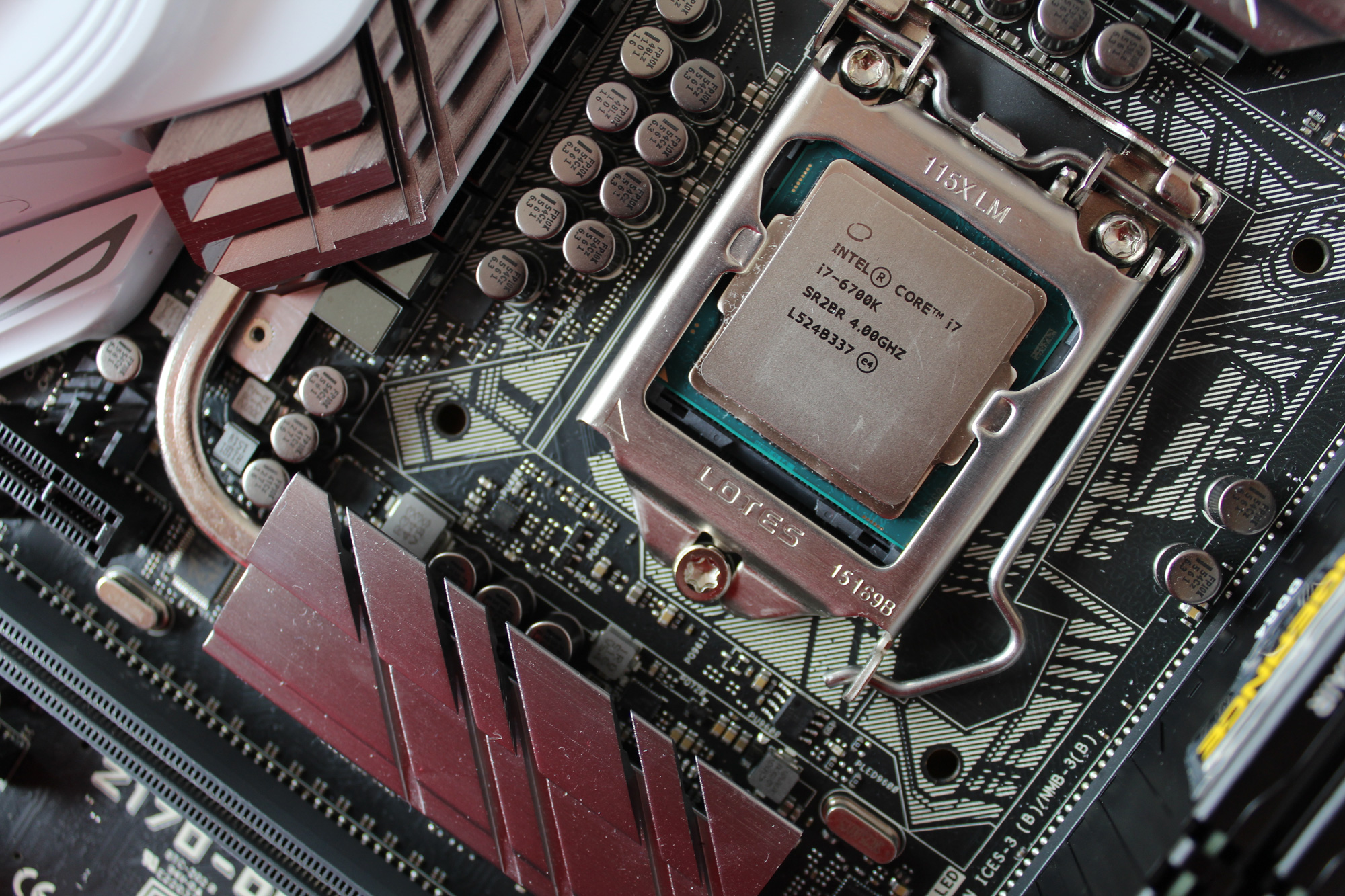
A 6th-generation Intel Core CPU, codenamed Skylake. This architecture and the 14 nm manufacturing process were where Intel's problems started. Credit: Orestis Bastounis

Apple began making its own Apple-branded processors in 2010, using technology it acquired when it bought P.A. Semi in 2008. But while early chips like the Apple A4 and A5 were energy-efficient and felt snappy in iPhones and iPads, it was extremely difficult to imagine their performance scaling all the way up to what Apple would need to replace the Intel chips in a MacBook, to say nothing of an iMac or a Mac Pro.

But these chips steadily improved, year after year, often by huge leaps and bounds. And there was trouble brewing at Intel.

By the mid-2010s, Intel's "Tick-Tock" model for improving its products was beginning to falter. The company had more trouble than expected getting its 14 nm manufacturing process up and running, and its manufacturing improvements stalled for years. Intel's next-generation 10 nm process wasn't shipping in any volume until late 2019, and for years, it was stuck shipping warmed-over iterations of 2015's 14 nm Skylake architecture.

And it wasn't just the slowed rate of improvement that was a problem. Former Intel engineer François Piednoël claimed that the Skylake architecture was inordinately buggy and that Apple was the one finding a lot of the bugs.

"Basically our buddies at Apple became the number one filer of problems in the architecture. And that went really, really bad," said Piednoël. "When your customer starts finding almost as much bugs as you found yourself, you're not leading into the right place."

The PowerPC-to-Intel switch came because Apple was unhappy with its current chips and because a better, more viable option was readily available. By the late 2010s, both of those things were true again.

Bridge over troubled water
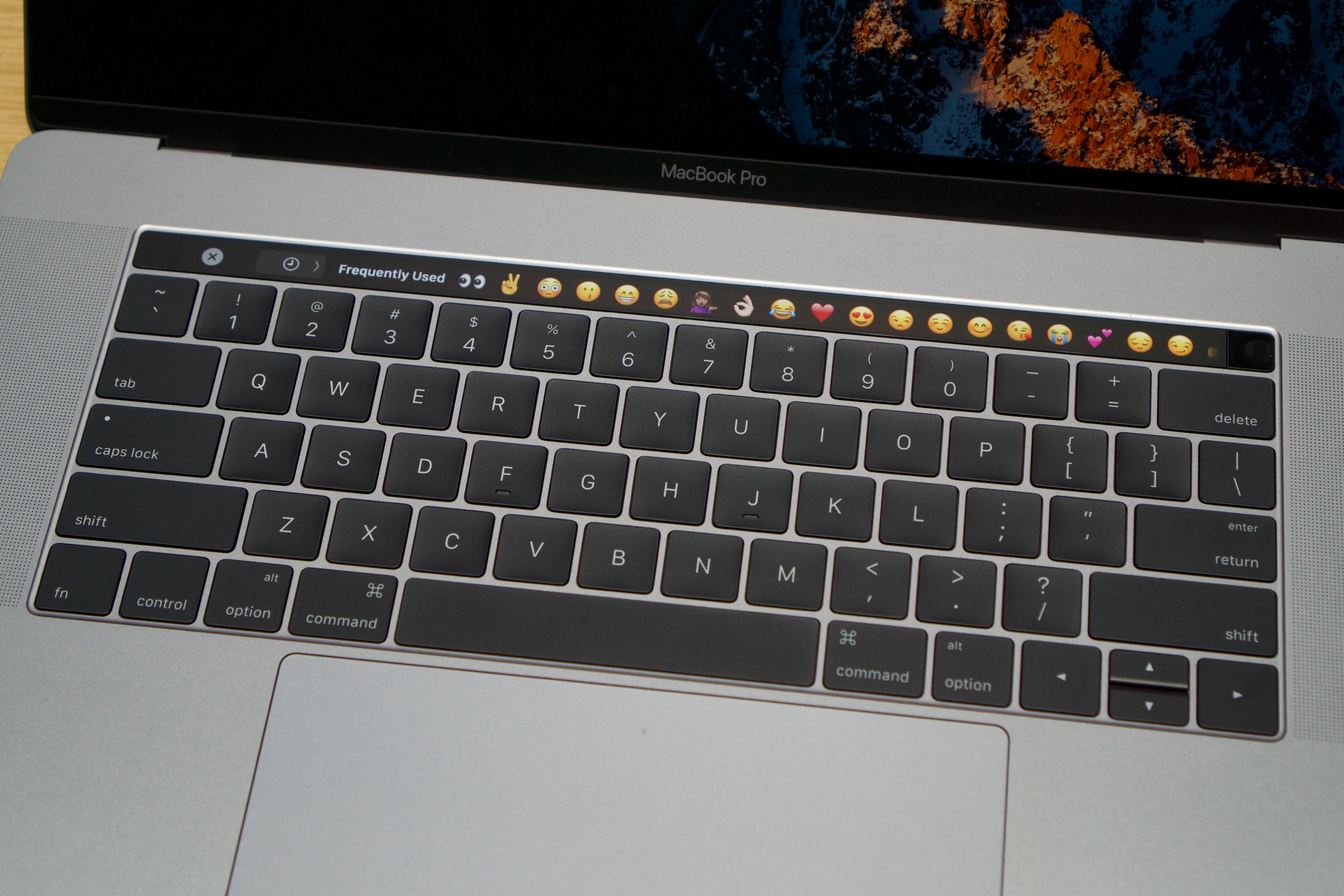
The MacBook Pro Touch Bar was a flawed idea that nevertheless showed how Apple was outgrowing Intel. Credit: Andrew Cunningham

In retrospect, the first "Apple Silicon Mac" was not the M1 MacBook Air or Mac mini that came out in late 2020 but the redesigned butterfly-keyboard MacBook Pros that released in late 2016.

Those models shipped with a now-abandoned piece of technology called the Touch Bar, a narrow strip of touchscreen above the keyboard that attempted to replace the function row with other buttons and sliders that could change dynamically based on what the user was doing.

To make the Touch Bar work, those Macs included a chip called the Apple T1. The T1 wasn’t much—it was essentially a repurposed Apple Watch processor that existed to drive the Touch Bar display and provide Macs with a Secure Enclave that could be used for Touch ID and Apple Pay. But it was a sign that Intel's chips were no longer serving all of Apple's needs. As in the PowerPC days, Apple was envisioning products that its chip supplier couldn't help it build.

The T1 was followed by the T2, a relative of the Apple A10 chip that handled the same things as the T1 plus additional security features, an SSD controller, and video encoding and decoding. Both the T1 and T2 ran their own operating system called "bridgeOS"—in one sense, the "bridge" referred to communication between those Macs' Intel processors and the Apple coprocessors. But in retrospect, you could also read it as a reference to those Macs' status as a bridge between the height of the Intel Mac era and the looming Apple Silicon era.

Apple inside
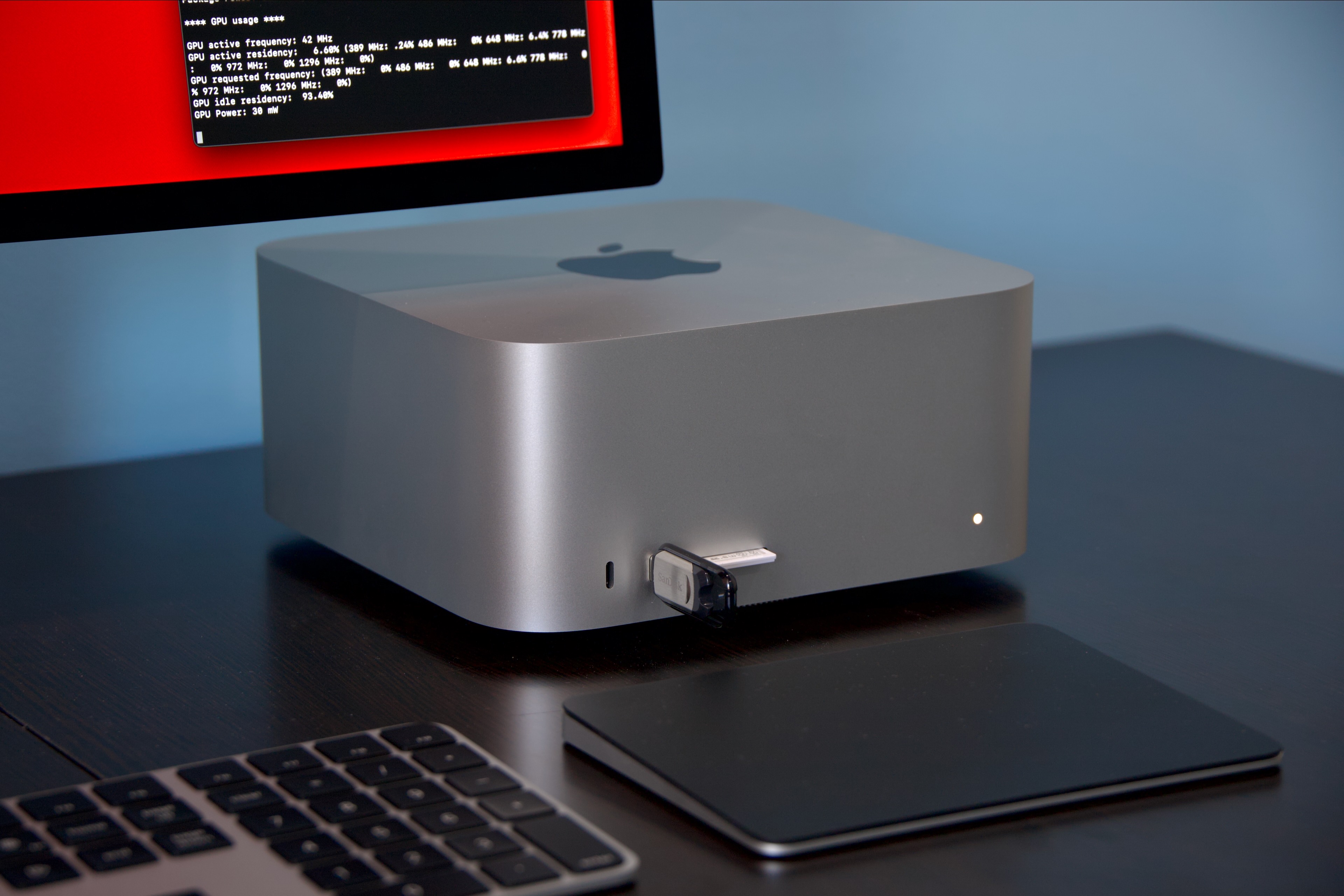
The powerful, compact, power-efficient Mac Studio is the kind of machine Apple couldn't have made with Intel's chips. Credit: Andrew Cunningham

"When we make bold changes, it's for one simple yet powerful reason," said Apple CEO Tim Cook. "So we can make much better products. When we look ahead, we envision some amazing new products, and transitioning to our own custom silicon is what will enable us to bring them to life."

Cook formally announced the long-rumored Apple Silicon transition in the company's 2020 WWDC keynote, which was delivered fully virtually during the height of the COVID-19 pandemic. (There's something faintly strange about watching this video now, even though basically all of Apple's major announcements are delivered as fully pre-recorded videos these days—it's full of weird cuts, and it feels like none of the presenters are sure what they should be doing with their hands.)

The first Apple Silicon Macs and the Apple M1 chip were announced in November of that year, and from then on, Intel Macs were living on borrowed time. The Apple Silicon transition took quite a bit longer than the PowerPC-to-Intel switch had, but the company finally completed the transition in mid-2023.

Apple promised that Intel Macs would be supported for "years to come," and it did make good on that promise, though later Intel Macs received fewer operating system updates than earlier ones. From 2020's macOS 11 Big Sur to last year's macOS 26 Tahoe, Apple released a total of six macOS releases that supported both architectures, though Tahoe's support list included just a bare handful of Intel models. Those Macs will get security and Safari updates until the fall of 2028. And then the Intel Mac era will be fully in the rearview.

What's striking about the Intel Mac era is that Apple switched to and away from Intel chips for basically the same reason: It was looking for a more compelling processor roadmap and the best possible performance-per-Watt for its chips. When Intel was executing well—and during the decade between the mid-00s and mid-2010s, Intel was executing exceptionally well—Apple wanted in. It was only after years of watching Intel struggle that Apple wanted out.

The big difference? When Apple stopped shipping PowerPC chips, consumer-focused PowerPC chips essentially disappeared. But Intel is still making and shipping processors, meaning that we (and Apple) can still see what could have been if the switch had never happened.

Some of Intel's updates this decade have been pretty good. The current Core Ultra Series 3 chips, in particular, are its most competitive in years, based on their CPU performance, graphics performance, and power efficiency. But I'd take Apple's steady, consistent drumbeat of generation-over-generation improvement any day over Intel's herky-jerky rollercoaster of refreshes, rebadges, and architectural overhauls.

Ditching Intel was a big risk for Apple, but so far, it's been the right decision.
Read full article

Comments


Read the whole story
fxer
2 hours ago
reply
Bend, Oregon
Share this story
Delete

Ripon Workhouse Museum in Ripon, England

1 Share

Under the English "New Poor Law" of 1834, civil parishes in England were required to join together  to form workhouse  unions with the aim of housing two classes of poor people, the poor and destitute of the areas served by the union, who were given long term, often permanent, but very frugal  accommodation with a requirement  to work 12 hours per day for 6 days a week, and vagrants , just passing through  the district, who were housed for 2 nights, giving a full day for them to provide 8 hours of hard labour in return for food.  Both classes were given a very restricted diet but the vagrants' diet was very frugal and hardly adequate. Essentially prison conditions were imposed for the crime of being poor.

Vagrants were searched for money on admittance and their own clothes were fumigated in an SO2 fumigation cabinet with the vagrants  wearing workhouse  uniform for their period of residence. Those seeking long term residence had to prove both their need and willingness to work and in addition a link to the locality. Without that the "Guardians" of the workhouse would send them on their way with instructions to seek relief in their own neighbourhood, both for economic reasons and as a throwback to the laws which were established to reduce mobility of labour after the Black Death, several centuries earlier.

At Ripon the workhouse for the  permanent  residents  was in a separate,  purpose built, block within the enclosed courtyard  and the vagrants were housed in separate accommodation  in the form of a row of "cells" in one of the wings of the gatehouse block. The main work carried out by vagrants at Ripon was breaking stones to small "pebbles" for road mending and cutting firewood, both illustrated here in the work-yard display.

The main workhouse block also contained  the accommodation  for the Master and his wife the Matron, jointly  responsible  for day to day running  of the workhouse, with the "inmates" housed in separate  single sex wings either side. Separation of the sexes, including  married couples and children, was enforced  rigorously. All these features are starkly illustrated by this fine museum.

Although formally abolished in 1929 many workhouses remained in use until the National Assistance Act of 1948 mainly because they were satisfying an unfilled need.

Read the whole story
fxer
3 hours ago
reply
Bend, Oregon
Share this story
Delete

Danish Cream Puffs (Vandbakkelser)

1 Share

This post is sponsored by Ankarsrum Assistent Original. It also contains affiliate links. If you purchase through these links, I may earn a small commission at no extra cost to you.

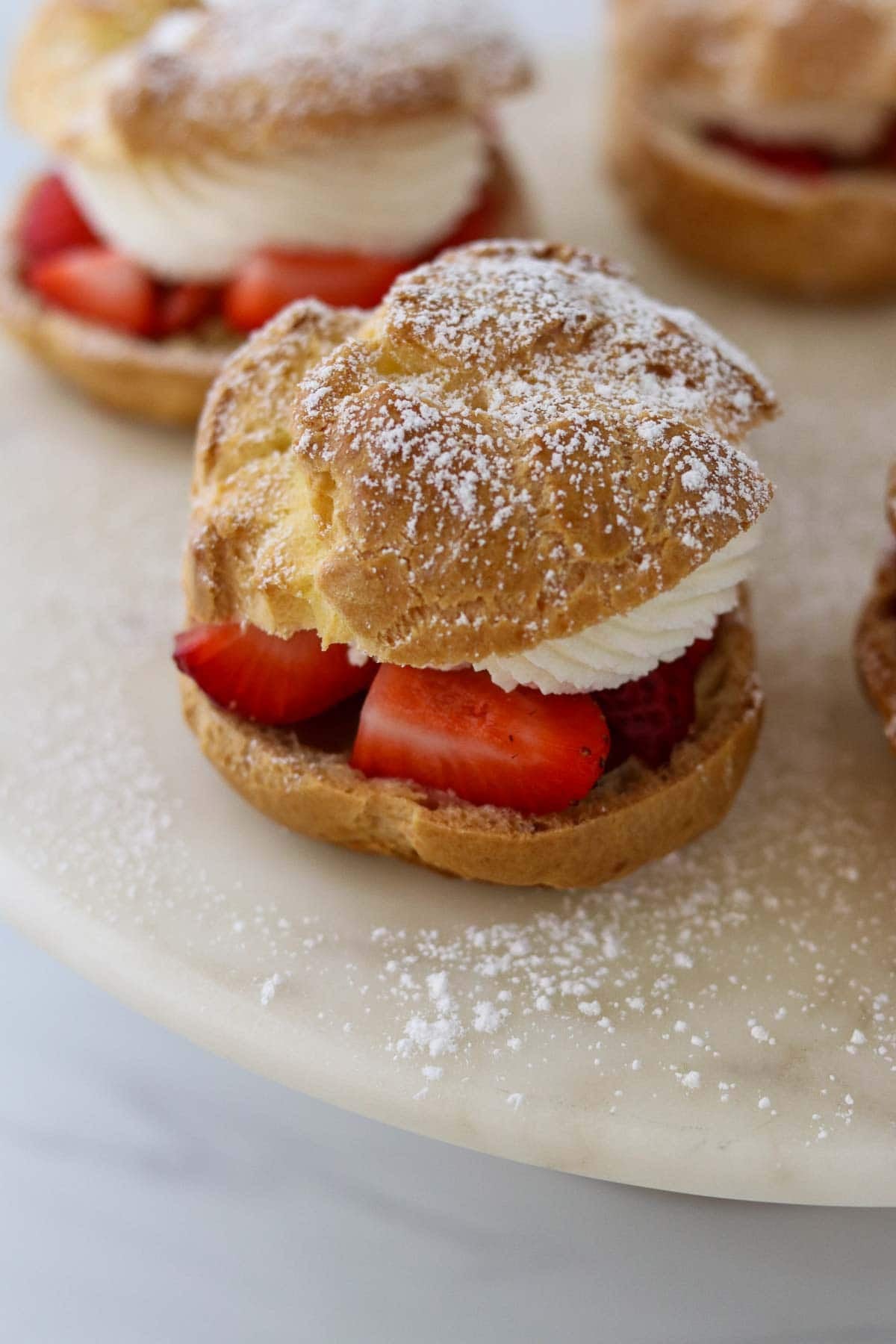
Fresh strawberries and whipped cream are one of summer's simplest pleasures, and these Danish Cream Puffs are the perfect way to enjoy them. Light and airy choux pastry shells are filled with juicy strawberries and billowy whipped cream and finished with a dusting of powdered sugar. Elegant enough for a special occasion but easy enough for a casual summer gathering, these cream puffs are a delightful Scandinavian-inspired dessert for strawberry season.

Danish cream puffs on a marble serving plate.

Known in Denmark as vandbakkelser, Danish cream puffs are made from choux pastry, a simple dough of water, butter, flour and eggs that bakes up into light, airy shells with hollow centers perfect for filling. While they can be enjoyed in many different ways, a filling of fresh strawberries and whipped cream is a classic choice during the summer months when berries are at their peak.

Looking for more strawberry recipes? Try my Strawberry Almond Tart, Strawberry Rhubarb Galette or these simple Roasted Strawberries next.

[feast_advanced_jump_to]

Why You'll Love this Recipe

  • Fresh strawberries and whipped cream are a classic summer pairing, and these cream puffs let their flavor shine.
  • Choux pastry may seem fancy, but it comes together with just a handful of basic ingredients.
  • These beautiful pastries are ideal for Midsummer celebrations, brunches, showers and other special summer gatherings.

Ingredients

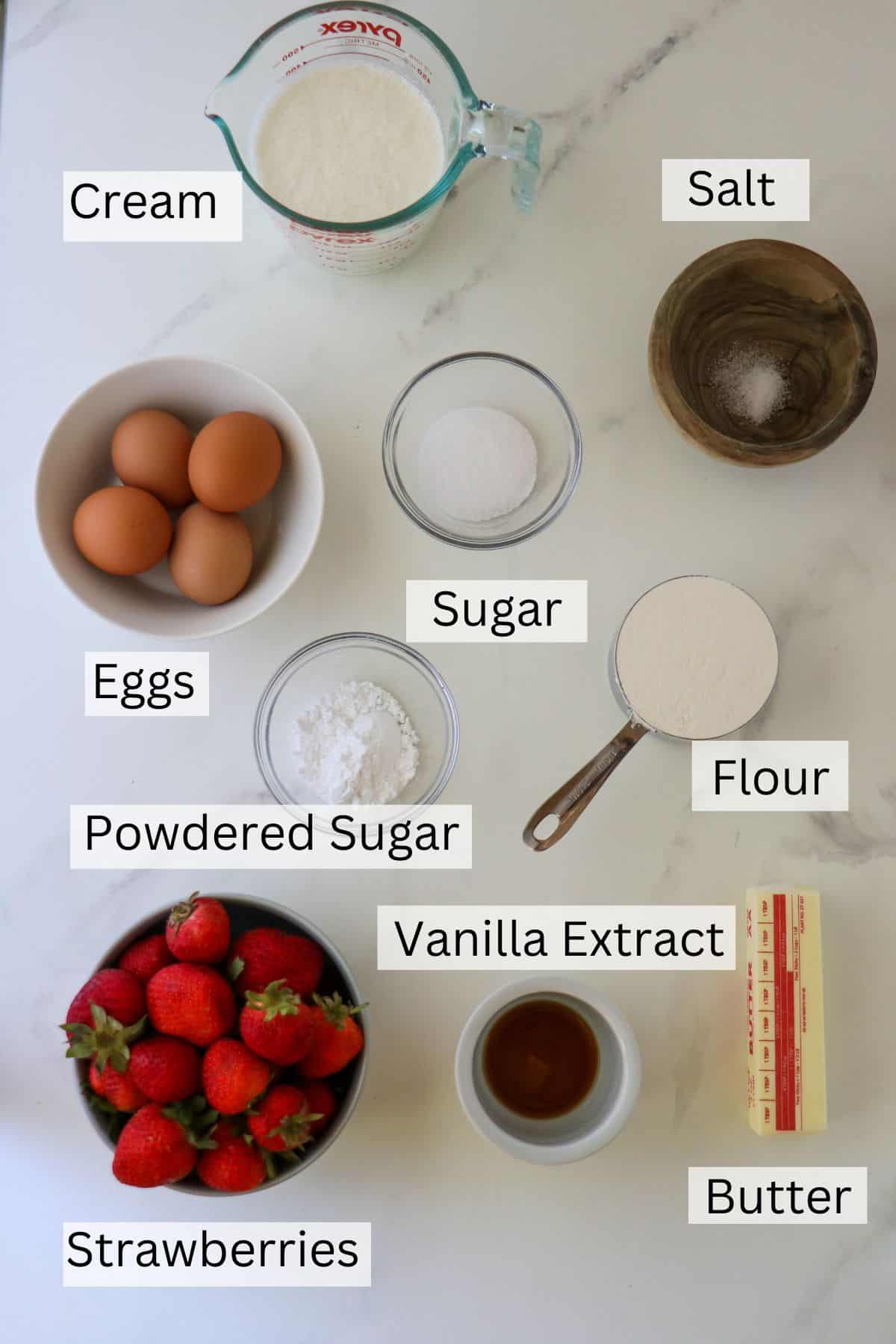
Labeled ingredients for Danish Cream Puffs.

See recipe card for exact amounts and detailed instructions.

Variations

  • Switch up the fruit - Mixed berries or sliced peaches are especially nice.
  • Use Elderflower Whipped Cream in place of the regular whipped cream for a summery touch.

Equipment

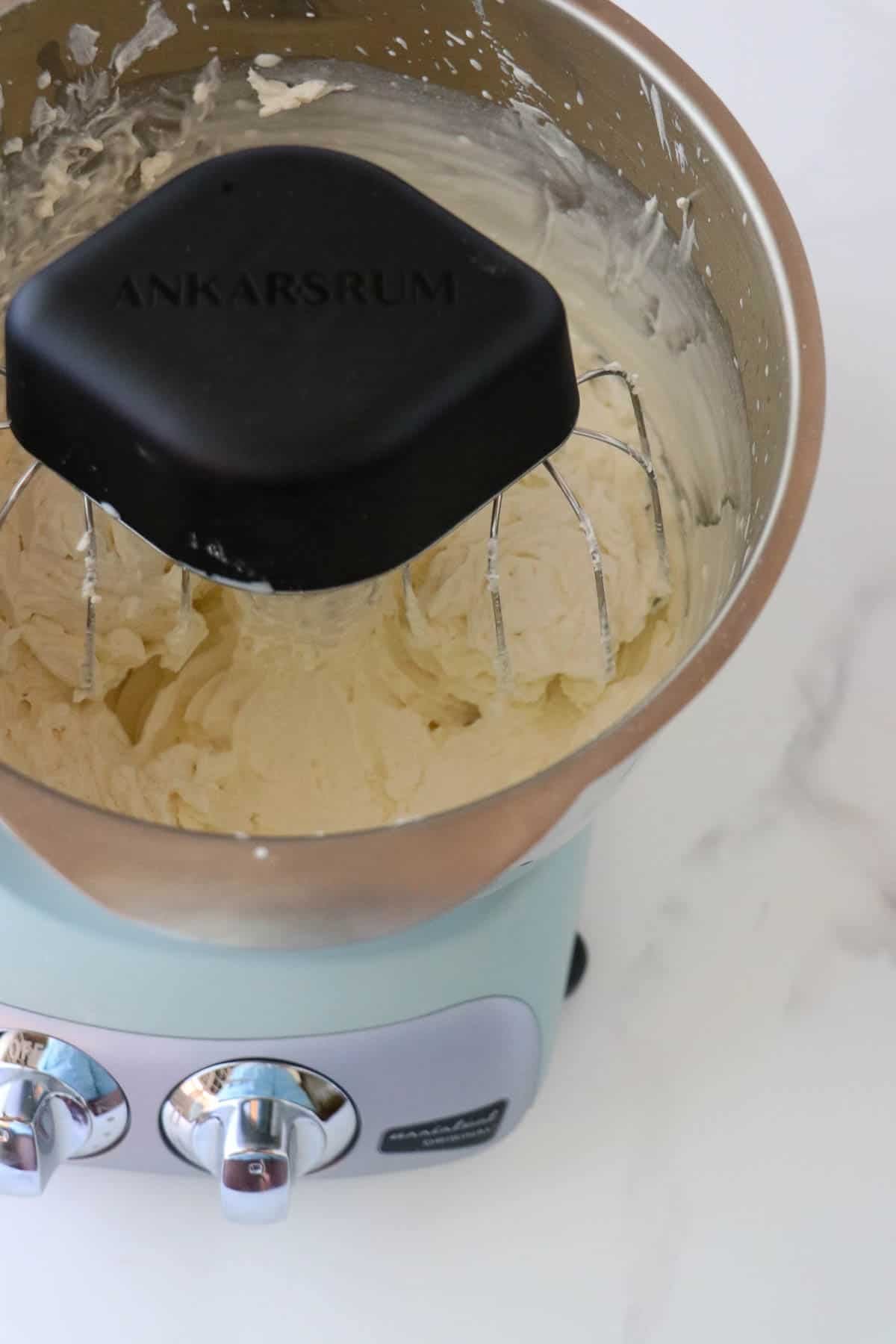
I used my Ankarsrum Assistent Original stand mixer fitted with the Premium Beater Set and the stainless steel beater bowl to make the choux pastry and the whipped cream. The Premium Beater Set includes a pair of cookie beaters and oversized balloon whisks, along with the beater housing, and is designed specifically for use with the Ankarsrum stainless steel beater bowl.

The cookie beaters are are sturdy stainless steel beaters designed to handle thicker doughs (and even cold butter) and can easily mix up to 2 pounds of cookie or pastry dough. The balloon whisks incorporate plenty of air into mixtures, making them perfect for whipping cream, egg whites, meringues, and light cake batters.

If you already own an Ankarsrum mixer and stainless steel beater bowl, the Premium Beater Set is a versatile addition that expands what the machine can do for everyday baking.

If you don't own an Ankarsrum, you can make the dough in any stand mixer, but you will need sturdy beaters and a stainless steel bowl to accommodate the hot choux mixture.

How to Make Danish Cream Puffs

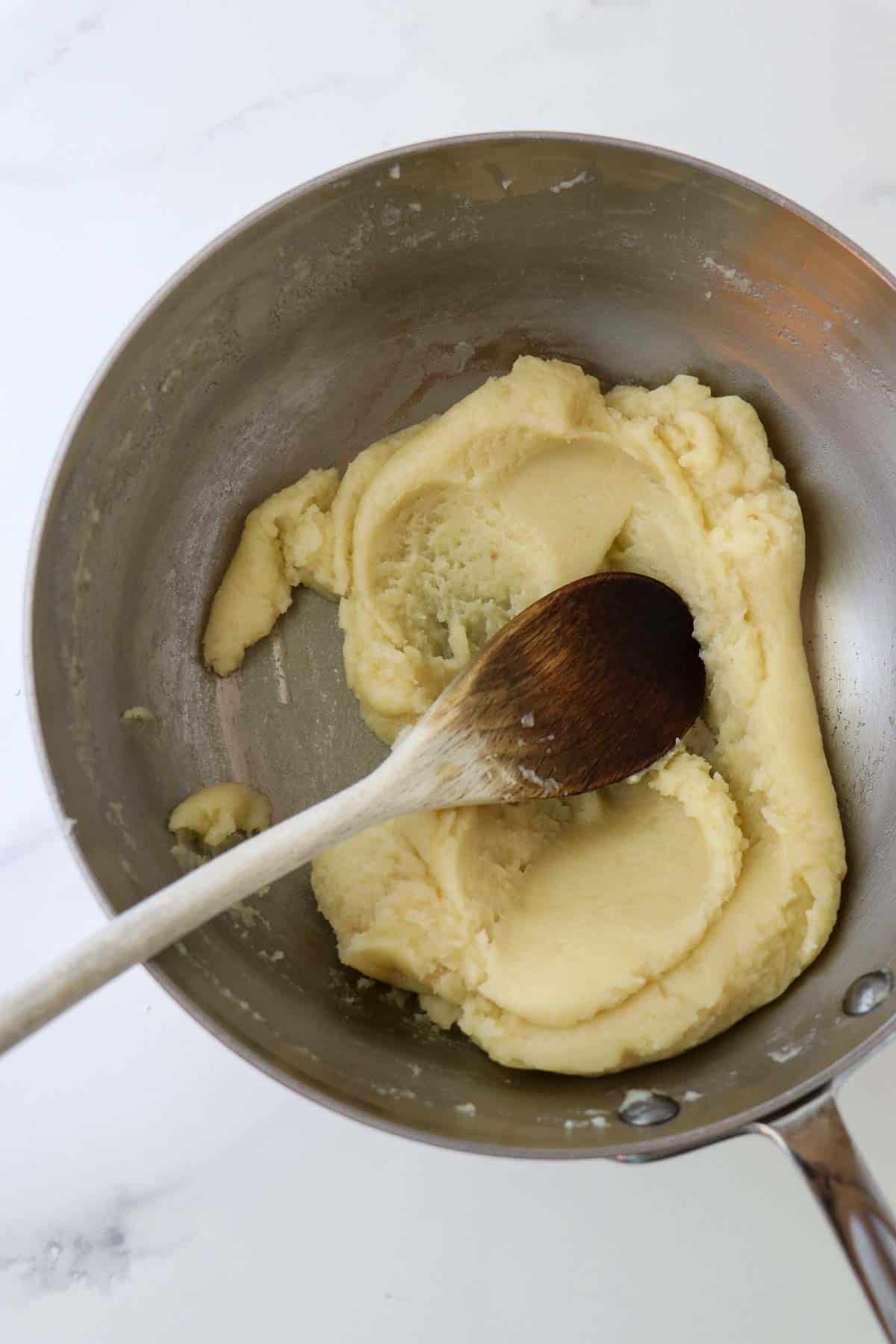
Choux paste in a saucepan with a wooden spoon.
  1. Preheat the oven to 400°F. Line two baking sheets with parchment paper.  Combine the water, butter, sugar and salt in a medium saucepan. Bring to a boil over medium-high heat. Remove the pan from the heat and add the flour all at once. Stir with a wooden spoon until a smooth dough forms. Return the pan to medium-low heat and cook, stirring constantly, for 1-2 minutes until the dough forms a ball and a thin film develops on the bottom of the pan.
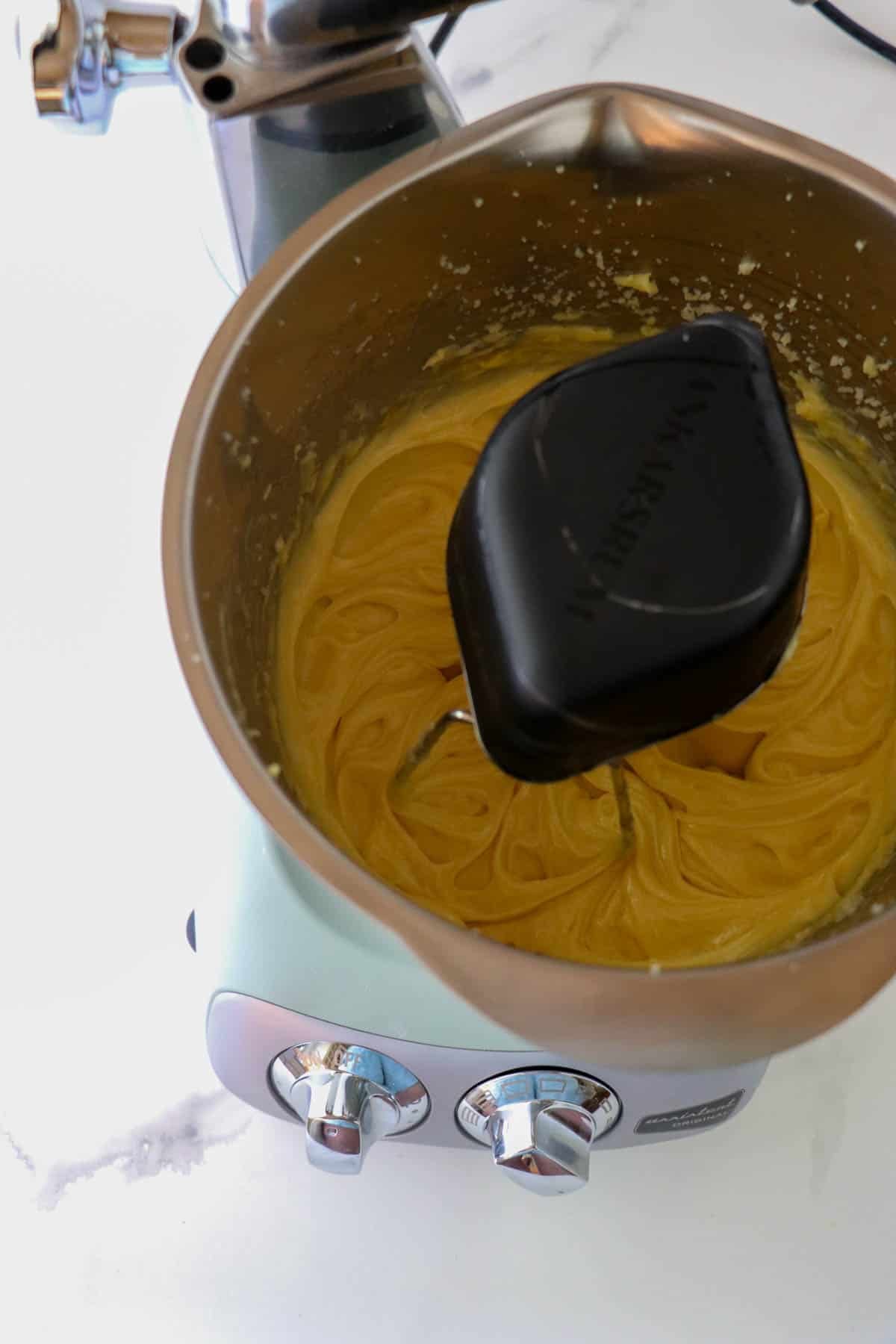
Choux paste in a mixing bowl.
  1. Transfer the dough to the bowl of a stand mixer (preferably stainless steel) fitted with the heavy duty cookie beaters or a paddle attachment. Mix on low speed for 2 minutes to cool slightly. Add the eggs one at a time, mixing well after each addition. The dough should become smooth, glossy and thick.
Person spooning choux paste onto a baking sheet.
  1. Using a large cookie scoop or spoon, portion 12 mounds of dough onto the prepared baking sheets, leaving a few inches between each puff.
Baked Cream Puffs on a baking sheet.
  1. Bake, one sheet at a time, for 20 minutes. Without opening the oven door, reduce the temperature to 350°F and continue baking for 15-20 minutes more until deeply golden brown and crisp. Turn off the oven, crack the door open slightly and let the puffs sit for 10 minutes. Transfer to a wire rack and cool completely.
Whipped cream in a stand mixer bowl.
  1.   Beat the cream, powdered sugar and vanilla together until medium peaks form.
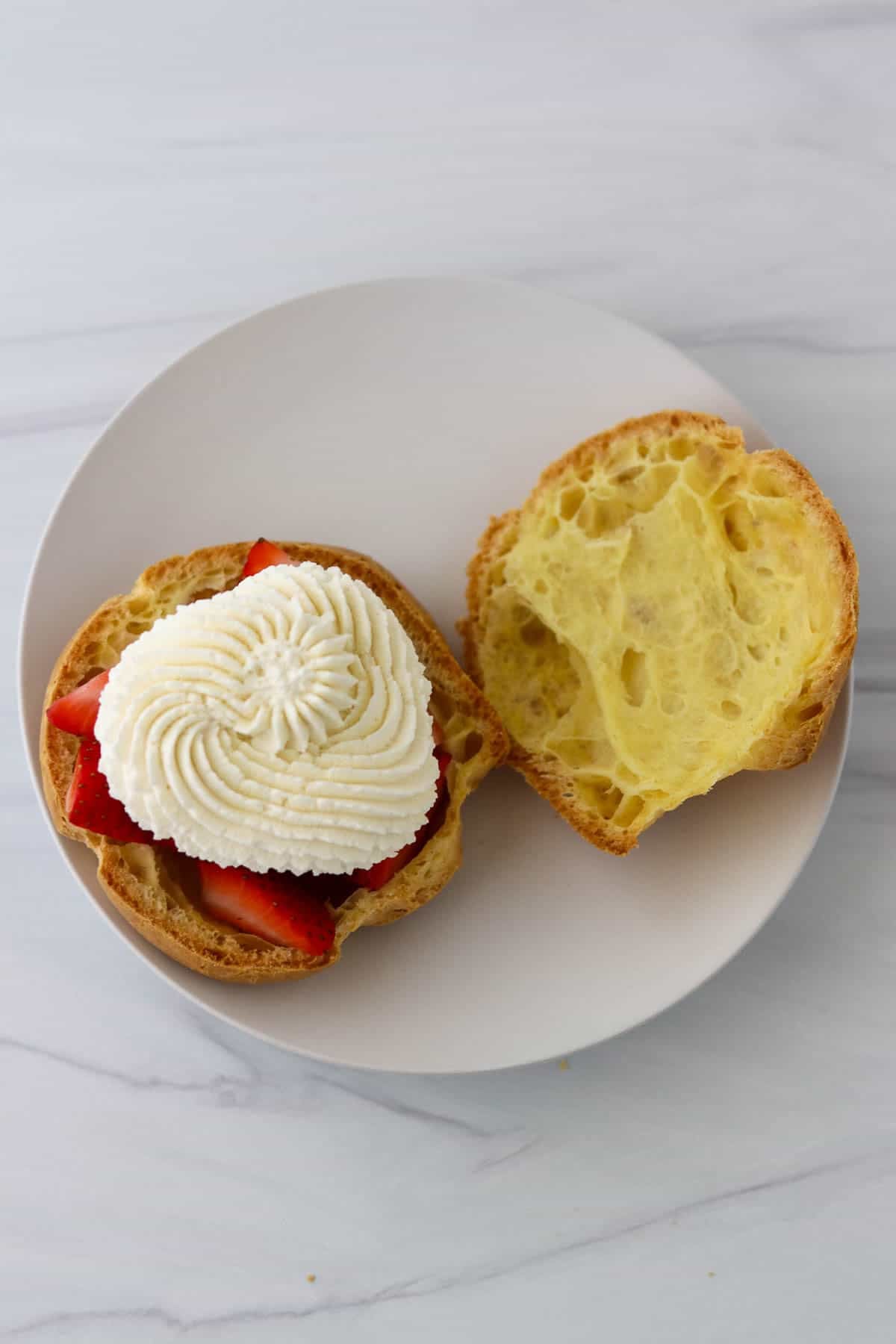
Cream puff topped with strawberries and whipped cream on a white plate.
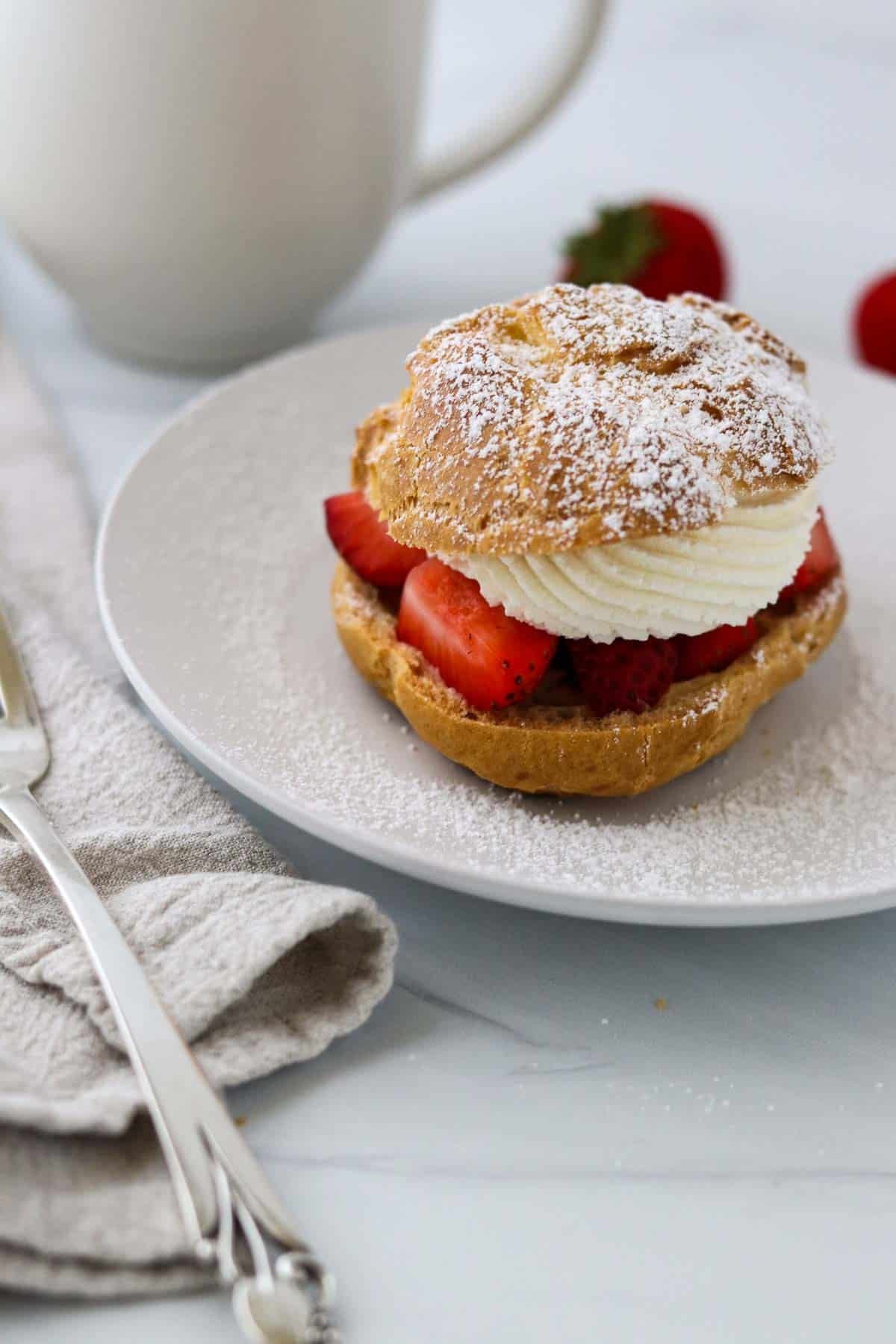
  1. Slice the cooled cream puffs horizontally using a serrated knife.  Arrange strawberries over the bottom half of the puff and spoon or pipe whipped cream on top.  Replace the tops.  Dust generously with powdered sugar and serve immediately.

Expert Tips

  • Be sure not to open the oven door while the puffs are baking. It can cause them to collapse.
  • You can bake both baking sheets at the same time, but because you can't open the oven door while they are baking, you can't rotate the pans so the top batch will be darker in color than the bottom batch.
  • Fill the puffs just before serving for the best texture.

Recipe FAQs

Can I make these cream puffs in advance?

The cream puffs themselves can be made up to a day in advance. Simply store them in a tightly sealed container at room temperature until ready to use. I don't recommend filling them in advance, but you could do the strawberries and whipped cream a couple of hours ahead of time and fill them at the last minute.

Can I freeze Danish cream puffs?

Absolutely! These puffs freeze really well. Wait until they are completely cooled and then pop them into a freezer safe bag or other storage container. They will keep for up to 3 months. Let the puffs defrost at room temperature when you are ready to use them.

Recipe

Cream puff filled with strawberries and whipped cream and sprinkled with powdered sugar.
Print

Danish Cream Puffs (Vandbakkelser)

Light and airy Danish Cream Puffs filled with fresh strawberries and whipped cream make the perfect Scandinavian summer dessert.
Course Dessert
Cuisine Danish, Nordic, Scandinavian
Prep Time 30 minutes minutes
Cook Time 45 minutes minutes
Total Time 1 hour hour 15 minutes minutes
Servings 12 puffs
Author Kristi

Ingredients

For the Choux Pastry:

  • 1 cup water
  • 8 tablespoons unsalted butter cut into pieces
  • 1 tablespoon granulated sugar
  • ¼ teaspoon fine salt
  • 1 cup all-purpose flour
  • 4 large eggs

For the Filling:

  • 2 cups heavy whipping cream
  • 2 tablespoons powdered sugar
  • 1 teaspoon vanilla extract
  • 1 ½ pounds strawberries hulled and quartered
  • 1-2 teaspoons granulated sugar

To Finish:

  • Powdered sugar for dusting

Instructions

  • Preheat the oven to 400°F. Line two baking sheets with parchment paper. Combine the water, butter, sugar and salt in a medium saucepan. Bring to a boil over medium-high heat.
  • Remove the pan from the heat and add the flour all at once. Stir vigorously with a wooden spoon until a smooth dough forms.
  • Return the pan to medium-low heat and cook, stirring constantly, for 1-2 minutes until the dough forms a ball and a thin film develops on the bottom of the pan.
  • Transfer the dough to the bowl of a stand mixer (preferably stainless steel) fitted with the heavy duty cookie beaters or a paddle attachment. Mix on low speed for 2 minutes to cool slightly.
  • Add the eggs one at a time, mixing well after each addition. The dough should become smooth, glossy and thick.
  • Using a large cookie scoop or spoon, portion 12 mounds of dough onto the prepared baking sheets, leaving a few inches between each puff.
  • Bake, one sheet at a time, for 20 minutes. Without opening the oven door, reduce the temperature to 350°F and continue baking for 15-20 minutes more until deeply golden brown and crisp.
  • Turn off the oven, crack the door open slightly and let the puffs sit for 10 minutes. Transfer to a wire rack and cool completely.
  • Make the Filling: Beat the cream, powdered sugar and vanilla together until medium peaks form.
  • Slice the cooled cream puffs horizontally using a serrated knife. Arrange strawberries over the bottom half of the puff and spoon or pipe whipped cream on top. Replace the tops. Dust generously with powdered sugar and serve immediately.

Notes

  • Be sure not to open the oven door while the puffs are baking. It can cause them to collapse.
  • You can bake both baking sheets at the same time, but because you can't open the oven door while they are baking, you can't rotate the pans so the top batch will be darker in color than the bottom batch.
  • Fill the puffs just before serving for the best texture.
  • To store puffs:  Once they have completely cooled, store the unfilled puffs in an airtight container at room temperature for up to 24 hours or freeze for up to 3 months.
 

The post Danish Cream Puffs (Vandbakkelser) appeared first on True North Kitchen.

Read the whole story
fxer
3 hours ago
reply
Bend, Oregon
Share this story
Delete

Good news—we have extra time before the Sun ends life on Earth

1 Share

It’s a bit worrying when a scientific paper begins, “How long will life on Earth survive?” But in this case—a study by Jacob Haqq‐Misra of Blue Marble Space and Eric Wolf at the University of Colorado Boulder—the billion-plus-year timeline under consideration shouldn’t cause you too much existential panic.

The context for this question is that we understand the Sun will brighten as it eventually matures into a red giant that swallows the Earth in a solar furnace. So, where along that 5 billion-year path will life on Earth, in fact, be cooked?

Weathering and the weather

This isn’t just a question of incoming radiation. Among the thermostat-like stabilizing feedback loops in Earth’s climate, the cycling of CO2 through the solid Earth is a major factor over timescales this long. The weathering of silicate rocks at the surface converts atmospheric CO2 into carbonate that ends up on the seafloor, where it can be subducted into the mantle with tectonic plates. (And eventually, it can cycle back out to the atmosphere through volcanoes.)

The weathering of bedrock depends, in part, on temperature. Warmer temperatures and a more active hydrologic cycle mean an increased rate of weathering, which pulls more CO2 out of the atmosphere. That slows rising temperatures. But in this scenario, it could also lead CO2 to fall to extremely low levels—and photosynthesis requires CO2.

This far-future puzzle has been the focus of many model simulations over the past few decades. With a steadily brightening Sun, when does the Earth either get too hot or too CO2-starved for the base of the food chain to survive?

Some of those models have been relatively simple equations. Others have been more complex one-dimensional layer models, representing an ocean and an atmosphere separately in the math, for example. This new study brings a 3D model to the party and uses a pair of scenarios that mark opposite ends of a spectrum.

The difference between the scenarios is based on extreme views of the temperature/carbon relationship described above. That was done in part because the idea that CO2 would eventually fall to very low levels has been challenged recently, based on some evidence of a much weaker relationship between bedrock weathering and global temperature. So in one scenario, the researchers held the planet’s temperature constant (equal to today’s) and let CO2 drop to compensate exactly for the brighter Sun. This is a world where strong weathering acts as a perfect thermostat. In the other scenario, CO2 is instead held constant at a modern value while temperature increases, representing a very weak weathering thermostat.

Too hot to handle

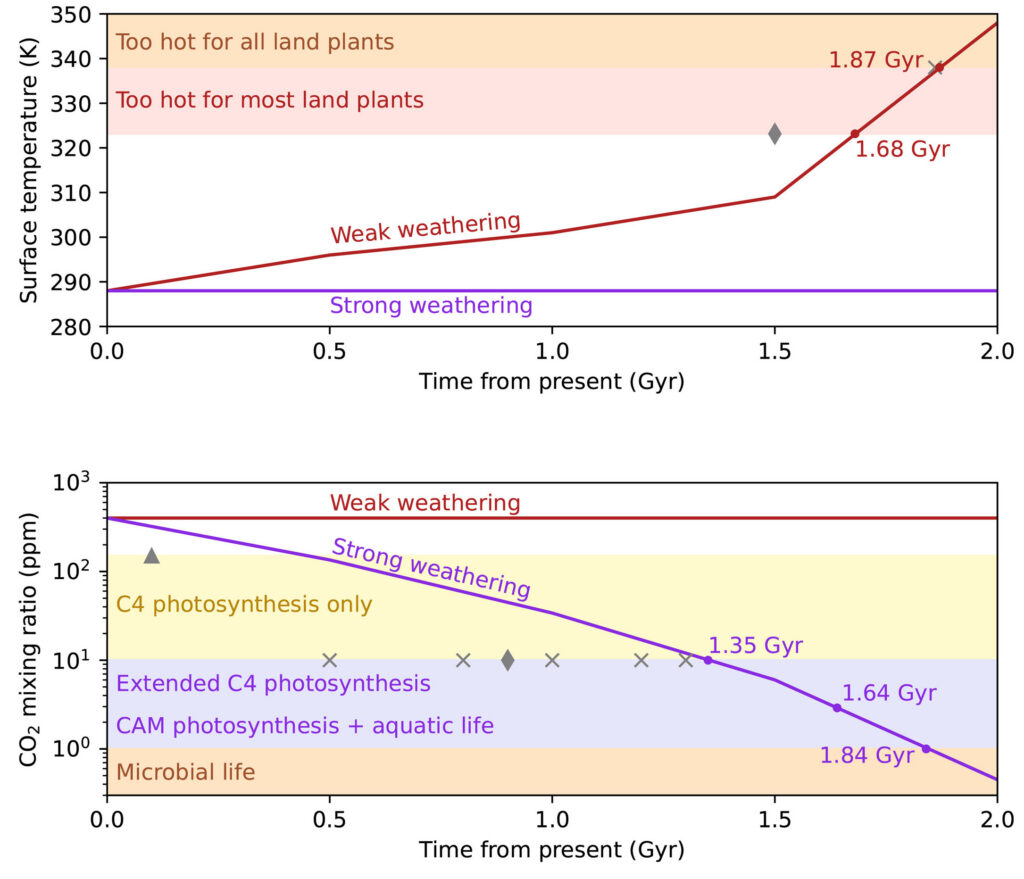
With weak weathering, the world is around 21° C (38° F) warmer 1.5 billion years from now, and it jumps an additional 40° C (72° F) between then and 2 billion years. Even with CO2 remaining at 400 parts per million, those temperatures would wipe out land plants on Earth.

Specifically, the physiological limits of most land plants are crossed by 1.68 billion years, and the rest are toast at 1.87 billion. (Boiling off the oceans and losing our water to space wouldn’t be far behind.)

In the strong weathering scenario, the temperature doesn’t change. But after 1 billion years, CO2 drops to about 34 parts per million, and after 2 billion years it falls to less than 1 part per million. The limit for most land plants is around 150 parts per million, while the much less common C4 plants could survive down to 3–10 parts per million. The latter limit gets hit between 1.35 and 1.64 billion years in.

A few plants, like cacti as well as some marine life, can cheat by using bicarbonate in the water if dissolved CO2 is low. They can probably make it down to 1 part per million. That would buy them a little more time, and they'd make it to about 1.84 billion years.

Two charts showing when model simulations cross thresholds for land plants. Model timelines for the weak and strong weathering scenarios. Temperature in the top plot is in kelvins—a change of 1 kelvin is equivalent to 1 °C. Carbon dioxide in the bottom plot is on a logarithmic scale. (10<sup>1</sup> is 10 parts per million, 10<sup>2</sup> is 100 parts per million, etc.) Credit: Haqq-Misra and Wolf/JGR Atmospheres

That's optimistic?

The, uh, good news about these estimates for the demise of complex life on Earth is that they’re actually a bit more optimistic than most previous studies. That’s down to the 3D model producing a little less warming for a brighter Sun, the expectation that CO2 declines more slowly over time, and a slight expansion of the CO2 range believed to be survivable by plants. Many previous estimates had put life’s expiration date at less than 1 billion years from now.

Obviously, there are a bunch of additional considerations that could significantly alter this story, and the researchers mention a few. If civilization persists long enough to see some of these changes, geoengineering would certainly be an option—like spreading aerosols in the stratosphere to reflect sunlight, for example.

There are even some wilder suggestions out there, like moving Earth’s orbit farther from the Sun or removing some of the Sun’s mass to tame the red giant. (We have a billion years to work on the logistics, after all.)

Less speculatively, evolution could have a say in the physiological limits of Earth’s plants. Any adaptations that expand the range of survivability would extend the timeline.

Ultimately, the point of modeling this kind of thing is not to make a confident prediction. Apart from the simple natural curiosity about what will happen to our world, this is also relevant to wondering about the potential for life on other worlds. The window of time during which life on Earth is possible tells us something about where to look outside our Solar System.

Land plants have been present on Earth for almost 500 million years, and if this new estimate is right, they could stick around for almost 1.9 billion more. As was the case for a few billion years early on, microbial life might again have the place to themselves for a while after that.

JGR Atmospheres, 2026. DOI: 10.1029/2025JD045586 (About DOIs).

Read full article

Comments


Read the whole story
fxer
4 hours ago
reply
Bend, Oregon
Share this story
Delete

Fox’s $22B Roku acquisition aims to expand its reach into smart TVs, advertising

1 Share

Fox Corporation has agreed to buy Roku Inc. for $160 per share, an approximate enterprise value of $22 billion, the firms announced today.

The acquisition would unite Fox’s broadcast channels, including Fox, Fox News, Fox Business, and FS1, as well as its streaming businesses, including Tubi, a free ad-supported streaming television (FAST) platform that Fox bought in 2020, with Roku’s own FAST service, The Roku Channel, and Roku’s streaming hardware business, including its streaming sticks and smart TVs. Roku says it has 100 million households using its platform.

The most valuable part of Roku’s business isn't its hardware, which lost $19.1 million in the quarter ending March 31, 2026, but its the operating system (Roku OS) and advertising business. In that same quarter, Roku’s advertising and subscriptions business posted a gross profit of $584.1 million, with the advertising business pulling in $371 million in revenue. The COVID-19 pandemic helped Roku become profitable in 2021, but the company didn’t see annual profitability again until 2025.

The planned merger aims to help Roku scale and maintain profitability more easily by enabling Roku “to execute on our strategy faster than we would otherwise by ourselves, even though we’re doing extremely well,” Anthony Wood, Roku’s CEO, said during a call with investors today.

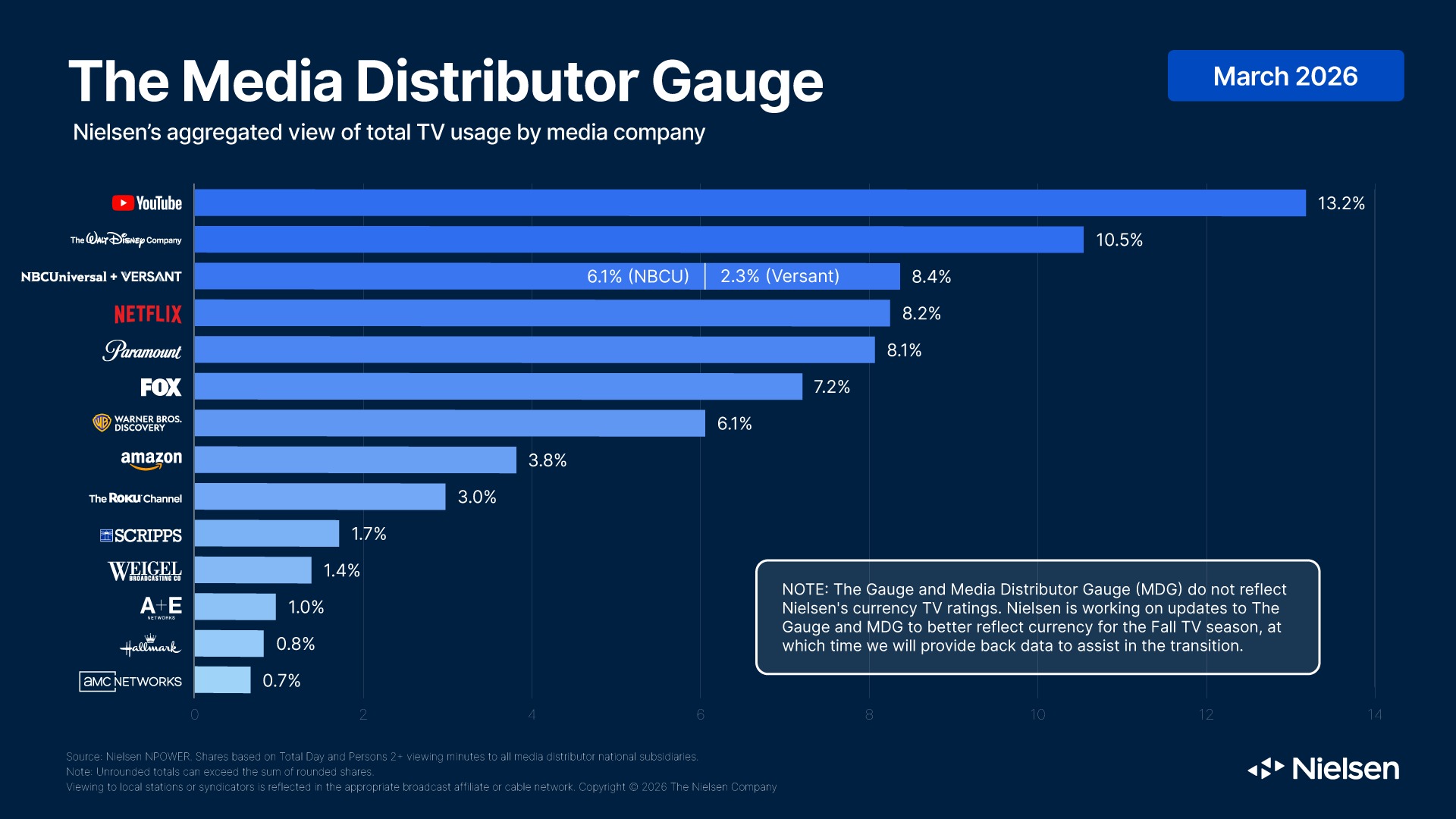
“Fox and Roku are committed to continuing to operate Roku as an open, partner-friendly platform and to the continued ubiquitous distribution of Fox content. On a pro forma basis, the combined company will become the third-largest player in US television by share of viewing,” today's announcement said. The stat seemingly refers to Nielsen's data for "aggregated view of total TV usage by media company" in March. The top-viewed distributors were YouTube (13.2 percent), The Walt Disney Company (10.5 percent), and NBCUniversal/Versant (8.4 percent). Fox was in fourth place (7.2 percent), and The Roku Channel was in ninth (3 percent).

Credit: Nielsen

Meanwhile, Fox would gain a new path toward ad sales and user tracking through The Roku Channel and Roku OS, which has a notable amount of ads. The merger would also help Fox expand beyond its legacy business and further into streaming, giving it more appeal among advertisers.

“Advertisers are … seeking large audiences, improved digital targeting and more consistent measurement across platforms,” Lachlan Murdoch, Fox’s CEO and chair executive, said during today’s investors call. “These converging dynamics across viewing, aggregation, and advertising have fueled the rapid growth of connected TV, and we are still in the early stages of this transition."

Should the deal close, Fox shareholders are expected to own about 73 percent of the merged company, and Roku shareholders are expected to own about 27 percent. Fox would take on $8 million in debt to pay for the Roku acquisition, and the companies expect to reduce combined expenses by $400 million.

Under the acquisition, Roku’s Wood would be on Fox’s board of directors and have “an ongoing role at the combined company,” the announcement said without providing more detail.

The acquisition remains subject to closing conditions, including regulatory approval and approval from Fox and Roku’s shareholders. It’s expected to close in the first half of 2027.

The announcement marks more consolidation for the streaming industry, which, broadly, has been challenged to reach and maintain profitability while providing always-on, on-demand service at lower prices than cable. With other deals, like Paramount buying HBO Max and the rest of Warner Bros. Discovery and Disney buying Hulu, we expect to see even more mergers and acquisitions, especially as legacy media and smaller streaming services look for ways to buoy profits.

Read full article

Comments


Read the whole story
fxer
4 hours ago
reply
Bend, Oregon
Share this story
Delete

UK to ban social media for kids under 16, may impose overnight curfews

1 Share

The UK government announced today that it will ban social media for all kids under the age of 16 in rules expected to take effect in spring 2027. The ban will apply to platforms including Snapchat, TikTok, YouTube, Instagram, Facebook, and X.

"We’re going further than any country in the world by banning social media for under-16s and putting wider protections in place to give kids their childhood back," Prime Minister Keir Starmer said in the announcement.

In addition to the ban on social media, Starmer's government said it will impose "world-leading blocks on harmful functions such as livestreaming and stranger communication with children for under-16s... Restrictions on these functionalities will also be on by default for 16- and 17-year-olds to prevent a cliff-edge at 16." The livestreaming and stranger-contact rules would apply to a range of services, such as online gaming.

"The government will also be looking in more detail at overnight curfews and breaks in infinite scrolling for under-18-year-olds and will set out more detail in July," the announcement said. The planned social media ban will not apply to messaging services like WhatsApp and Signal.

Another planned change is that "so-called AI ‘romantic companion’ chatbots—designed to simulate sexual relationships or roleplay with users—will have to enforce a minimum age of 18. Similar intimate functionalities will be restricted for under-18s on AI chatbots more widely," the UK government said.

Age checks

Platforms will be ordered to verify users' ages. Communications regulator Ofcom will be tasked with determining what kinds of age-verification systems will be required to comply with the rules. The ban decision was made after a consultation that drew responses from 116,000 people.

"Ofcom will set out in the coming months different options for effective forms of age assurance for proving whether someone is over 16 that are accurate, robust, reliable, and fair," the government said in a fact sheet on the rules, noting that facial recognition may be part of the age-check scheme. Adults can avoid the new age check on their existing social media accounts if they've already proven their age in another way.

The UK Online Safety Act already requires age checks for porn and other sensitive content. When it took effect last year, it appeared that many people in the UK used VPNs (virtual private networks) to circumvent the age verification.

VPNs themselves can create privacy and security problems. "The VPNs that children are incentivized to use pose privacy and security risks. Bad actors in the VPN space often trade in the sensitive browsing data that these tools can gather," said the Center for European Policy Analysis, a research group whose funders include Google and Meta.

UK modeled rule on Australia ban

The UK government today said the social media ban will use the same model as Australia, where online platforms must pay financial penalties if they fail to block underage users. Social media companies criticized the Australian rules but agreed to comply.

YouTube said in a statement to media outlets today that "blanket bans push kids out of such curated, supervised, beneficial experiences and towards anonymous, less-safe services.” Meta said the similar rule in Australia showed that "bans risk isolating teens from online communities and information, and driving them to unregulated alternatives that lack built-in protections and parental controls."

The Electronic Frontier Foundation has said that age-verification requirements harm privacy by requiring more collection of personal information from users of all ages. Banning social media also prevents kids from accessing useful content, the group said.

"Beyond being spaces where people can share funny videos and engage with enjoyable content, social media enables young people to engage with the world in a way that transcends their in-person realm, as well as find information they may not feel safe to access offline, such as about family abuse or their sexuality," the EFF said in March as the UK discussions were progressing. "In severing this connection to people and information by banning social media, politicians are forcing millions of young people into a dark and censored world."

Liberal Democrats prefer age-rating system

MP Victoria Collins of the Liberal Democrats party said the proposal is "woefully inadequate." The UK should instead force tech companies to address addictive algorithms and harmful content, she said.

"That's why the Liberal Democrats put forward a social media age-rating system that, instead of a blanket ban, puts the onus on the social media giants to clean up their act and have safety by design for all of us," she said.

MP Nigel Farage, leader of the right-wing Reform UK party, said "the social media ban is well-intentioned" but is "unlikely to work given the mass adoption of VPNs. It will also mean the introduction of Digital ID via the back door. The real answer here is handsets for children with limited features."

Conservative Party leader Kemi Badenoch took credit for Starmer's Labour Party deciding on an under-16 ban. "It is fantastic news that the government has finally woken up to the dangers of social media for young people... Huge credit goes to MP Laura Trott and my Shadow Cabinet for relentlessly fighting for this. Conservatives welcome this latest Labour U-turn, and will continue to work for the best implementation of the policy," Badenoch said.

Read full article

Comments


Read the whole story
fxer
4 hours ago
reply
Bend, Oregon
Share this story
Delete
Next Page of Stories