



17841 stories
·
173 followers

Mozilla: Anthropic's Mythos found 271 security vulnerabilities in Firefox 150

1 Share

Earlier this month, Anthropic said its Mythos Preview model was so good at finding cybersecurity vulnerabilities that the company was limiting its initial release to "a limited group of critical industry partners." Since then, debate has raged over whether the model presages an era of turbocharged AI-aided hacking or if Anthropic is just building hype for what is a relatively normal step up on the ladder of advancing AI capabilities.

Mozilla added some important data to that debate Tuesday, writing in a blog post that early access to Mythos Preview had helped it pre-identify 271 security vulnerabilities in this week's release of Firefox 150. The results were significant enough to get Firefox CTO Bobby Holley to enthuse that, in the never-ending battle between cyberattackers and cyberdefenders, "defenders finally have a chance to win, decisively."

"We've rounded the curve"

Holley didn't go into detail on the severity of the hundreds of vulnerabilities that Mythos reportedly detected simply by analyzing the unreleased source code of Firefox's latest version. But by way of comparison, he noted that Anthropic's Opus 4.6 model found only 22 security-sensitive bugs when analyzing Firefox 148 last month.

The vulnerabilities identified by Mythos could have also been discovered either by automated "fuzzing" techniques or by having an "elite security researcher" reason their way through the browser's complex source code, Holley writes. But using Mythos eliminated the need to "concentrate many months of costly human effort to find a single bug" in many cases, Holley added.

By identifying bugs so efficiently, Holley writes that AI tools like Mythos tilt the cybersecurity balance toward defenders, who benefit when discovering vulnerabilities becomes cheaper for both sides. "Computers were completely incapable of doing this a few months ago, and now they excel at it," Holley writes. "We have many years of experience picking apart the work of the world’s best security researchers, and Mythos Preview is every bit as capable."

In an interview with Wired, Holley said that, from now on, this kind of AI-aided vulnerability analysis is something that "every piece of software is going to have to [engage with], because every piece of software has a lot of bugs buried underneath the surface that are now discoverable." And while it's possible that future models more advanced than Mythos may be able to find bugs that current models miss, Holley said he was confident that "at least on the Firefox side, having had a bit of a head start here, that we’ve rounded the curve."

Running through the AI-aided defense gauntlet could be especially important for the open source projects that underpin much of the modern Internet. That's both because their public codebases are easier for AI systems to explore for vulnerabilities and because many such projects rely on wildly insufficient volunteer maintenance for their security.

In a New York Times essay last week, Mozilla CTO Raffi Krikorian argued that the human difficulty of both finding bugs and writing complex software has created a kind of balance in cyberthreat research that Mythos could break wide open. "The programmer who gave 20 years of his life to maintain [open source] code that runs inside products used by billions of people? He doesn’t have access to Mythos yet. He should," Krikorian wrote.

Read full article

Comments


Read the whole story
fxer
2 hours ago
reply
Bend, Oregon
Share this story
Delete

Anthropic gets $5B investment from Amazon, will use it to buy Amazon chips

1 Share

Amazon has significantly boosted its multibillion-dollar bet on Claude developer Anthropic by investing an additional $5 billion—enabling Anthropic to eventually secure up to 5 gigawatts' worth of AI chips from Amazon to help train and run its popular Claude AI models.

Amazon is already one of Anthropic’s largest investors, having previously invested $8 billion in the AI startup. The latest move brings Amazon’s immediate investment up to $13 billion, and the companies have agreed to the possibility of Amazon committing another $20 billion in the future if the partnership achieves certain commercial milestones, according to Wall Street Journal reporting.

The large cash infusion and prospect of obtaining more computing resources come at a crucial time for Anthropic, given the massive surge in paid subscriptions for Claude-related services early this year. That demand spike and strain on the existing cloud compute infrastructure supporting Claude have contributed to performance issues and even occasional outages for thousands of Claude users.

“Growth at this pace places an inevitable strain on our infrastructure; our unprecedented consumer growth, in particular, has impacted reliability and performance for free, Pro, Max, and Team users, especially during peak hours,” Anthropic wrote in an announcement about the Amazon investment.

The new deal with Amazon will deliver “meaningful compute in the next three months” and nearly 1 gigawatt in total before the end of 2026, said Anthropic. The company did not specify the timeframe for when Anthropic might secure the full 5 gigawatts of new compute capacity from Amazon.

However, the agreement covers Amazon’s Graviton chips and multiple generations of the company’s Trainium2 through Trainium4 chips. The latter are Amazon’s AI chips designed for use in data centers to train the largest AI models.

“Our custom AI silicon offers high performance at significantly lower cost for customers, which is why it’s in such hot demand," said Andy Jassey, CEO of Amazon, in a statement accompanying Amazon’s announcement.

Such an agreement is also the latest example of circular financing during the AI boom—the practice of tech companies investing in AI startups to help the latter buy products or services from the original investors. In this case, Amazon is giving Anthropic more money that it can use to purchase more AI chips and cloud computing resources from Amazon. The latest deal includes Anthropic committing more than $100 billion over the next decade to Amazon Web Services (AWS) technologies, including the current and future generations of Amazon’s custom silicon chips.

This is not the only circular financing deal for Anthropic involving some of the largest tech companies. The AI startup has also purchased AI chips and cloud services from Google, Nvidia, and Microsoft after receiving multibillion-dollar investments from them—part of a multicloud strategy that allows Anthropic to access a wide range of the latest AI hardware.

Read full article

Comments


Read the whole story
fxer
2 hours ago
reply
Bend, Oregon
Share this story
Delete

Internal emails show how Amazon raises prices across the Internet, lawsuit says

1 Share

Newly unsealed emails reveal the sneaky ways that Amazon colludes with rivals to raise prices across the Internet on "everything from diapers to clothing to furniture," California Attorney General Rob Bonta alleged in a press release Monday.

"Amazon and a competitor will knowingly stop price matching each other, so that one retailer can increase its price, and the other retailer can match to the new, higher price," Bonta alleged, pointing to one of three such schemes described in Amazon emails. "Thus, both competitors start selling at a higher price, increase their profits, and consumers pay more."

The emails surfaced in a lawsuit that the state of California filed in 2022, accusing Amazon of wielding its tremendous influence as the world's largest retailer to pressure vendors into increasing prices on rival e-commerce websites or removing products from cheaper platforms entirely. According to The New York Times, these emails offer "a rare behind-the-scenes look at how Amazon operates its $2.66 trillion empire."

Three ways Amazon allegedly rigs prices

Amazon works in three ways to pressure vendors into manipulating competitor prices, Bonta alleged.

In one supposed scheme, Amazon proposes price matching by agreeing to increase the price of a product or temporarily pause its sales, which then allows the other retailer to raise its price.

Another route Amazon frequently takes flips that scheme. When Amazon sees a rival offering a product at a price it considers unprofitable, it pressures vendors to get the rival to raise their price to a level Amazon likes. Once the rival raises its price, Amazon then matches it.

Finally, Amazon allegedly follows a third, arguably more aggressive, path to get vendors to remove products entirely from platforms offering lower prices. That way, Amazon won't be forced to lower its price to compete.

All three scenarios raise prices for consumers, Bonta alleged.

In most examples, Amazon's requests for price increases were met with urgency. Some prices spiked within a day, as vendors allegedly feared that Amazon might drop them from the platform or otherwise punish them for allowing cheaper sales elsewhere.

Some of the price increases Amazon requested were higher than others. Whereas emails showed Amazon pushed Walmart and Levi's to raise the price of khaki pants by about a $1.50, another vendor, All the Rages, got Walmart to increase prices of two different lamps by about $15 each.

Even man's best friend has been targeted by the alleged price-fixing. Emails showed one vendor, GlobalOne, used a "happy face emoji" after Chewy agreed to increase prices on 13 kinds of Canine Naturals pet treats. In that example, Amazon immediately took steps to increase prices even more after Chewy agreed to the initial request to price match, Bonta alleged.

"Overall this looks like it’s working!" GlobalOne's spokesperson reported to Amazon when the higher prices popped up on both platforms.

Some price hikes linked to Prime Day

Some requests for price increases were permanent, Bonta alleged. Other times, Amazon sought temporary price increases ahead of some of the biggest sales days on its platform in a seeming bid to coerce vendors at key moments when they couldn't afford to push back. As a result, Amazon seemingly set a higher base price before enacting significant price drops that were intended to surge sales.

For example, the e-commerce giant threatened to remove four products sold by a furniture company called Armen Living "immediately" before the "critical sales days of Black Friday and Cyber Monday," if "drastically" lower prices weren't increased on rival sites, including Home Depot's website. That pressure campaign sought to mark up a barstool from $156.58 to $172.97 and a dining chair from $103.56 to $119.99, emails showed.

Similarly, Amazon pushed a lawn/garden vendor, Scotts, to request a price increase "even if it is just for the three days leading up to" Prime Day, an email showed.

Amazon downplays emails

Amazon's spokesperson, Mark Blafkin, told The New York Times that the company looked forward to responding to California's latest filing in court. Downplaying the filing as a "transparent attempt to distract from the weakness of its case," Blafkin claimed that the evidence isn't "new" and that Bonta has had the emails for years and is now exaggerating their significance ahead of the trial.

“Amazon is consistently identified as America’s lowest-priced online retailer, and we’re proud of the low prices customers find when shopping in our store," Blafkin said.

However, Bonta argued that the examples surfaced in the lawsuit are substantial evidence of explicit price-fixing. They "are not outliers" but "illustrative of countless interactions—spanning years and many different employees and product lines—in which Amazon, vendors, and Amazon’s competitors agree to increase and 'fix' the prices of products on other retail websites," he alleged.

"Amazon’s goal is to insulate itself from price competition by preventing lower retail prices in the market," Bonta alleged. To achieve this, he noted that "coercive exchanges with vendors abound in Amazon documents."

He alleged that additional discovery has shown that Amazon trains its employees to use vague language in emails or, better yet, to avoid having such discussions by email. As best practice, Amazon workers are told to request that vendors schedule calls to negotiate what Amazon deems "problematic" pricing on rival sites due to the "delicate" nature of the requests.

AG: Amazon stole millions from consumers

Bonta is hoping this evidence will help California secure a preliminary injunction blocking Amazon from any price-fixing while the trial proceeds. A hearing on the request for the preliminary injunction is scheduled for July 23, while the case is scheduled to go to trial in January 2027, the press release said.

"Amazon’s price fixing is taking money out of the pockets of millions of California consumers every day and reducing available product selection/choice," Bonta alleged, arguing that California had shown that it was likely to prevail in proving Amazon fixed prices.

To fight the request, Amazon will need to demonstrate that it "would suffer grave or irreparable harm from the issuance of the preliminary injunction," Bonta said. And he expects that "Amazon cannot meet this burden," since the price-fixing is allegedly "explicit."

"The price-fixing is not driven by the vendors," Bonta told the court. "Rather, Amazon tells vendors what prices it wants to see to maintain its own profitability."

"Amazon cannot show that any harm arises from a prohibition against illegal acts," and financial loss does not "suffice to show grave or irreparable harm," Bonta argued.

"You don’t see price-fixing so explicitly and egregiously in writing like this," Bonta told the NYT.

Read full article

Comments


Read the whole story
fxer
2 hours ago
reply
Bend, Oregon
Share this story
Delete

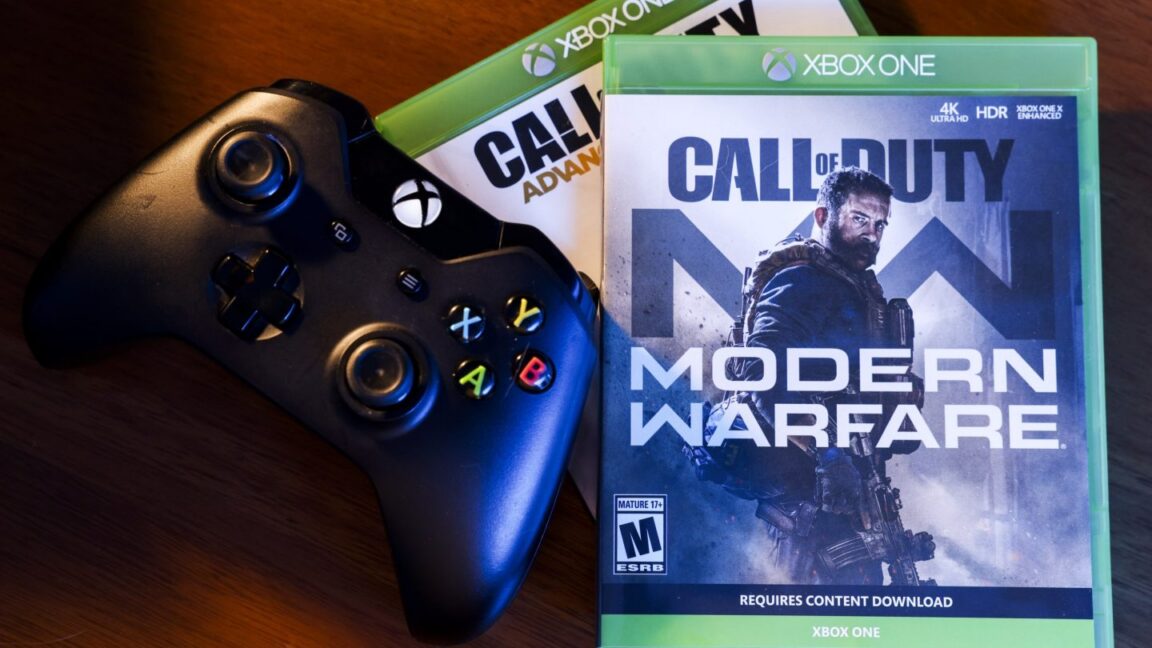
Microsoft's Game Pass gets cheaper, loses launch day Call of Duty access

1 Share

Microsoft announced Tuesday that subscribers to its Game Pass service will see significant price reductions starting today. But those subscribers will also be losing included day-one access to Activision's popular Call of Duty series from now on.

In the US, the price of a Game Pass Ultimate subscription will drop to $22.99 a month (down from $29.99, down roughly 23 percent), while the more limited PC Game Pass will drop to $13.99 a month (from $16.49, down roughly 22 percent). Going forward, neither subscription will include launch day access to new Call of Duty games, which will not be available on Game Pass until the following holiday season. Previous Call of Duty games will continue to be available to Game Pass subscribers, though.

"Game Pass Ultimate has become too expensive for too many players," recently named Xbox CEO Asha Sharma said in a social media post accompanying the announcement, echoing sentiments shared in an employee memo leaked to the Verge last week. "We’ll keep learning and evolving Game Pass to better match what matters to players."

Splitting the baby

The price of a Game Pass subscription has risen steadily since the service launched as a $10 a month collection of about 100 console games in early 2017, including a whopping 50 percent price increase for game Pass Ultimate last October. But the offerings included in a Game Pass Ultimate subscription have also expanded over time to include access to over 500 console games, Ubisoft+ Classics and EA Play subscriptions, downloadable PC games, streamable cloud games, and console multiplayer services that previously needed a separate Xbox Live Gold subscription.

Last year, Bloomberg reported that Microsoft estimated it had lost $300 million in direct sales of Call of Duty games due to the title's inclusion in Game Pass, according to an anonymous employee. At the same time, Game Pass saw limited subscriber growth immediately following the addition of new Call of Duty games to the plan in 2024.

Today's pricing and game availability adjustments could help remedy both of those problems, while still saving money for Game Pass Ultimate subscribers who buy Call of Duty separately.

When Microsoft raised the price of its Game Pass Ultimate subscription from $16.99 to $19.99 in 2024, the move drew an angry response from the FTC, which was at the time still appealing Microsoft's merger with Activision on antitrust grounds. The FTC noted that the price increase—which came alongside the elimination of a cheaper $10.99 "Console" subscription tier—"coincide[s] with adding Call of Duty to Game Pass’s most expensive tier." The FTC also noted at the time that Microsoft had promised Call of Duty's Game Pass availability would come with "no price increase for the service based on the acquisition."

Today's Game Pass price reduction comes after a 2025 in which entertainment subscriptions in general saw massive price increases well ahead of inflation, according to federal data. In 2026 so far, we've also seen significant price increases for Netflix, Spotify, CrunchyRoll, YouTube Premium, and others.

Read full article

Comments


Read the whole story
fxer
5 hours ago
reply
Bend, Oregon
Share this story
Delete

The Vera C. Rubin Observatory has Discovered 11,000 New Asteroids, and It's Barely Even Started!

1 Share

A model of the inner Solar System showing the asteroids discovered by Rubin in light teal. Known asteroids are dark blue. Credit: NSF–DOE Vera C. Rubin Observatory/NSF NOIRLab/SLAC/AURA/R/NASA/Goddard/ESA/Gaia/DPAC

Rubin’s largest asteroid haul yet, gathered before the Legacy Survey of Space and Time even begins, is just the “tip of the iceberg”

Read the whole story
fxer
1 day ago
reply
Bend, Oregon
Share this story
Delete

Israel escalates attacks on medics in Lebanon with deadly ‘quadruple tap’

2 Shares

When they received the call to respond to an Israeli airstrike in the city of Mayfadoun, in southern Lebanon, most of the paramedics held back, having previously seen colleagues killed by double-tap attacks targeting rescuers. But the medics from the Islamic Health Association (IHA) rushed to the scene.

By the time the other emergency workers arrived at the site, they found the IHA medics had indeed been caught in a second strike. They started evacuating their wounded colleagues, only for their ambulances to be hit in two further attacks.

One of the paramedics covered his ears and screamed, convulsing in pain as shrapnel shattered the back window of the ambulance.

The rescue mission on Wednesday afternoon had turned into a nightmare as Israel carried out three consecutive strikes on three sets of ambulances and medical workers.

A man carries the blood-stained jacket of a paramedic killed in Mayfadoun, during his funeral procession on Thursday. Photograph: Mahmoud Zayyat/AFP/Getty Images

In total, the attacks killed four medics and wounded six more, from three different ambulance corps, according to medical sources. Three of the medics were from the Hezbollah-affiliated IHA and Amal-affiliated medical corps, while one was from the Nabatieh emergency services organisation. Under international law, all medics are protected and are considered non-combatants, regardless of political affiliation.

Rescuers in Lebanon have long been wary of the double-tap attack, when Israeli forces target a location, wait until people gather to help survivors, and then strike again. Wednesday’s three-wave attack after the initial one prompted the coining of a fearsome new term: the quadruple tap.

In a video taken by one of the paramedics at the site, rescuers are seen loading two wounded people into their ambulances when a bomb lands next to their vehicle. Paramedics rush to extract the driver, who is motionless and limp as they pull him from the ambulance, which is splashed with blood. “Oh God, oh God,” the man filming can be heard saying. They carry two more blood-covered medics out of their vehicle and on to stretchers.

Among the paramedics killed was Fadel Sarhan, 43, who is survived by his eight-year-old daughter.

The Lebanese health worker Fadel Sarhan was killed in the Israeli ‘quadruple tap’ attack. Photograph: Social media

“Fadel was a very loved person. He had a bold personality, but at the same time, he was emotional. He was well liked and responsible,” said Ali Nasr al-Deen, the head of the Mayfadoun civil defence centre who grew up with Sarhan.

“He used to feed the cats and dogs. He would bring pet food from Beirut so they wouldn’t go hungry. He was that kind of person, caring and attentive. It’s a huge loss for us,” said Nasr al-Deen.

Medics mourned their colleagues on Thursday at funerals in Nabatieh, a city near Mayfadoun. Such events have become increasingly common, with healthcare workers killed by Israeli bombings on a near daily basis.

Mohammed Suleiman, whose 16-year-old son, Joud, was killed while on duty as a paramedic by an Israeli strike weeks earlier, joined his peers in burying another of his friends on Thursday. A few hours after the funerals, Israel carried out another wave of airstrikes on Nabatieh.

Mourners attending the funeral of Fadel Sarhan in Haret Saida, southern Lebanon, on Thursday. Photograph: EPA

Israel has so far killed 91 healthcare workers and wounded 214 more in Lebanon since the Israel-Hezbollah war started on 2 March. It has given little justification for its repeated attacks on medical infrastructure and workers, apart from accusing Hezbollah of using ambulances and hospitals to transport fighters and weapons, without providing evidence for the claim.

The Lebanese ministry of health accused Israel of deliberately targeting ambulance crews. “Paramedics have become direct targets, pursued relentlessly in a blatant violation that confirms a total disregard for all norms and principles established by international humanitarian law,” the ministry said in a statement.

The Israeli military did not immediately respond to a request for comment.

In the video taken of the quadruple tap on Wednesday, the frame was frozen on the interior of the ambulances, as the Nabatieh emergency services highlighted that the vehicle clearly contained no weapons.

A few hours after Israel hit the ambulances outside Nabatieh, it bombed the vicinity of the governmental hospital in Tebnine, south Lebanon. It was the second time in two days that Israeli bombings damaged the healthcare facility, which is the only remaining public hospital in the area. The strikes injured 11 hospital workers and damaging the emergency department, according to the World Health Organization (WHO).

A video of Tebnine hospital from 14 April showed workers trying to clear shattered concrete and debris from the emergency department after a strike blew in the windows.

Commenting on the strike in Tebnine, the head of the WHO, Tedros Adhanom Ghebreyesus, said: “I reiterate the call for the immediate protection of healthcare facilities, health workers, ambulances and patients. There must be safe, sustained and unhindered humanitarian access across Lebanon.”

An ambulance in Tebnine was also struck on Thursday, leading to the critical injury of two medics, according to the Lebanese ministry of health. As healthcare workers watched their colleagues and friends being killed by Israel, the mental toll was becoming almost too much to bear.

“We have to go to places to rescue people, but then we get double tapped,” said Abbas Atwi, the head of the IHA’s emergency department in Nabatieh, shortly after a medical centre was targeted in March, killing his friends and colleagues. “But we will stay and keep going, we will not leave.”

Read the whole story
fxer
1 day ago
reply
Bend, Oregon
acdha
3 days ago
reply
Washington, DC
Share this story
Delete
Next Page of Stories